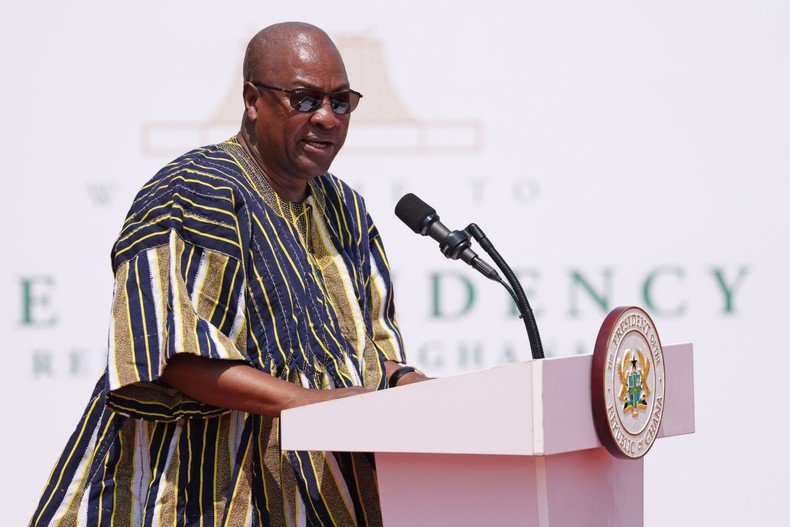
In a statement issued by the Ghanaian presidency following the “Accra Reset’s Addis Reckoning” forum on the sidelines of the African Union summit, Mahama outlined plans to finance cocoa purchases in local currency and halt the export of raw mineral ores by 2030.
The move marks a strategic turning point for Ghana, which has emerged as Africa’s top gold producer but is now seeking to derive greater long-term value from cocoa, its most iconic agricultural export.
“One of the key decisions we’ve made is to stop accepting foreign funding for the purchase of our cocoa. We are going to raise domestic bonds. We have enough Cedis in Ghana to pay for our cocoa,” Mahama said, according to the presidency.

Breaking free from foreign financing constraints
For decades, foreign-backed cocoa financing required Ghana to pledge its cocoa beans as collateral, effectively locking the country into exporting raw produce and limiting domestic processing. Mahama said this model deprived Ghana of the opportunity to maximize earnings from its own resources.
“You collateralise the beans with the financier, buy them, ship them, and they pay you the international market price,” he said. “We have the capacity to process 400,000 tons of those beans in Ghana, but because they are collateralised, we cannot even allocate them to local processors.”
By shifting to domestic bond financing in Ghanaian cedis, the government expects to unlock hundreds of thousands of tons of cocoa for local processing, significantly boosting export value and strengthening national revenues.
Mahama also set an ambitious deadline to transform Ghana’s broader resource economy. “By 2030, there won’t be any raw mineral ores leaving Ghana. You must process all that locally,” he said.
The presidency said the reforms are designed to position Ghana not just as a leading producer of cocoa and gold, but as a global value-added exporter, ensuring more wealth, jobs, and industrial growth remain within the country.