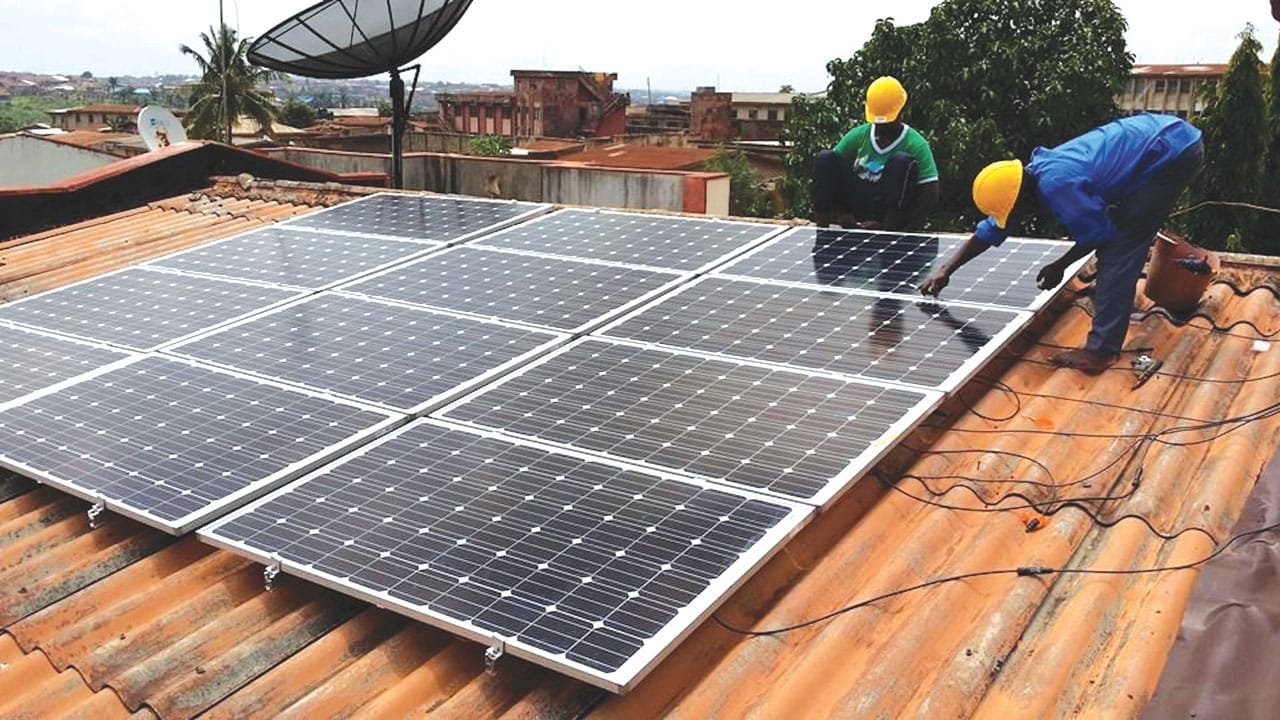
Africa led global solar growth in 2025, recording the fastest year-on-year increase in installed capacity of any region. Its growth outpaced other parts of the world, even as overall global solar expansion began to slow.
This is according to the newly released Africa Solar Outlook for 2026 by the Africa Solar Industry Association. The report indicates that the continent’s total installed solar capacity grew by about 17% last year.


It notes that much of the expansion was driven by imports of Chinese made solar panels and batteries.
By contrast, global solar capacity grew by 23% to 618 gigawatts in 2025, slower than the 44% increase recorded in 2024.
The report says Africa had 23.4 gigawatt peak of operational solar capacity at the end of 2025.
However, Chinese export data show that nearly 64 gigawatt peak of solar modules have been shipped to the continent since 2017, suggesting that some installations may be untracked or underreported.
Solar expansion streches beyond Africa’s core markets
According to the outlook, solar growth is spreading beyond established markets such as South Africa and Nigeria, which traditionally accounted for roughly half of the panels shipped to the continent. The report says the South Africa’s share fell below one third in 2025 as imports rose in other African markets.
The findings show that 20 African countries set new annual records for solar imports last year. The data also indicate that 25 countries imported at least 100 megawatts of capacity, an indicator of wider adoption across the continent.
It notes that Nigeria overtook Egypt as Africa’s second largest importer of solar panels in 2025. Data cited in the outlook show that Nigeria imported roughly 1,721 megawatts of solar modules in the 12 months to June 2025, a sharp increase from the previous year.
This shift represents a broader trend showing solar imports into African nations rose about 60% in the year to June 2025 with growth outside South Africa tripling compared to prior years.
In addition to Nigeria and Egypt, other countries such as Algeria saw solar imports rise more than 30-fold year-on-year. Markets like Zambia and Botswana also reported strong import gains.
At least 23 African countries, including Tunisia, Kenya, Chad and the Central African Republic, now generate more than 5% of their electricity from solar energy, according to the new findings.
Falling solar prices add to growth
Moreover, prices for solar panels and battery storage systems have fallen in recent years. The drop, driven largely by cheaper equipment from Chinese manufacturers, has made solar-plus-storage systems more affordable for homes and businesses across Africa.
For instance, battery costs in Africa fell to $112 per kilowatt-hour in 2025, down from an average of $144 per kilowatt-hour in 2023.
John Van Zuylen, CEO of AFSIA, noted that falling battery storage costs are enabling more households and businesses across Africa to access reliable, round-the-clock electricity.
“This ever-decreasing price of storage has game-changing implications for Africa, which has a dire need for stable and baseload power,” he said.
Industry data also reveal Africa added around 4.5 GW of solar capacity in 2025. The expansion wasn’t limited to utility-scale projects; smaller installations also surged. Commercial, distributed, and rooftop solar systems grew rapidly, all reshaping the Africa’s green energy transition market.
What you should know
Across multiple African natons, there have been growing interest in solar energy adoption. This surge is driven not only by affordability, but also internal policy adjustments from different countries.
For instance, market analysts have observed that the gradual removal of diesel and petrol subsidies in Nigeria over the past two years has raised the cost of generator-based power, contributing to increased adoption of solar alternatives by businesses and households.
In September, Nigeria announced plans for a 1 GW solar panel factory, described as the largest in West Africa. Similar manufacturing facilities are under construction in Egypt, South Africa, and Ethiopia, according to the report.
Meanwhile, many African markets still lack long-term roadmaps, clear tax frameworks, or predictable import duties, which industry participants say undermines confidence in large-scale solar manufacturing investments.
Policy uncertainty remains a concern for investors across the continent, with industry experts highlighting the need for stable, long-term frameworks.
“The problem is not the opportunity. It’s visibility. If a government announces a plan, companies need to trust that it will remain in place,” Van Zuylen said.
The report states that continued solar expansion in Africa will depend on consistent policies, reliable supply chains, and sustained investment in manufacturing and distribution.