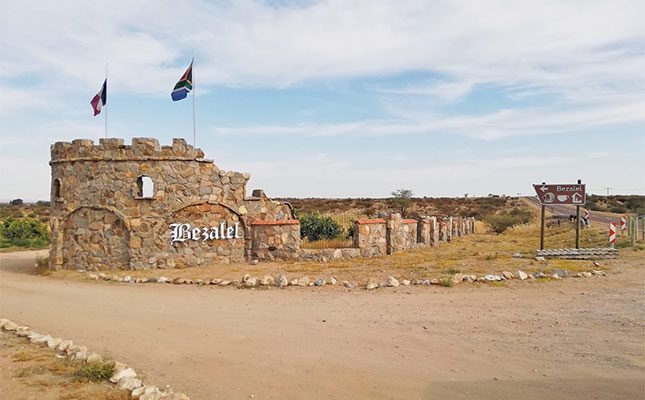
Bezalel Wine and Brandy Estate has evolved from a bulk grape supplier to a producer of small-batch, high-quality wines, brandies, and infusions. Martiens Bezuidenhout spoke to Glenneis Kriel about his family’s journey.


– ADVERTISEMENT –
Popular belief in the wine industry holds that vineyards should be situated near the ocean to produce top-quality wines. Bezalel Estate, between Keimoes and Upington in the Orange River region of the Northern Cape, has shown, however, that its wines, brandies and infusions can compete with the best in the country – proving that exceptional quality isn’t limited to coastal regions.
Over the years, the winery has won numerous accolades for its wines and brandies. But Martiens Bezuidenhout, the fourth generation on the farm, says they stopped entering competitions after the COVID-19 pandemic because of the costs involved and the small quantities and wide variety being produced.
Due to their boutique nature and direct-to-consumer approach, winning awards does not offer any real market advantage for them.
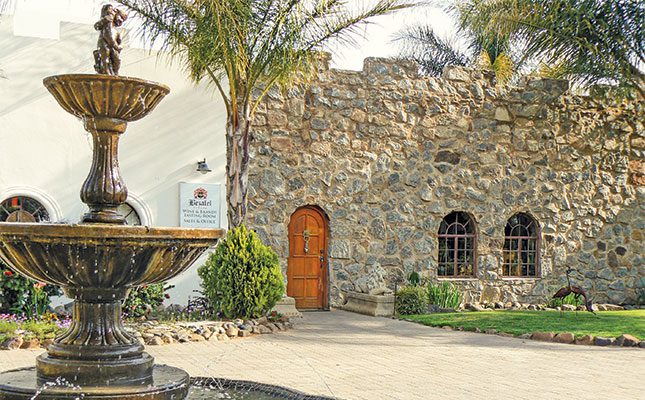
“We are 100% tourist-oriented and sell about 60% of our wines through the cellar door. The rest is sold online, with almost all of those sales coming from people who have visited the farm before,” says Martiens.
About 80% of their visitors are from outside the Orange River Valley, often stopping by en route to destinations ranging from Namibia and the West Coast to Augrabies Falls and the Kgalagadi.
To boost wine sales and diversify their income, Bezalel also operates a farm-to-table restaurant and self-catering accommodation, and hosts weddings, workshops and private events. The winery was recognised with a South Africa’s Top 100 Hospitality Award in 2023, and a Tripadvisor Traveller’s Choice Award in 2022.
They also produce raisins. Of the 42ha under vineyards, 18ha are dedicated to wine grape production, with the remainder planted to table grape varieties that are used for raisin production.
History
Wine grape production in the Orange River Valley started around the 1960s, when KWV sought new areas to produce Chenin Blanc and Colombar grapes for its brandies.
“It was a good agreement. KWV supplied the farmers – who until then mainly grew lucerne, cotton and groundnuts and small-scale grapes for raisins – with planting material, know-how and an offtake. The initiative completely changed agriculture in the region and paved the way for large-scale table and dried grape production,” says Martiens.
Orange River Cellar was launched as a co-operative in 1965, with Martiens’s grandfather, Jannie, among the founding members. This allowed the region to expand into wine production.
For years, however, the region was thought incapable of producing high-quality grapes, which kept prices low.
“It’s ironic, because wine grapes originated in the desert regions of the Caucasus and Persia, not in coastal areas. And while the Orange River region has since proven its ability to produce top-quality wine, many people still associate it with ‘cheap, sweet wine’,” he says.
The misconception was reinforced by farmers who chased high volumes to boost their income per hectare.
“We do have highly fertile soils, which allow us to produce almost double the yields of typical premium regions. Even so, there’s a limit – at some point, high volumes come at the expense of flavour and aroma,” says Bezuidenhout.
Towards excellence
While the first generation relied heavily on KWV for guidance, the next generation of Orange River wine producers grew up immersed in viticulture and went on to study wine grape production or winemaking at Stellenbosch University or the Elsenburg Agricultural Training Institute.
Martiens’s father, Inus, was among those who studied at Elsenburg. On returning home, he began questioning some of the prevailing practices and advocating a new approach to wine grape production that would help the region establish itself as a producer of higher-quality wines.
“Because of the great diversity in the region, my father wanted research to identify which grape varieties performed best in the different microclimatic zones of the area, to better reflect the terroir where they were grown, along with production practices that would support the development of premium-quality wines,” says Martiens.
However, Inus was ahead of his time, and his ideas initially fell on deaf ears. Prices remained low, and producers were rewarded for grapes with high sugar levels rather than overall quality.
“Change came difficult probably because about 80% of KWV’s wine came from the Orange River around that time. We produced bulk wine, which was blended into higher-quality wines to boost volumes. Even today, South African wine of origin can include up to 25% juice grown elsewhere,” says Martiens.
The resistance to change did not deter Inus. While continuing to supply grapes to Orange River Cellars, he established extensive trial blocks to test a wide range of grape varieties and clones under local conditions.These included French varieties that KWV had previously said would not succeed in the region, such as Cabernet Sauvignon, Merlot, Shiraz, and Pinot Noir, as well as German, Portuguese, and Italian varieties.
“My father spent many years sourcing these varieties, planting them to assess their growth, and then making wine from them to evaluate their suitability for producing fine wine. And remember, in those days it took about five years before you had your first harvest,” says Martiens.
At its peak, the trial comprised 30 varieties, which has since been reduced to 19.
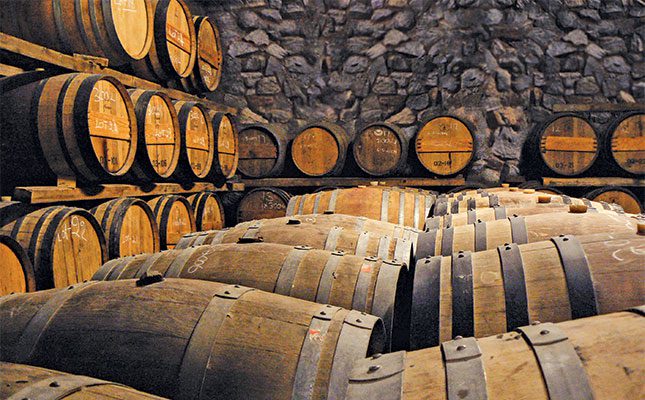
Inus also experimented with making his own wine, initially as a garagiste, and in 1995 built a cellar on the farm, which officially opened the following year.
“If you look at our cellar, you will see that it was built from granite rocks we removed from our lands. Most of the buildings on the farm were constructed by our own hands,” Martiens says proudly.
The winery was initially named Dyasonsklip Cellar but later changed to Bezalel Estate when the farm was officially registered as a wine estate. Martiens explains that Bezalel means “in the shadow of God” or “under God’s protection”.
“The name refers to the best-known craftsman in the Bible, Bezalel, who was chosen by God to build the tabernacle. Just as Bezalel was tasked with creating something meaningful and sharing his knowledge with others, our family sees ourselves as craftsmen in winemaking and farming – creating quality products through careful, hands-on work and passing on our knowledge to others.”
Over the years, the landscape has changed considerably. Orange River Cellars, which the family still supplies with grapes, has also shifted its focus toward producing higher-quality wine and now offers its own premium range. This renewed approach has earned the cellar widespread recognition and awards for its top labels.
A new generation
The region’s transformation toward quality production mirrors Bezalel’s own journey. Over time, the family has refined its practices to produce distinctive, small-batch wines, brandies, and infusions that capture the character of the Green Kalahari.
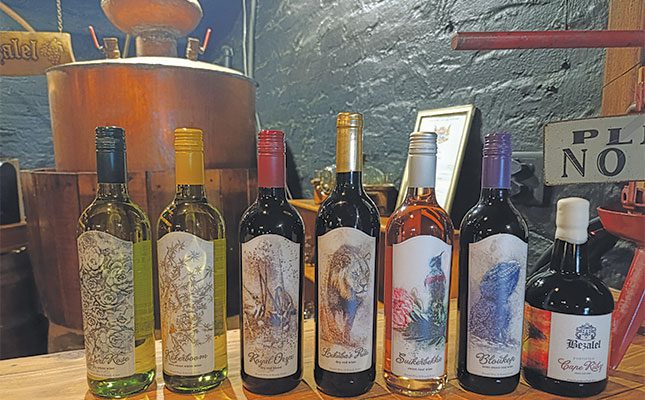
“We produce only a single pallet of each product per batch, equalling 800 to 1 100 bottles per batch,” says Martiens.
Inus retired in 2016, at which point Martiens took over after working alongside him for a year. The retirement was short-lived, however, and Inus, not one for just sitting around, returned to oversee dried grape production at the very next harvest with Martiens focusing on the wine cellars and distillery.
Unlike Inus, Martiens did not formally study viticulture or winemaking.
“My grandfather always said that experience is more important than book knowledge. So, I decided to study for a bachelor’s degree in the fine arts, another passion of mine. My art is used on all our labels. I depict animals from our region for all our red wines, plants for all our white wines, and both on the rosés,” he says.
Production
Pest and disease pressure in the Orange River region has always been low, thanks to the dry climate. This has allowed the Bezuidenhouts to produce organic grapes and wines – initially informally, but with their grapes certified under Ecocert for consumer assurance in recent years.
“Our biggest challenges are hail and rain at the wrong time. Black frost can also be a problem, as it causes the water inside plant tissues to freeze, leading to internal cell damage,” says Martiens.
He adds that they used to burn tyres to raise temperatures when there was a risk of black frost, but this is not environmentally friendly or good for the vineyards.
“We’re exploring alternatives. In Italy, some farmers are experimenting with solar-powered LED rope lights inside the vines to increase temperatures. It’s not only an environmentally friendly solution, but also looks beautiful,” he says.
Fungal disease during wet years can also be a challenge, which they manage using copper sulphate.
“We don’t use any synthetic crop protection or fertilisers, but strategically plant cover crops – primarily lucerne and poppies – to build soil nitrogen levels and suppress weeds,” Martiens adds.
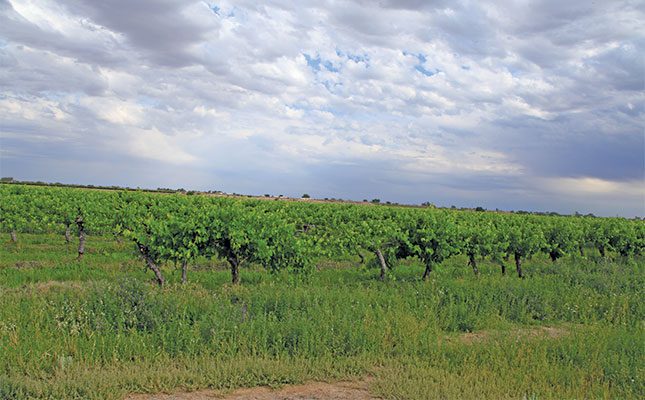
Grape production is capped between 18t/ha and 32t/ha, depending on the variety, with red cultivars on the lower end, and varieties used for brandy, such as Colombar, closer to the higher end.
“The average yield in the region is about 32t/ha, while some producers boast of 60t/ha – but I don’t think you can produce high-quality wine at such volumes,” he says.
The vineyards are flood-irrigated from the Orange River, which offers several advantages. Production costs are low, as all irrigation works through gravity. The flooding deposits highly fertile topsoil across the region. Finally, the large volume of water helps cool the vines, which is vital because the vine stomata shut at high temperatures – which can reach up to 46 °C – bringing growth and production to a standstill.
Product range
Martiens says they used to distil wine on the farm since his grandfather’s time, with his father originally wanting to make his own pot-distilled brandy. Their first 20-year-old pot-distilled brandy was finally released this year, and Martiens will release his first 10-year-old pot-distilled brandy next year. The farm also made the world’s first brandy aged in oak barrels with rooibos wood.
“Our VSOP pot-distilled brandy has an orange skin flavour, made more prominent with the use of the rooibos wood,” says Martiens.
They also make a hanepoot brandy with a warm profile, rich muscat flavour and raisin aromas.
The production of liqueur infusions started as a solution to a problem.
“My father planted lots of date palms around the cellar, but he is the only one who eats dates, and with each harvest every freezer on the farm would get stuffed full of extra dates. So, my mother decided to make a plan and ended up making a liqueur infusion from it, using my father’s brandy,” says Martiens.
“The date infusion tastes like a cross between caramel, honey and spiced rum, with a rich smoothness that makes it great for sipping neat, over ice or in creamy cocktails.”
They also make lemon, coffee, strawberry, peppermint and chilli infusions, all from crops growing on the farm, except for the coffee.
For the Bezuidenhouts, Bezalel is more than a winery – it is a family legacy and a laboratory for innovation.
“We’re always experimenting, always learning, and always looking for ways to express the unique character of our land,” says Martiens.
From traditional wines and pot-distilled brandies to rooibos-aged spirits and fruit infusions, the farm continues to push boundaries while staying true to sustainable, hands-on practices. It is this blend of tradition, quality, and creativity that has transformed Bezalel Estate into a destination for fine wine and unforgettable experiences in the Orange River region.
For more information email Martiens Bezuidenhout at [email protected].
Get trusted farming news from Farmers Weekly in Google Top Stories.
➕ Add Farmers Weekly to Google
✔ Takes 10 seconds · ✔ Remove anytime