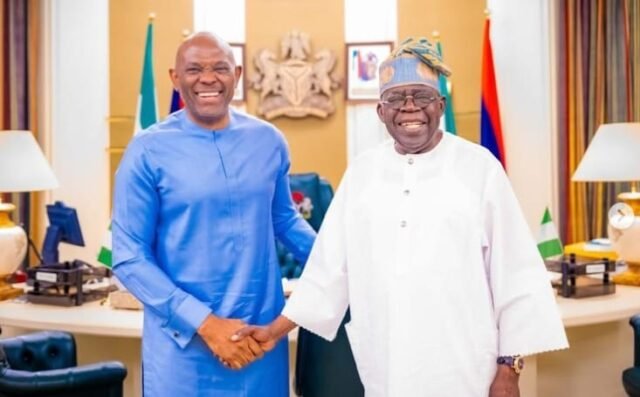


Nigeria’s electricity crisis may finally get some relief if the government takes action on power sector debts, according to Tony Elumelu, chairman of Heirs Holdings, Transcorp, and UBA. After meeting President Bola Tinubu at the Presidential Villa, Elumelu stressed that paying the debts owed to electricity generation companies is critical for increasing supply and reviving industrial productivity.
“All of us who are in the power sector are owed significantly, but in spite of that, we continue to generate electricity. We want to see the payments made so that there will be more provision of electricity to the country. Access to electricity is critical for the development of our economy,” Elumelu said.
## Power Sector Liquidity: The Bottleneck Holding Back Growth
Nigeria’s power generation companies have long struggled under the weight of outstanding payments from the government. Despite generating electricity consistently, many GenCos face cash flow issues that limit their capacity to expand operations or invest in infrastructure. Elumelu argued that clearing these debts could unlock a technical leap in power output. “If payments are made on time, power generators can scale operations and provide more electricity,” he added.
Technically, Nigeria’s power sector lags behind regional peers due to inefficiencies in payment and transmission. Unlike South Africa or Ghana, where utilities have more predictable revenue streams, Nigerian companies often operate on uncertainty. Settling these debts could align Nigeria’s electricity generation with more stable systems abroad, making industries and SMEs less vulnerable to outages.
## Supporting Small Businesses Through Stable Power
Elumelu also emphasized the link between power stability and economic growth. “Mr. President is very passionate about capacitating small and medium-scale entrepreneurs in Nigeria. That is what Nigerian youth need,” he said. SMEs are particularly sensitive to electricity reliability, as frequent outages drive up operational costs and limit expansion. Addressing power sector liquidity could directly boost job creation and stimulate local economies.
Foreign Exchange Stability: A Boost for Investors
The billionaire businessman noted that access to foreign exchange has improved dramatically, removing a major headache for Nigerian banks and investors. “Today, if you get 10 calls on banking issues, not even one is on FX. That market is totally sorted,” he said. Combined with power sector reforms, this stability could create an environment conducive to long-term business planning.
Elumelu highlighted that policy alignment between government reforms and private sector initiatives is essential. Tax incentives, development finance institutions, and monetary reforms all play a role in giving entrepreneurs the tools to thrive.
Why Power Sector Reform Is Non-Negotiable
For Elumelu, resolving power sector liquidity is not optional — it is the single biggest lever for economic expansion in 2026. Increased electricity supply can reduce production costs, attract foreign investment, and boost industrial output. When comparing Nigeria’s situation to regional benchmarks, countries with stable power infrastructure consistently outperform in manufacturing growth and job creation.
“The President realises it, embraces it, and is committed to doing more, especially helping to fast-track the payment of the power sector debt so that power generators can do more for the country. That is very, very critical,” Elumelu said.
In short, timely payments to GenCos could be the spark Nigeria needs to finally overcome its power supply bottleneck and energize economic growth. With SMEs at the center of the conversation and improved FX stability supporting business confidence, the pieces are in place — now it’s about execution.