– Advertisement –
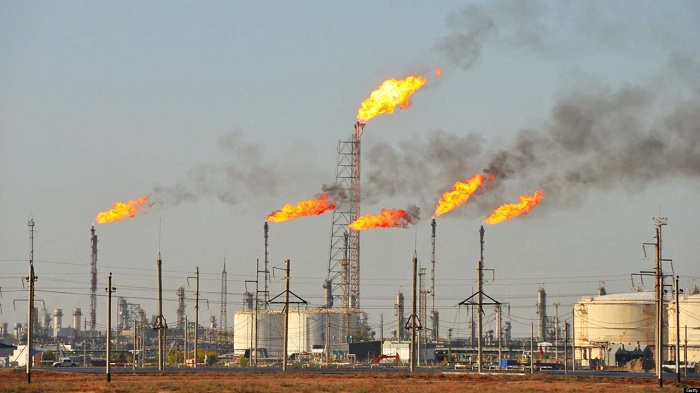
Nigeria LNG Limited (NLNG) has reduced Nigeria’s gas flaring from about 62 per cent to less than 12 per cent through its Train 1–6 operations, reinforcing its position as a leading example of gas monetisation in Africa.
The General Manager, Production, NLNG, Mr. Nnamdi Anowi, disclosed this during a panel session titled “De-Risking Investments in African Oil and Gas Projects” at the Sub-Saharan Africa International Petroleum Exhibition and Conference (SAIPEC) held in Lagos.
Anowi said NLNG’s operations have not only significantly curtailed gas flaring but have also boosted government revenues and contributed to national development. He revealed that the company is considering the development of Trains 8 and 9 as part of plans to further monetise Africa’s vast natural gas reserves and consolidate development gains.
According to him, NLNG’s gas commercialisation model is anchored on revenue certainty, a critical factor in de-risking large-scale energy investments.
“For example, with Train 7, investors needed absolute clarity on revenue sources. Without long-term gas delivery contracts, no investor would commit funds to such a project,” Anowi said.
He stressed that governance and institutional credibility are equally vital, noting that investors must have confidence in a company’s strategy, leadership and technical capacity before committing capital.
On project execution, Anowi highlighted the importance of structured construction models that transfer significant risks away from company balance sheets through firm contractual arrangements that guarantee delivery timelines and cost discipline. He added that proper scoping and detailed engineering design must go beyond preliminary stages to provide financiers with the assurance required to back multi-billion-dollar projects.
Addressing the global energy transition debate, Anowi argued that Africa’s pathway must be just and pragmatic, focusing on decarbonisation without undermining development goals.
“Energy transition in the African context means energy addition,” he said, explaining that the continent must expand overall energy supply to meet growing demand.
He noted that global energy demand is increasingly driven by rising electricity needs, particularly from data centres, which require stable and substantial power supply. Renewable energy alone, he said, may not be sufficient to meet this expanding demand, underscoring the need for Africa to responsibly develop its natural gas resources as a transition fuel.
Anowi warned that when oil and gas projects are perceived as excessively risky, investors tend to withdraw, leading to stalled developments, job losses and lost revenues critical to national growth.
He described risk reduction in the oil and gas sector as a national economic priority, linking it directly to Nigeria’s energy security and long-term development objectives.
For NLNG, he said, de-risking entails maintaining reliable gas supply, honouring long-term contractual obligations and preserving its reputation as a dependable supplier to both domestic and international markets.
He further emphasised the importance of clear and consistent government policies, enforceable contracts and comprehensive project preparation before capital commitments are made. Such measures, he noted, enable financiers to provide funding at lower costs, ultimately benefiting the country.
Strong infrastructure, skilled local manpower and modern technology, he added, also play a pivotal role in reducing operational risks. Efficient pipelines, processing facilities and digital systems enhance safety, reliability and cost efficiency across the lifecycle of energy projects.
Looking ahead, Anowi called for coordinated efforts between government and industry players to expand proven and bankable projects capable of delivering measurable national value, stressing that the coming decade should prioritise investments that drive sustainable growth across Nigeria and the broader African energy landscape.