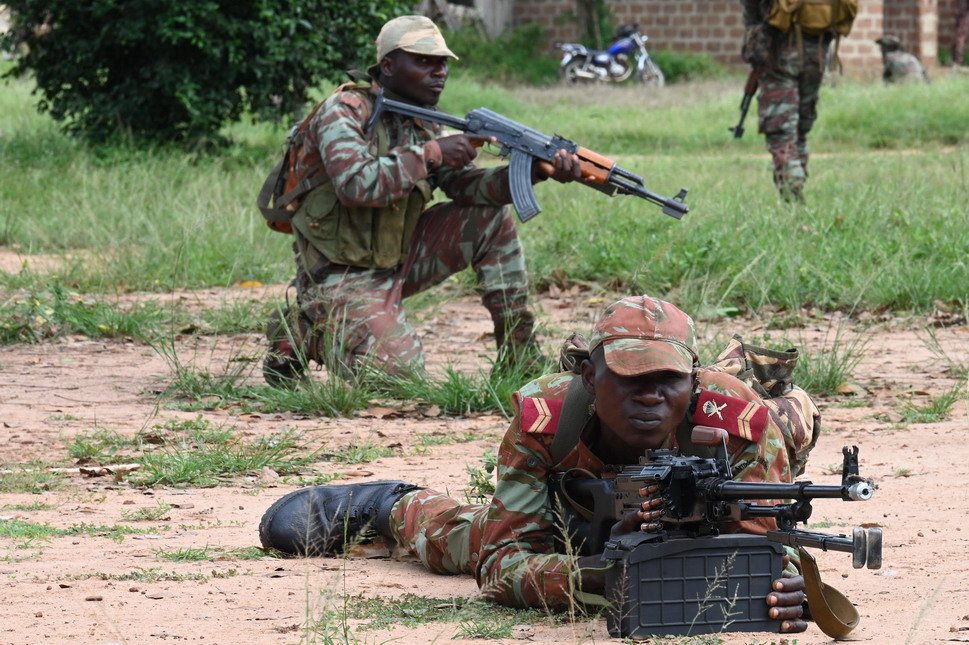
Benin has become a key front for violent militant Islamist groups operating from neighboring Burkina Faso and Niger seeking to expand their operations into coastal West Africa. Since the first attack in Benin in 2019, the security threat to districts in the north has steadily expanded and fatalities increased, reaching an estimated 575 deaths in 2025.
These attacks are a spillover from the unmitigated militant Islamist threat in the Sahelian countries of Mali, Burkina Faso, and Niger that have experienced a sevenfold increase in fatalities since 2019 and are now threatening each of the coastal West African countries.
The government of Benin has responded by equipping and restructuring its defense and security services, deploying thousands of troops to affected areas, and tightening border controls. Yet, tangible results have been slow to materialize. The defense and security forces (DSF) still struggle against nimble militants who have inflicted heavy losses on civilians and soldiers and captured military equipment. These setbacks expose persistent structural gaps and operational shortcomings that constrain Benin’s counterinsurgency strategy.
The DSF’s limited mobility and slow response times allow militants to dictate the terms of engagement. The distance between key bases further entrenches reliance on static posts and checkpoints—often isolated and vulnerable. Aerial assets—drones, helicopters, and surveillance aircraft—are underutilized, and a shortage of trained drone operators further blunts their impact. Many units are also ill-prepared for combat in rugged terrain, with gaps in technical proficiency and asymmetric-warfare skills. Together, these factors sap operational effectiveness and leave the DSF exposed to the more agile militant groups.
These limitations were underscored with the January 2025 overrunning of the heavily fortified Alibori military base, considered a cornerstone of Benin’s security campaign to stabilize the northern border regions. This was followed by subsequent attacks on Beninois forces over the course of the year, including in the W Regional Park, which resulted in the loss of 54 soldiers.
The Expanding Militant Group Threat
The militant threat in Benin has evolved from a peripheral concern into an entrenched reality. Northern regions of the country had functioned mainly as a transit and supply zone for Sahelian insurgent groups since 2018, providing markets for stolen livestock, contraband, artisanal gold, motorcycles, and fuel. Militants moved through border parks with relative ease, and while their presence was known—locals even referred to them as “Boko Haram”—they were not initially seen as a direct menace.
This changed in December 2021, when militants attacked a military outpost in Porga near the Burkinabe border, killing two soldiers and wounding several others. This marked the beginning of a sustained wave of violence in the far north. Analysts indicate that the Katiba Hanifa faction of the al Qaeda-affiliated Sahelian militant group, Jama’at Nusrat al Islam wal Muslimeen (JNIM), has leveraged geographical advantages, manipulated local identities, and employed calibrated violence to entrench itself in Benin’s northern borderlands.

The border areas have long been poorly integrated into national governance, marked by limited infrastructure, scarce public services, and uneven security provision. This patchy state presence has fueled frustration and a sense of neglect among some communities, which militants manipulate to present themselves as a viable alternative. Government measures such as restrictions on transhumance and artisanal gold extraction have at times deepened resentment by undermining local livelihoods. Without parallel efforts to secure those livelihoods, such restrictions can inadvertently strengthen the very groups they aim to weaken.
To mitigate these risks, the government has sought to address the marginalization of frontier zones. Even prior to the emergence of militant groups, the Beninois Agency for the Integrated Management of Border Areas (ABéGIEF) launched several economic initiatives to reinforce state presence and promote development in remote areas. The government subsequently expanded this approach in 2024 through the Resilience and Prevention Program (PREP), which seeks to strengthen the government’s capacity to support communities facing fragility and conflict. PREP adopts an integrated approach combining investments in social cohesion and public services with measures to strengthen livelihoods and food security, alongside land reforms intended to mitigate resource-driven tensions.
Despite these efforts, gains in livelihoods and governance have remained uneven due to their limited scale and geographic reach, constraining their ability to address the structural drivers of insecurity. These shortcomings are compounded by mounting humanitarian pressures, as Benin has hosted approximately 25,000 refugees displaced from JNIM-linked violence in Burkina Faso in recent years.
Geography amplifies these dynamics. Northern Benin’s rugged northern terrain turns borderlands into entry points, sanctuaries, and recruitment grounds for militants. This challenging topography includes the Atacora Mountains and central-north hills, which create hard-to-police spaces suited for guerrilla warfare, weapons storage, and militant hideouts.
The country lies at the convergence of volatile borders with Burkina Faso, Niger, and Nigeria—each home to violent militant groups. Transboundary parks such as the W-Arly-Pendjari Complex further enable cross-border mobility and access to illicit economies—fuel smuggling, poaching, and illegal resource extraction—as well as control over licit trade along key transport corridors. Smugglers and poachers, terrain-savvy, often armed, and already alienated by government-imposed restrictions in protected zones, were instrumental in helping violent extremist groups consolidate their presence in the tri-border zone. Echoing tactics in Burkina Faso and Niger, militants exploit these grievances by offering park access in return for enlistment or logistical support.
Beyond the parks, other illicit-trafficking hotspots sustain militant networks. These armed groups cultivated broad intermediary chains in Benin’s borderlands—coerced or willing—to source fuel, food, trafficked medical products, cattle, and other essentials. Artisanal gold mining in Kouaténa adds cross-border flows of people and resources that militants exploit.
Militant elements exploit social fault lines in northern Benin to further facilitate their entry. Frictions over access to land between pastoralist communities, especially Fulani groups, and sedentary farmers such as the Bariba and Dendi have intensified due to demographic pressure, agricultural expansion, and environmental stress. They have been further reinforced by weaknesses in land governance, including frequent changes in land policy, which tend to redistribute advantages unevenly. This has incentivized actors to contest or manipulate legal claims, thereby perpetuating cycles of grievance and retaliation.
Overlaying these governance challenges are evolving mobility dynamics that compound insecurity. Northern Benin lies along major transhumance corridors from Burkina Faso and Niger, intensifying competition over land and water, particularly during grazing seasons. Border restrictions have increasingly diverted pastoralists onto informal routes, heightening tensions with host communities. These land pressures have fostered abuses—such as arbitrary arrests, inflated fines, and livestock seizures—contributing to the gradual militarization of transhumant groups. At the same time, the transition of formerly transhumant groups toward permanent settlement, driven by economic pressures and state policy, has generated new disputes, as settled herders are often perceived by autochthonous farming communities as illegitimate claimants to land.
Taken together, these intersecting pressures have contributed to the growing ethnicization of conflict, particularly around Fulani identity, deepening social polarization and amplifying the risk of militant exploitation. These vulnerabilities are further exacerbated by local political competition, in which ethnic or religious affiliations are sometimes instrumentalized to consolidate political support, eroding social cohesion and public trust. Corruption, weak accountability, and the limited on-the-ground presence of political leaders in rural areas—many of whom administer their constituencies from distant urban centers—reinforce perceptions of neglect and exclusion, further weakening local mechanisms for conflict regulation.
Militant insurgent groups exploit this environment by portraying themselves as protectors of herders, particularly Fulani communities, who already face stigma and underrepresentation. Violent extremist groups in the Sahel have recruited heavily from the Fulani population, a transnational community of some 35 million people across West Africa (even though the vast majority of Fulani reject extremism). Across the Sahel, militant Islamist leaders such as Amadou Koufa (Mali) and the late Ibrahim Malam Dicko (Burkina Faso) have instrumentalized Fulani grievances over exclusion to recruit youth. This has entrenched what many call “the Fulani question”—the harmful conflation of Fulani identity with violent extremism.
This narrative has hardened over time. Prejudicial portrayals of Fulani herders as criminals or terrorists now circulate in media, popular discourse, and even security and political circles. This perception is increasingly evident in northern Benin, where many affected communities describe violent militancy as a “Fulani threat,” even though they comprise roughly 9 percent of the total Beninois population.
By seizing on this stigmatization to mobilize sympathy and recruitment, militant leaders transform local grievances into vehicles for entrenchment. If unaddressed, this dynamic could replicate the Sahelian pattern in which violent militancy acquires a partial ethnic dimension—one that is both harder to contain and more likely to perpetuate cycles of violence.
Strategic Uses of Violence
In northern Benin, militant groups such as Katiba Hanifa have adopted a calibrated use of violence that evolves with the stage of their territorial penetration. Early in their expansion, they displayed restraint, focusing attacks on security forces and park rangers while avoiding large-scale assaults on villages. From mid-2022 onward, however, violence against civilians escalated sharply, reflecting challenges in securing local support and a growing reliance on coercion to intimidate communities, enforce compliance, and punish defiance.
This coercion has taken multiple forms. Targeted assassinations have eliminated chiefs, community leaders, and suspected collaborators, both to instill fear and to demonstrate the impotence of the state. Kidnapping has emerged as a particularly versatile weapon. While initially directed at foreigners—such as the abduction of two French nationals in Pendjari in 2019—abductions have since focused on local leaders, public officials, traders, and civilians perceived as aligned with the authorities. Kidnappings serve overlapping functions: they enable forced recruitment, provide intelligence through interrogation, punish collaboration or desertion, and intimidate community leaders into silence. Ransom extraction supplements these aims, particularly when wealthy pastoralists or traders are targeted. This makes kidnapping both a political and economic weapon, destabilizing communities, eroding trust in state protection, and reinforcing militant dominance. National parks and remote border zones serve as ideal holding grounds for hostages, exploiting terrain and weak government presence to extend captivity or negotiate terms.

Insurgent violence has also escalated into more direct confrontations with government forces. The January 8, 2025, attack on a fortified military base in Alibori, carried out by around one hundred militants on motorcycles operating from the tri-border area with Burkina Faso and Niger, killed 28 soldiers and marked a shift from opportunistic harassment to deliberate territorial penetration. The April 17, 2025, ambush in W National Park, which left at least 54 soldiers dead, was the deadliest day for Benin’s military since militants entered the country in 2019. Altogether, over 900 Beninois soldiers and civilians have been killed from such attacks, underscoring the ambition of insurgent expansion. While most insurgent leadership, planning, and logistical infrastructure continues to be based in eastern Burkina Faso and southwestern Niger, the trajectory is clear. Militants seek to expand their operational footprint within Benin by increasingly relying on locally rooted intelligence and logistical networks.
Alongside coercion, insurgents pursue softer tactics to secure local acceptance. They offer financial incentives to unemployed youth, assure civilians that neutrality will spare them, and invoke religious duty as a moral justification for recruitment. While the leadership is strongly ideological, motivations among rank-and-file recruits vary. Most join because they face insecurity, economic need, or coercion, and only a marginal fraction demonstrates genuine ideological commitment.
By blending repression with selective accommodation, insurgents not only impose their authority but also, in some cases, succeed in winning tolerance—or even active support—from the very communities they seek to dominate.
Initial Reforms to Strengthen Defense Capabilities
Reforms launched after the 1990 National Conference established civilian supremacy and prohibited soldiers from political activity. Ethnic quotas in recruitment fostered balance, cohesion, and reduced the risk of factionalism. The presidential guard was restructured in 1996 into the Republican Guard and tasked with protecting institutions rather than individual leaders. Peacekeeping deployments abroad further exposed Beninese officers to international standards of discipline, while domestic contributions to development projects improved the military’s standing among civilians.
While helping transform the military into a modern force, these institutional reforms did not translate into effective operational readiness for the emerging threat environment of the late 2010s.
Cognizant of the growing threat from the central Sahel, the government, from 2017 onward, expanded the military presence in the north, reorganizing deployments and equipping units with light tactical vehicles for patrols. By 2018, the Beninois Armed Forces had begun a gradual process of modernizing its capabilities. To improve its infantry combat and tactical mobility in forests and savannahs, the army acquired a fleet of armored carriers (French Bastion, American M113, Chinese ZFB-05, and South African Casspir).
These assets supplemented other acquisitions with high levels of tactical mobility, such as French ACMAT VLRA light tactical vehicles and Chinese Dongfeng CSK-131 light protected vehicles. Training was also intensified, with greater emphasis on counterinsurgency and strengthening international partnerships, particularly with France and the United States.
Parallel institutional reforms reshaped the broader security apparatus. In 2018, the gendarmerie and national police merged into a single Republican Police force under the Ministry of Interior, and in 2020, the National Guard was created as a fourth branch of the Armed Forces to support counterterrorism operations among other missions.
Nonetheless, the first major militant attacks in late 2021 exposed the structural fragility of the armed forces. At the time, the Army numbered barely 7,500 personnel (out of a total population of 14 million) with an annual budget of $93 million. Manpower was insufficient for sustained operations in the north, mobility remained constrained, and intelligence capacity was fragmented. These attacks underscored both the urgency of expediting modernization and the inadequacy of existing reforms to confront asymmetric threats at scale.
In response, the government significantly raised defense spending, with the overall military budget increasing by 60 percent between 2022 and 2024. As a result, equipment and operational capabilities have been upgraded, and conditions for troops and support for families have improved noticeably.
The government launched Operation Mirador in January 2022, deploying nearly 3,000 troops to the northern border, integrating multiple defense and security forces under a unified field command. The government simultaneously initiated recruitment drives that expanded the armed forces to 12,300 personnel in 2024. These investments facilitated the creation of specialized units such as the First Commando Parachute Battalion and the First Armored Group.
Modernization also accelerated through new equipment acquisitions supported by external partners. In 2023, France supplied drones, armored personnel carriers, pickup trucks, and armed Puma helicopters to strengthen troop mobility. China likewise expanded its assistance, providing PMR-50 reconnaissance and combat drones equipped with grenade launchers and other munitions. The United States broadened Benin’s operational toolkit through equipment transfers and training. American-supported training has sought to professionalize new recruits and ensure effective use of this increasingly sophisticated arsenal.
The government has also invested in improving coordination among defense and security forces, recognizing that multiagency operations are essential for addressing the complex, cross-border threats facing Benin. These efforts bring together the military, police, gendarmerie, customs, intelligence services, and forestry units to provide a more adaptive and sustained security response, particularly in border zones vulnerable to violent militancy and trafficking.
At the institutional level, the establishment of the National Defense and Security Council (CNDS) and the Permanent Secretariat of the National Commission for the Fight against Radicalization, Violent Extremism and Terrorism (CNLCREVT) demonstrates a shift toward whole-of-government coordination, linking the Ministries of the Interior and Public Security; Economy and Finance; Agriculture, Livestock, and Fisheries; and National Defense, alongside other DSF agencies.
Benin has also advanced in integrated border management, creating an institutional framework that combines the strategic oversight of the ABéGIEF, the operational reach of the Special Border Surveillance Unit (USSF), and the training mission of the Borders Academy, established in 2023. These developments show growing political will to foster coordinated, multisectoral responses to challenges posed by porous borders.
At the same time, the government has sought to make the DSF more population-centric, recognizing that building trust with local communities is essential to countering militancy. Agencies such as ABéGIEF, which supports border communities through income-generating projects and schools, and the National Peace Coalition, active across communes and departments, have been reinforced.
Operationally, civil-military initiatives have delivered tangible benefits, including the rehabilitation of public schools, expanded access to clean water through new boreholes, and the provision of free veterinary services in remote, livestock-dependent areas. These initiatives complement awareness campaigns and community policing programs aimed at improving living conditions in the northern regions.
Intelligence capacity has also been improved. Agencies now place greater emphasis on engaging local populations to strengthen informant networks, enhance evidence gathering, and develop specialized investigative and analytical units. With international support, investments in data-processing and analysis centers have increased the ability to turn raw information into actionable intelligence. Taken together, these reforms mark meaningful progress toward a more integrated security architecture capable of addressing asymmetric threats.
Continued Gaps in Counterinsurgency Capacity
Nonetheless, important gaps persist for Benin’s DSF system to function effectively at scale. Most notably are weaknesses in rapid-deployment units, aerial mobility, and drone-enabled surveillance—capabilities essential for countering a highly mobile adversary operating across porous borders.
In the air domain, although Benin has acquired drones, surveillance aircraft, and light planes,25 these assets are still too few to cover the rugged northern terrain. They are also underutilized and insufficiently integrated into ground operations, creating an “aerial blindness” that insurgents exploit. Militants conceal their movements in forests, parks, and savannahs and, after attacks, withdraw to cross-border sanctuaries in Burkina Faso and Niger that serve as staging areas and fallback positions. The lack of rapid aerial deployment means Benin’s forces are frequently left reacting to events rather than shaping them.
Compounding this, Benin’s pursuit of cross-border threats has been undermined by neighboring Sahelian countries’ withdrawal from the Economic Community of West African States (ECOWAS) following military coups. Senior officials in Benin have voiced frustration at limited cooperation, citing insurgents’ freedom of movement in border zones and the absence of counterpart security arrangements across the frontier. As President Patrice Talon noted, militants operate “completely at large in neighboring countries.”28 Without formalized bilateral or multilateral mechanisms for operational coordination, Benin is left to confront a transnational threat with purely national tools.
The over-centralization of logistics and force movements add another layer of vulnerability. Operational decisions remain concentrated in a small circle of senior leaders, slowing reinforcement, resupply, and redeployment. This centralization denies field commanders the autonomy needed to adapt quickly to an evolving threat. It also points to underlying institutional frictions between senior commanders with limited field exposure and younger officers facing difficult operational realities.
To reinforce security in the north, the government has established a network of 8 forward operating bases in Malanville, Ségbana, Tanguiéta, Matéri, Karimama, Kalalé, Banikoara, and Abomey-Calavi, complemented by 15 outposts positioned across Ségbana, Tanguiéta, Kérou, Matéri, Banikoara, and Kandi. Nonetheless, these facilities have not yet generated a sufficiently comprehensive or agile security presence along the frontier. The army’s footprint in border zones remains thin, and overstretched supply lines hinder the ability to maintain a sustained presence in rural communities. Major facilities like the base at Kandi are located far from the Burkina Faso–Niger border, creating long response times that militants exploit with hit-and-run tactics.
Nigeria’s experience fighting Boko Haram underscores the risks of this posture. Concentrating forces in large garrison towns reduced casualties within fortified perimeters but left vast rural areas exposed, allowing insurgents to entrench themselves, intimidate isolated communities, and ambush mobile units. Benin now confronts a similar force posture dilemma.
The lesson is clear: hunkering down in fortified bases locks forces in a defensive crouch, creates a static target (especially with militants’ expanded use of weaponized drones), and increases insurgents’ freedom of maneuver. What Benin requires instead is a dispersed network of small, well-protected, mutually supporting forward positions capable of sustaining regular patrols and remaining closely connected to rural populations, backed by quick-reaction forces and air and drone support.
Absent these adaptations, the army’s power projection will remain episodic and reactive.
Training needs to keep pace with these adaptations in counterinsurgency. Thousands of new recruits have joined since 2021, yet the deployment of armored vehicles, drones, and surveillance aircraft demands specialized knowledge and disciplined operators. In practice, undertrained soldiers often underutilize or mishandle such equipment. In the worst cases, stockpiles have fallen into militant hands, with insurgents later flaunting captured weapons in propaganda. Accordingly, leadership, tactical adaptability, and discipline matter as much as weapons.
Intelligence shortfalls are another impediment to Benin’s counterinsurgency. Effective operations against militant groups require an intelligence architecture that fuses inputs from multiple actors, including:
Military reconnaissance from patrols and drones
Police investigations and informant networks
Border surveillance
Civilian and community alert networks
Open-source intelligence from social media and geospatial mapping
In Benin, these streams remain fragmented. Agencies collect data but operate in silos, with little habit of information sharing. The result is duplication, blind spots, and delayed responses. Insurgents exploit these gaps, maintaining tactical surprise and the initiative in major engagements. The large-scale assaults in Alibori (January 2025) and W National Park (April 2025) were not simply military setbacks. They revealed serious weaknesses in early warning, coordination, and threat anticipation.
The net effect is a paradox. Benin’s long-term reforms since the 1990s succeeded in professionalizing the military, embedding civilian supremacy, fostering better ethnic cohesion within the force, and building legitimacy. Post-2017 modernization expanded the army’s size, upgraded its equipment, and shifted doctrine toward asymmetric conflict. Yet the transition to an effective counterinsurgency force remains incomplete.
Turning Capacity into Effectiveness
The task now is to convert capacity into operational effectiveness, ensuring units can move quickly and protect the populations most at risk. This demands reforms that empower field leaders, enhance force mobility, strengthen intelligence, and put community protection at the center of the strategy for countering violent militancy.
Empower adaptive military leaders. Granting local commanders decision-making authority, supported by fortified forward command posts in border hotspots, would shorten decision cycles, strengthen initiative, and enable rapid mobilization. Yet authority alone is not enough. Effective counterinsurgency demands officers who can act on intelligence, manage civilian interactions, and adapt operations in real time. Leadership training must emphasize taking initiative, tactical acumen, and the ability to direct troops effectively under pressure.31 Building this capacity requires systematic training in decentralized command and investment in a professional officer corps, supported by reliable logistics, aerial protection, and terrain-adapted mobility.
Côte d’Ivoire as an Operational Model for Converting Reform into Effectiveness
Côte d’Ivoire’s experience illustrates how these principles can work in practice. After the 2020 Kafolo attack, Abidjan created the Northern Operational Zone, placing all security agencies under a unified command with delegated authority to make rapid, ground-level decisions. This decentralization—paired with professionalization reforms that rebalanced inflated officer ranks and strengthened training through professional military education institutions—produced a more capable force in the field.
Côte d’Ivoire also invested in terrain-adapted mobility, forward operating bases, and emerging aerial surveillance assets. This enabled units to act quickly on intelligence and maintain regular contact with civilian populations in remote border areas. Although gaps remain, this combination of decentralized command, officer development, improved logistics, and mobility contributed to a sharp decline in attacks since 2022, demonstrating how institutional reforms can translate into operational effectiveness. This experience underscores a central lesson for Benin: empowered leaders must be supported by forces that can move quickly.
Pair force mobility with strike capacity. Benin has taken important steps to move away from static deployments by redeploying more military assets closer to hotspots and expanding its special forces and other specialized units. These measures have contributed to limiting cross-border incursions and preventing militants from holding territory. Fielding additional helicopters and drones can further close the gap between intelligence and action.
Strengthen intelligence capabilities. Operational improvements depend on a stronger intelligence foundation to anticipate threats, guide targeting, and ensure that mobility is used effectively. Counterinsurgency requires investment in human capital and institutions, not just equipment. Investing in open-source intelligence (OSINT) and geospatial intelligence (GEOINT) capabilities within the Ministry of Defense, General Staff, and national intelligence services is essential. Strengthening the ability to fuse data from drones, patrols, and open sources into actionable intelligence would improve coordination and link the armed forces with police, rangers, and border guards.
Training must build operational adaptability. Advanced systems must be matched with training that builds operational adaptability. Drones, surveillance systems, and encrypted communications are decisive only when operators can employ them effectively in fluid environments. The goal is to field a force trained for rapid deployment, sharp situational analysis, and timely decision-making. Speed in movement, decision-making, and coordination must become the hallmark of Benin’s operations if it is to outmaneuver agile militant groups.
Benin has broadened its recruitment and training initiatives for drone operators to build a workforce capable of supporting unmanned aerial vehicle (UAV) missions. However, more needs to be done to expand and professionalize these units, including advanced training in bush tracking, ambush navigation, and night operations. Further gains can be achieved by decentralizing logistics and systematically embedding aerial reconnaissance into routine patrols, which would strengthen Benin’s capacity to react swiftly and project force deep into areas where militants operate.
These efforts need to be integrated within a more systematic training architecture. Training must be institutionalized through military academies and specialized schools that incorporate modules on drone operations, geospatial mapping, encrypted communications, and small-unit tactics. Embedding these skills across new recruits would ensure continuity, while international partnerships could bolster officer training.
Merit-based recruitment and promotions. Capability development must also be anchored in accountability. Political interference influences career advancement and limits the military’s ability to undertake sustained reforms. These dynamics contribute to the enduring perception of the armed forces as an instrument of political authority rather than a service focused on protecting the population. To shift this trajectory, promotion and career incentives should reward operational performance, effective intelligence use, and unit cohesion over seniority, reinforcing a merit-based culture consistent with Benin’s professionalization trajectory. Maintaining ethnic balance in recruitment and ensuring equitable promotion will remain vital for cohesion. Regular after-action reviews of major engagements would help ensure battlefield lessons translate into doctrinal adaptation.
Put community protection at the core. Counterinsurgency is not only about neutralizing militant groups but about safeguarding the populations most exposed to their violence. This requires systematic monitoring of indicators such as civilian protection, response times, and territorial coverage. It also demands preparing the next generation of security leaders to embed a community-centered security culture into doctrine. Military academies and training centers have a critical role in this process. By integrating modules on early warning, community engagement, non-kinetic threat mitigation, interagency coordination, and local conflict resolution, training institutions can instill the principle that civilian protection is not a byproduct of operations but the organizing logic of strategy. Anchoring military education in this way would align modernization with legitimacy, ensuring that effectiveness is measured not only by battlefield outcomes but also by the safety and resilience of communities.
Together, these measures would allow Benin to translate steady gains in professionalism and force modernization into battlefield effectiveness. Countering militants does not require overwhelming troop numbers, but rather information superiority, rapid mobility, and institutionalized learning.
Building Trust and Sustaining Pressure
Technological upgrades, expanded recruitment, and training will remain insufficient without stronger institutions. Benin needs to operationalize the national security bodies established under the 2019 constitutional revision, particularly the National Security Council and the National Intelligence Council. These bodies, together with institutions responsible for strategic planning, coordination, and oversight, must be strengthened to ensure resources are managed in a coherent and flexible manner. Strengthening security sector governance is critical to fostering professionalism and effectiveness. Aligning operational capabilities with a clear strategic framework is essential for transforming modernization efforts into sustainable security outcomes.
Successful counterinsurgency depends on more than security measures alone. Stability ultimately hinges less on weapons acquired or insurgents killed than on whether northern communities feel protected, represented, and connected to the national project. Achieving this requires sustained social investment alongside defense and security reform, including stronger local governance, more schools and clinics, secure livelihoods for farmers and herders, and renewed trust in state institutions. In this regard, reinforcing the legal foundations of counterterrorism is essential. Strengthening the independence, transparency, and procedural safeguards of the Court for the Repression of Economic Offences and Terrorism (CRIET) would help restore public trust and ensure that justice supports—rather than undermines—security efforts.
Militants thrive where the state is absent or perceived as arbitrary. Reversing this dynamic requires placing civilian protection, credible justice, and service delivery at the center of strategy.
Benin’s path forward requires aligning short-term measures—such as troop expansion and equipment procurement—with the accelerated implementation of reforms that strengthen leadership, accountability, and interagency cooperation, while anchoring security in the protection of communities. Only by pairing enhanced mobility and rapid-reaction capabilities with modernized governance and meaningful socioeconomic investment can Benin convert its growing capacity into sustained effectiveness against violent militant groups.
Written by Anouar Boukhars for the Africa Center for Strategic Studies and republished with permission. The original article can be found here.