• Business
  • Markets
  • Politics
  • Crypto
  • Finance
  • Intelligence
    • Policy Intelligence
    • Security Intelligence
    • Economic Intelligence
    • Fashion Intelligence
  • Energy
  • Technology
  • Taxes
  • Creator Economy
  • Wealth Management
  • LBNN Blueprints
  • Business
  • Markets
  • Politics
  • Crypto
  • Finance
  • Intelligence
    • Policy Intelligence
    • Security Intelligence
    • Economic Intelligence
    • Fashion Intelligence
  • Energy
  • Technology
  • Taxes
  • Creator Economy
  • Wealth Management
  • LBNN Blueprints

This Startup Thinks It Can Make Rocket Fuel From Water. Stop Laughing

Simon Osuji by Simon Osuji
February 11, 2026
in Artificial Intelligence
0
This Startup Thinks It Can Make Rocket Fuel From Water. Stop Laughing
0
SHARES
3
VIEWS
Share on FacebookShare on Twitter


There’s been this hand-wave, this assumption, this yada yada at the core of our long-term space programs. If we can return astronauts to the moon, we’ll find ice there. And if we find that ice in sufficient quantities, we’ll break it down into hydrogen and oxygen, and yada yada, we’ll use that fuel to fly deeper into the solar system, maybe even to Mars. And if we get to Mars, we’ll find even more ice on the Red Planet. We’ll mine that, combine it with the carbon dioxide in the atmosphere, and yada yada, we’ll use that to fly the astronauts back.

It’s an idea that’s been around since the Apollo era and has been touted in recent years by the likes of former NASA administrator Bill Nelson and SpaceX’s Elon Musk. But here’s the thing: No one has ever successfully turned water into rocket fuel, not for a spaceship of any significant size. A startup called General Galactic, led by a pair of twentysomething engineers, is aiming to be the first.

This fall, General Galactic plans to fly an 1,100-pound satellite, using water to supply its only propellant in-orbit. If it works, it not only could start to solve the yada yada problem, it could make US satellites more maneuverable at a time when there’s a growing possibility of a conflict in space.

“Everybody wants to go build a moon base or a Mars base or whatever. Who’s going to pay for it? How does it actually work?” asks Halen Mattison, CEO of General Galactic. “Our vision is to go build a gas station on Mars,” he adds, “but also eventually build out the refueling network” in between.

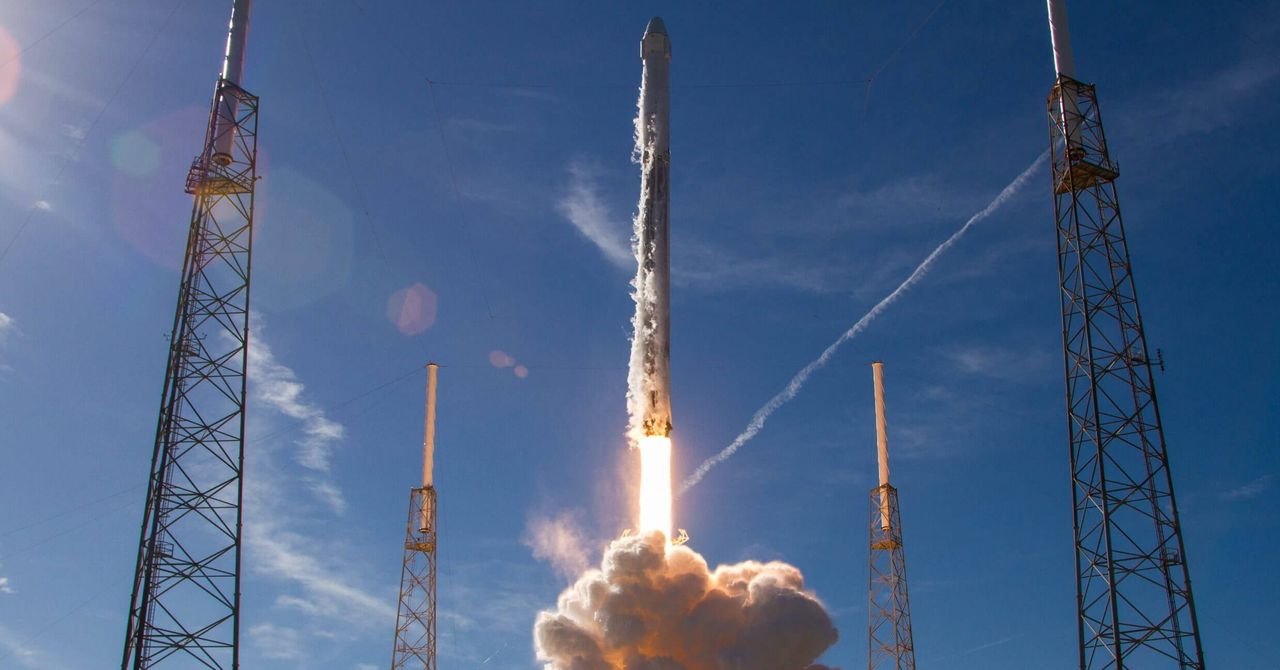
That’s the very, very long-term plan, at least. For starters, Mattison, a former SpaceX engineer, and his CTO, Luke Neise, a veteran of Varda Space, have purchased a spot on a Falcon 9 rocket launch. Scheduled liftoff is October or later in the fall.

There are, to broadly oversimplify, two main kinds of engines that you can use in your spacecraft. You can take a fuel like liquid methane, maybe combine it with an oxidizer, and burn it. That’s called chemical propulsion, and every big rocket you’ve ever seen take off uses some variation of that method, because it provides a lot of thrust, even if it’s not terribly efficient.

Or you can take a gas like xenon, zap it with electricity, and shoot it out of the spacecraft, either as an ionized gas or a plasma. That’s called electric propulsion—again, I’m way oversimplifying. And “it’s very, very low thrust. People jokingly like to call it a burp in space,” Mattison says. “But it lasts forever. The efficiency is crazy.” Enough burps over time can actually be quite effective. Electric propulsion is used to keep satellites in their proper orbit and to power space probes like Dawn, which NASA sent to explore the asteroid belt.

Water isn’t ideal for either electrical or chemical propulsion. But it might be just good enough for both. Unlike, say, liquid methane, you don’t need to worry about water accidentally blowing up your spacecraft or keeping it cooled at -260 degrees Fahrenheit or having it boil off when your satellite faces the sun.

General Galactic plans to demonstrate the two methods during its Trinity mission. For chemical propulsion, it’ll use electrolysis to split the water into hydrogen and oxygen, then burn the hydrogen, with oxygen as the oxidizer. For the electrical propulsion system—this one’s called a “Hall thruster”—it’ll split the water, then apply enough electrical energy that the oxygen becomes a plasma. From there, you use a magnetic field to shape the plasma and shoot it out.



Source link

Related posts

Red Hat unifies AI and tactical edge deployment for UK MOD

Red Hat unifies AI and tactical edge deployment for UK MOD

February 11, 2026
The Best Smart Sleep Pads for Your Most Efficient Sleep (2026)

The Best Smart Sleep Pads for Your Most Efficient Sleep (2026)

February 11, 2026
Previous Post

MSMEDA, Cairo governorate secure $245,216 for urban upgrading project under EU, AFD financing

Next Post

China Bitcoin legalization is priced at 5% but Beijing’s February 2026 Ban 2.0 made one detail brutal

Next Post
China Bitcoin legalization is priced at 5% but Beijing’s February 2026 Ban 2.0 made one detail brutal

China Bitcoin legalization is priced at 5% but Beijing’s February 2026 Ban 2.0 made one detail brutal

Leave a Reply Cancel reply

Your email address will not be published. Required fields are marked *

RECOMMENDED NEWS

My Pivot Journal: Jennifer Daniel’s exciting journey from Talent Management to Product Design

My Pivot Journal: Jennifer Daniel’s exciting journey from Talent Management to Product Design

2 years ago
The Kenyan Diaspora Living in Malaysia: Embracing New Tradition

The Kenyan Diaspora Living in Malaysia: Embracing New Tradition

11 months ago
VFS Global rolls out South Africa passport renewal services in Dubai

VFS Global rolls out South Africa passport renewal services in Dubai

6 months ago
Schuko Sockets in SA: What’s Legal and What’s Not

Schuko Sockets in SA: What’s Legal and What’s Not

2 weeks ago

POPULAR NEWS

  • Ghana to build three oil refineries, five petrochemical plants in energy sector overhaul

    Ghana to build three oil refineries, five petrochemical plants in energy sector overhaul

    0 shares
    Share 0 Tweet 0
  • The world’s top 10 most valuable car brands in 2025

    0 shares
    Share 0 Tweet 0
  • Top 10 African countries with the highest GDP per capita in 2025

    0 shares
    Share 0 Tweet 0
  • Global ranking of Top 5 smartphone brands in Q3, 2024

    0 shares
    Share 0 Tweet 0
  • When Will SHIB Reach $1? Here’s What ChatGPT Says

    0 shares
    Share 0 Tweet 0

Get strategic intelligence you won’t find anywhere else. Subscribe to the Limitless Beliefs Newsletter for monthly insights on overlooked business opportunities across Africa.

Subscription Form

© 2026 LBNN – All rights reserved.

Privacy Policy | About Us | Contact

Tiktok Youtube Telegram Instagram Linkedin X-twitter
No Result
View All Result
  • Home
  • Business
  • Politics
  • Markets
  • Crypto
  • Economics
    • Manufacturing
    • Real Estate
    • Infrastructure
  • Finance
  • Energy
  • Creator Economy
  • Wealth Management
  • Taxes
  • Telecoms
  • Military & Defense
  • Careers
  • Technology
  • Artificial Intelligence
  • Investigative journalism
  • Art & Culture
  • LBNN Blueprints
  • Quizzes
    • Enneagram quiz
  • Fashion Intelligence

© 2023 LBNN - All rights reserved.