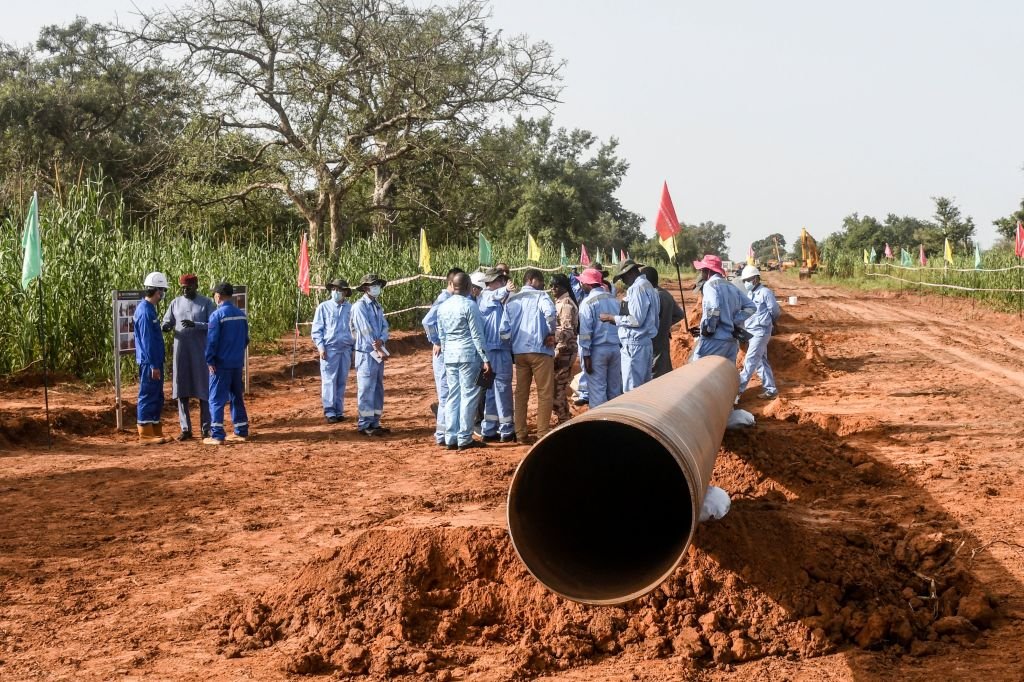
A Nigerien rebel group has attacked oil production infrastructure, which could weaken the country’s finances and threaten its ruling junta’s grip on power.
Created in 2024, the Patriotic Movement for Freedom and Justice (MPLJ) has gained strength through a series of attacks on Africa’s largest pipeline, which stretches nearly 2,000 kilometers from Niger’s oil-rich eastern deserts to Benin’s coast. The rebels’ primary targets are two Chinese oil companies that represent the main source of income for the junta and its leader, Gen. Abdourahamane Tiani.
“Destroying the pipeline means destroying General Tiani,” MPLJ leader Moussa Kounaï told Jeune Afrique magazine for a January 12 article. “This illegitimate regime has made the situation more unstable and more precarious for all Nigeriens. If it survives today, it is solely thanks to oil money. We therefore asked our Chinese partners to stop financing this regime, but they do not listen.”
Niger’s debt to China continues to balloon. In April 2024, the junta took out an advance of $400 million at 7% interest against crude oil sales. But ongoing pipeline sabotage has delayed repayment. Every day the pipeline is shut down reportedly costs the government and its Chinese investors about $10 million in revenue.
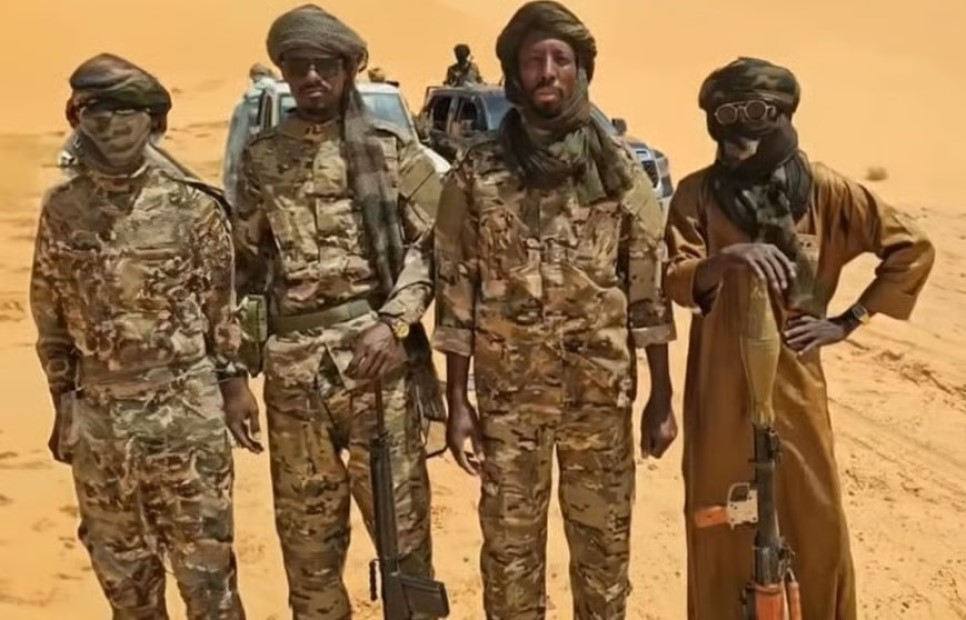
PATRIOTIC MOVEMENT FOR FREEDOM AND JUSTICE
The MPLJ aims to stop production of crude oil in Niger as a means to restore the country’s democratically elected president, Mohamed Bazoum, who has been held prisoner since being deposed in July 2023.
“This oil is ours, but we do not benefit from it,” Kounaï said. “I call on all Nigeriens to join the struggle: our fight is your fight. We are going to cut off Tiani’s oxygen.”
Kounaï formed the MPLJ after a disagreement and split from the Patriotic Liberation Front (FPL), a rebel group based in northeast Niger that emerged in the coup’s aftermath. The FPL fractured and disarmed after its leaders’ arrests.
African Security Analysis (ASA), a Swedish risk consultancy, said MPLJ’s early operations appeared to be symbolic warnings before the group intensified its strikes with one in November and two in December 2025.
“The occurrence of two attacks within the same month and operating area suggests an intent to apply sustained pressure on strategic economic assets and demonstrate resilience in the face of security measures,” ASA wrote in a January 17 report. “The group’s operational approach appears geared toward economic coercion, reputational damage and political leverage rather than territorial control.”
Based in the desert areas surrounding the Agadem oilfields in the Diffa region of eastern Niger, the MPLJ claims to be an offshoot of local pastoral and nomadic clans. The MPLJ says that when China National Petroleum Corp. (CNPC) and its subsidiary, West African Oil Pipeline Co. (WEPCO), built the pipeline on their land, they promised to meet a hiring quota of local staff.
MPLJ second-in-command Brahim Mohamed Hagar said that although some Nigeriens have been hired, “they are almost never people from the region. The Chinese prefer to bring in their own staff from China and recruit a few Nigeriens from Niamey,” he told Jeune Afrique.
Lol Oumar Arami, executive director of the Nigerien Initiative pour la Participation Citoyenne sur les Industries Extractives organization, is a former deputy head of security for the Agadem pipeline who agrees with Hagar’s assessment.
“Since Chinese companies began exploiting Nigerien oil in 2011, promises to recruit from nomadic communities in the area have never been kept,” he told Jeune Afrique. “In addition, funds intended for local populations were diverted by town halls. Even menial jobs such as handling or guarding are carried out by foreigners.”
Kounaï said the Chinese extractive operations were supposed to fuel local development but have failed.
“Here, there is a lack of everything,” he said. “There are no hospitals, no boreholes for water, no schools. Children study in makeshift huts. Herds die because of pollution, without their owners receiving any compensation. And since Tiani came to power, the situation has worsened. Soldiers harass the locals. They search them, threaten them, treat them like enemies. Families that had lived on this land for hundreds of years are being forced to leave.”