



Dylan is a senior researcher at the Revolving Door Project, where she leads RDP’s Economic Media Project.
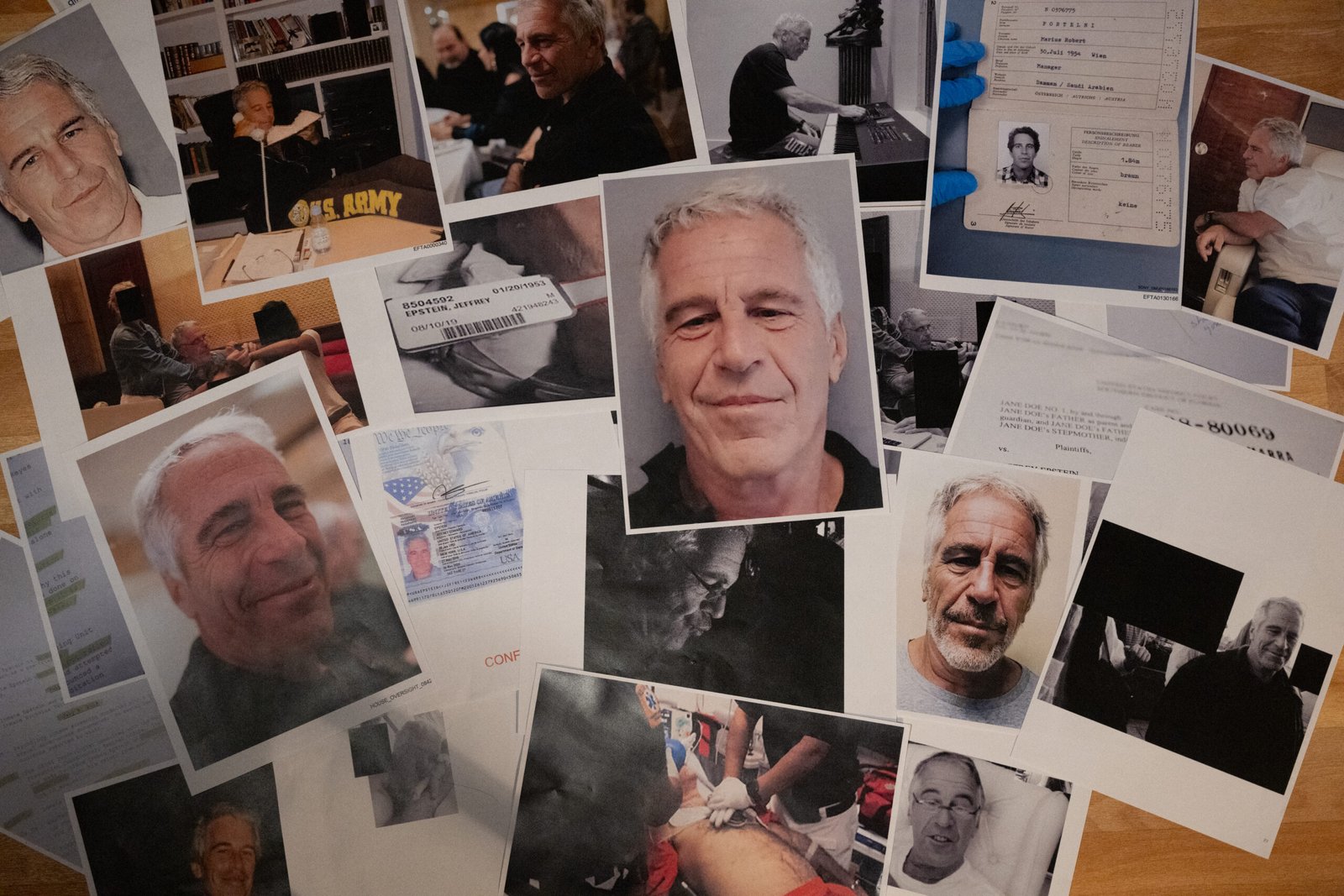
With each successive trove of documents from the Epstein files the Department of Justice releases, we’re treated to rare insight into how our ruling class behaves in private, and how connected many of them were to the late sex trafficker.


The list of elites who maintained close relationships with Epstein is long and includes prominent politicians, media figures, academics, and business leaders. In contrast, the list of people who have faced any meaningful consequences, at least in the United States, is so far quite short. Recently, Brad Karp, a top Democratic Party fundraising “bundler,” was removed as chair of the white-shoe law firm Paul Weiss after his extensive ties to Epstein were revealed. Peter Attia, the celebrity doctor and a new hire at Bari Weiss’ CBS News, resigned from a protein bar company after emails showed him making dirty jokes with Epstein. The economist Larry Summers was deemed toxic after a previous DOJ disclosure, went on leave from teaching at Harvard, and was unceremoniously dropped by numerous institutions. So far, that’s about the extent of it.
To be very explicit, this lack of serious consequences is a choice that powerful people in the United States are making. Meanwhile, in the United Kingdom, Prince Andrew is prince no more, reduced to merely Andrew Mountbatten-Windsor after King Charles removed all of his remaining royal titles; the former CEO of Barclays has been barred from the finance industry; the British ambassador to the United States, Peter Mandelson, has been forced out; Morgan McSweeney, Prime Minister Keir Starmer’s chief of staff and a Mandelson protege, was forced to resign under pressure; and Starmer risks losing his post over the Mandelson appointment. In Slovakia, the national security adviser to the prime minister has resigned. Accountability, if you care to enforce it, is in fact possible.
But on this side of the pond, elites have moved to protect powerful people with Epstein connections (themselves included). Donald Trump is the most obvious example; for any other president, the relationship between the two men would have been a fast track to impeachment. The documents also reveal how many powerful people maintained relationships with Epstein years after he was convicted of soliciting a minor for prostitution in 2008: Among them are former presidential adviser and current podcast bro Steve Bannon, Trump’s Commerce Secretary Howard Lutnick, Tesla et al. CEO and “MechaHitler” progenitor Elon Musk, LinkedIn co-founder Reid Hoffman, Palantir co-founder Peter Thiel, and Microsoft co-founder Bill Gates. Extensive redactions to the documents by the Justice Department have slow-walked matters even further, but on Tuesday, Rep. Ro Khanna took aim by reading off the names of “six wealthy, powerful men that the DOJ hid for no apparent reason” on the floor of Congress.
If there’s to be any measure of accountability, the powerful people who palled around with Epstein, asked his advice, or otherwise provided cover for him need to be cast out of polite society forever.
To make matters worse, many figures who appear in the files have reacted to the ongoing Epstein disclosures in ways that merit aggressive eyebrow raising. After the threat of being held in contempt of Congress, former President Bill Clinton, who for years had a close relationship with Epstein, and former Secretary of State Hillary Clinton have finally, under pressure, agreed to testify before the House Oversight Committee. The Clintons resisted subpoenas, even calling them “invalid and legally unenforceable,” until a bipartisan majority of the House Oversight Committee voted to move the measure to hold them in contempt to the full House. Before that inflection point, they apparently expected Democrats to close ranks around them, as they always have in the past. Republican maneuvering aside, the presumption that noncompliance with a legitimate subpoena from Congress is somehow permissible, or even noble, reflects the air of impunity that ruling elites have toward basic functions of the rule of law.
But make no mistake: If there’s to be any measure of real accountability, the powerful people who palled around with Epstein, asked his advice, or otherwise provided cover for him need to be cast out of polite society forever.
Beyond being packed with salacious gossip and more than enough material for months more of investigative journalism, the newly released documents are striking in how they reveal elites’ widespread casual disdain for us commoners. Perhaps more than anything, the Epstein files are jarring for how transparently they communicate that members of our elite believe that norms, consequences, and even laws don’t apply to them. There seems to be no end to the number of emails from powerful people seeking out Epstein’s advice for how to handle controversies ranging from sexual assault allegations to formal human resources investigations to media scrutiny. (Former Arizona State University professor Lawrence Krauss is probably the clearest example; as Grace Panetta wrote for The 19th, “Krauss turned to Epstein for public relations advice and strategy, sent him possible cross-examination questions for his accusers, forwarded an article on the dos and don’ts for apologizing, and fielded Epstein’s edits and feedback on draft statements.”)
Not to put too fine a point on it, but it should absolutely be disqualifying to seek image management tips from someone like Epstein, particularly years after they pleaded guilty to soliciting sex from a minor. If you’re running to a convicted child sex trafficker to plan your PR strategy, if you’re chummily asking for his insights and making social plans, or if you are seeking advice on how to use professional leverage to induce a subordinate to have sex with you, then you are probably someone we should never hear from again.
It is worth being quite clear here: This does not mean everyone who makes any appearance at all in the files needs to be excised from public life. For instance, the political commentators Megan McArdle, Josh Barro, Ben Dreyfuss, and Ross Douthat recently recorded a podcast episode titled “We’re All in the Epstein Files,” which notes that they all are there because of tweets that a third party shared with Epstein, mostly via a newsletter sent out by Gregory Brown. That sort of thing is not the point. In order to actually clean house, we need to be clear where the dirt is.
But there are many cases where influential figures were cavorting with Epstein for years, maintaining close relationships with a prominent sex trafficker, and often being creepy in the correspondence itself. In many more, the emails became damning in context.
For example, the MIT Media Lab, an initiative heavily backed by billionaire Hoffman, accepted Epstein’s donations for years after his conviction, including soliciting donations in 2016. Importantly, MIT Media Lab staff internally flagged Epstein’s criminal history in 2013 — even sending a helpful link to his Wikipedia page — when Media Lab director Joichi Ito raised him as a prospective funder, according to a report commissioned by the university. Ito ignored those concerns, accepted Epstein’s money, and remained in touch until well into 2019, including exchanging text messages in May, just three months before Epstein’s death.
The new documents also show Ito attempted to arrange a meeting with himself, Hoffman, and Epstein during a 2016 conference, while promising to “drag interesting [p]eople over” from the conference to a nearby house. That awkwardness is compounded by the fact that the MIT Media Lab gave Epstein an appreciation gift even later in 2017. Ito, for his part, did resign from MIT, as well as from the boards of multiple foundations in 2019.
Or take prominent evolutionary biologist Robert Trivers, who continued to solicit funding from Epstein until at least 2017, based on a check from January and a thank you note from August of that year. Trivers, along with Ito, shows how Epstein was still influential in shaping our public discourse long after he became a publicly known sex offender. In a February 2017 email, Trivers even passed along a “small joke” about his association with Epstein being described as a “folly” and he a “fool” for continuing the relationship (an allusion to Trivers’ book The Folly of Fools). Trivers also credited Epstein with coming up with the idea to branch out in order to land speaking gigs, which resulted in a speaking engagement in London.
The Epstein saga has been unfolding against the backdrop of eroding trust in institutions and elites. What it has taught the public so far is that elites were undeserving of our implicit trust in the first place and, more broadly, that their shared interests are only with one another. If we want to move back toward a healthy public sphere where people are able to believe in the system and their ability to shape it, we need to reform it to be worthy of that trust. That will require never again letting people lacking any concept of basic human decency set the terms of our public discourse, dictate our moral frameworks, wield the powers of our government, or serve as our leaders. We need to cast out the creeps — permanently.
Correction: February 10, 2026, 6:49 p.m. ET
This story has been updated to clarify that Summers went on leave from his teaching role at Harvard voluntarily.


