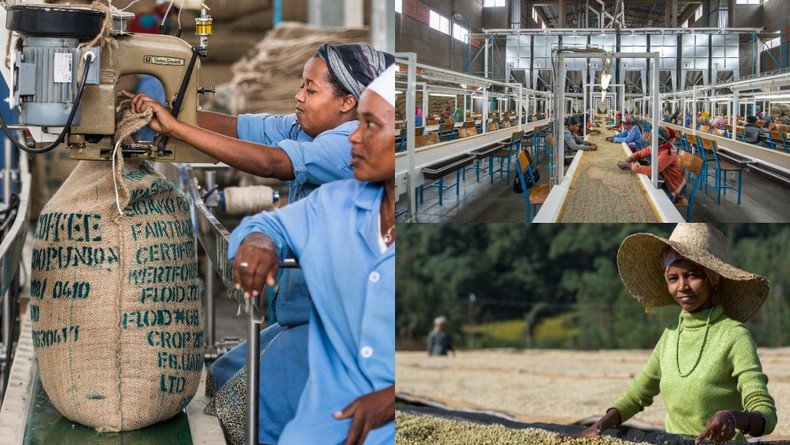
The Russian Ambassador to Ethiopia, Evgeny Terekhin, disclosed the figures in comments to Russian state media, attributing the sharp rise to stronger exports of fertilisers, agricultural machinery, and energy equipment from Russia, alongside growing Ethiopian sales of coffee, flowers, and textiles.
“Traditional export items are acting as growth drivers,” Terekhin said, pointing to sustained demand on both sides.
Coffee has become the most prominent symbol of this trade upswing. Ethiopian beans, particularly from the Sidamo and Harar regions, have gained significant traction among Russian consumers.
Beyond goods, cooperation is extending into digital commerce. Ethiopian authorities have granted Russian online marketplaces a so-called green corridor, easing regulatory barriers for market entry. Wildberries and Russ, now operating under the merged entity RWB, are preparing to launch operations in Ethiopia after adapting their platforms to local consumer preferences.
“The entry of Russian tech companies into the Ethiopian market is no longer theoretical,” Terekhin said, noting that technical integration and product localisation are already underway.
The ambassador also linked the trade boom to progress on large-scale industrial cooperation. At a bilateral intergovernmental commission meeting in November 2025, Russia’s aluminium producer Rusal signed agreements with Ethiopian Investment Holdings to explore the construction of an aluminium plant in Ethiopia.
If realised, the project could position Ethiopia as a regional metals hub and deepen Russia’s industrial footprint on the continent.