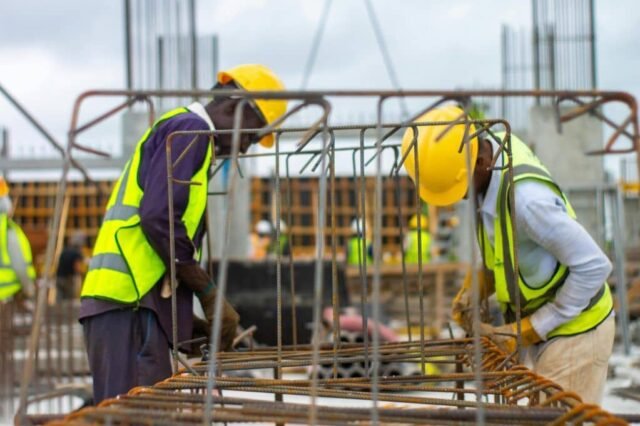


EmmanPlus Porch Homes Nigeria Limited, a real estate enterprise, is advocating for the implementation of budget-conscious construction methods to tackle Nigeria’s escalating affordable housing shortage and enhance accessibility for individuals with lower incomes.
Statistics reveal a significant expansion of Nigeria’s housing deficit, surging from approximately 14 million units in 2010 to an estimated 28 million units by 2024. The increasing rate of inflation, the declining value of the Naira, and the rising expenses associated with building materials have rendered homeownership unattainable for a large segment of the Nigerian population, leaving only about 10% with housing access.
Speaking to reporters in Lagos, Bamidele Akinmola, the firm’s Operations Manager, stated that the adoption of cost-effective construction strategies, adaptable ownership frameworks, and collaborative alliances could substantially increase housing availability and affordability, particularly for those within the low- to middle-income brackets.
He elaborated that a key aspect of the company’s approach involves greater reliance on locally sourced construction materials and innovative building technologies. This aims to reduce dependence on imports and mitigate the impact of inflation on project expenditures.
Akinmola noted that the soaring prices of cement and other essential materials are major factors exacerbating the housing shortfall, with the cost of vital supplies more than doubling in the last three years. “Our strategy is motivated by the necessity to provide homes that are in line with the financial realities of average Nigerians,” he asserted.
“The housing crisis in Nigeria extends beyond mere numbers; it’s fundamentally about affordability and accessibility. We are consciously re-evaluating the design, construction, and financing of homes. By streamlining building processes, utilizing local materials, and employing phased development strategies, we can lower expenses and transfer those savings to prospective homeowners.”
**Related News**
* Racketeering’s Role in Worsening the Housing Crisis for Low-Income Earners
* The Impact of Urbanization on Nigeria’s Housing Shortage
* Engineers Emphasize Creative, Inclusive Solutions for Tackling the Housing Crisis
Akinmola highlighted that inadequate mortgage financing remains a critical challenge for the sector, with Nigeria’s mortgage-to-GDP ratio remaining below one percent.
He announced that the company intends to broaden its rent-to-own and flexible payment programs, enabling potential homeowners to distribute payments over a period, avoiding the substantial initial costs linked to traditional mortgages.
“We understand that numerous Nigerians are excluded from conventional mortgage systems. Our rent-to-own and adaptable payment alternatives are intended to close that divide, offering more families a viable path to homeownership,” he added.
The Operations Manager further disclosed that the firm is collaborating closely with state governments, local communities, and private-sector partners to acquire land through transparent procedures, consistent with developing public-private partnership models within the housing sector.
He emphasized that sustained private-sector involvement is essential to reducing Nigeria’s housing deficit, in conjunction with government-sponsored housing initiatives.
“Large-scale housing developments possess the capacity to stimulate economic growth, generate employment opportunities throughout the construction supply chain, and improve living standards in rapidly growing urban areas. As pressures intensify in cities such as Lagos, Akure, Abuja, and Port Harcourt, our endeavors are geared toward delivering practical, scalable solutions that can gradually reduce Nigeria’s housing gap,” Akinmola concluded.