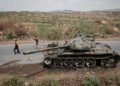
As soldiers struggle with basic shortages, the SANDF’s costly Armed Forces Day celebrations raise uncomfortable questions about priorities, accountability and respect.
Armed Forces Day was introduced in 2012 to honour South African soldiers who served from the era of World War I to today’s deployments. Observed on 21 February, it is intended to be a moment of national remembrance and gratitude.
Yet the way the South African National Defence Force (SANDF) observes this day increasingly raises concern. In its current form, Armed Forces Day has become an expensive national spectacle that is difficult to justify in a country facing economic pressure and a defence force battling declining capacity.
Each year, personnel and equipment are transported from across the country to a single host city. The costs are substantial: transport, accommodation, security and logistics all for a once-off event. Heavy military equipment is moved for display while much of it remains outdated or poorly maintained.
This happens while ordinary soldiers struggle with shortages of basics such as uniforms, combat boots and serviceable equipment. For the public, the contrast is stark and uncomfortable: generals staying in luxury hotels and travelling in blue-light convoys while troops operate under visibly constrained conditions.
The SANDF’s financial record compounds the concern. It has been more than 15 years since a clean audit was achieved. The Auditor-General of South Africa has repeatedly warned about irregular expenditure, weak financial controls and the need for cost containment. Against this backdrop, persisting with a high-cost ceremonial model appears disconnected from reality.
Other armed forces internationally demonstrate that honour does not require extravagance. Many commemorate their military days through decentralised memorial services and local parades held where units are already stationed. These ceremonies retain dignity and meaning while keeping costs under control.
South Africa already has a suitable national site for remembrance: the memorial hall at the De Brug Mobilisation Centre in Bloemfontein. Rather than shifting Armed Forces Day around the country each year, the SANDF could anchor national commemoration at this permanent site, honouring all fallen soldiers in a space dedicated to memory and reflection.
Local units and bases could still celebrate meaningfully. Exercising Freedom of the City in municipalities where units are based would strengthen community ties without incurring the costs of national mobilisation. Such an approach would drastically reduce spending on travel and accommodation.
The savings would matter. Redirected funds could be used to repair grounded aircraft, restore naval capability and address long-standing equipment shortages. More importantly, they could improve the daily conditions of soldiers who continue to serve under increasing strain.
Commemoration should uplift those who wear the uniform, not highlight inequality within it. Armed Forces Day should symbolise respect, humility and responsibility, not excess.
At a time when every rand counts, reforming Armed Forces Day is not about diminishing honour. It is about honouring soldiers properly, by ensuring that limited resources serve readiness rather than display, and substance rather than spectacle.