African universities are gaining global traction, moving from the margins of academia into the mainstream of serious research and innovation. Across the continent, institutions are producing work that shapes international debates in science, health and development.
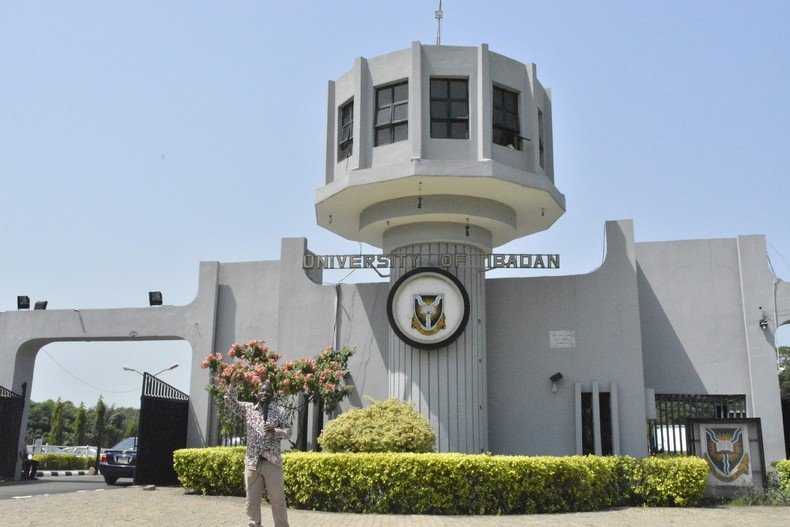
At the forefront is Ghana’s University of Cape Coast, now the highest-ranked university in West Africa, among the top five in Africa, and ranked high for research influence. Nigeria’s University of Ibadan, founded in 1932, followed as the second-best in West Africa, maintaining its reputation as one of the continent’s leading research universities.
These results come from the Times Higher Education World University Rankings 2026, which assess 2,191 universities in 115 countries and territories. Globally, the University of Oxford retained the number one spot for the tenth consecutive year, buoyed by its strong research environment.
Below are the top 10 universities in West Africa in 2026, according to latest ranking:


1. University of Cape Coast (Ghana)
Rank: 801–1000 Overall score: 35.5–38.9
- Teaching: 18.2
- Research Environment: 22.1
- Research Quality: 63.3
- Industry Income: 33.3
- International Outlook: 44.9
The University of Cape Coast is the highest-ranked university in Ghana and West Africa. It also ranks first globally in terms of research influence.
Located within 500 metres of the Atlantic Ocean, UCC is one of the few seafront universities in the world. Academic programmes are organised into five colleges: Health and Allied Sciences; Distance Education; Humanities and Legal Studies; Agriculture and Natural Sciences; and Educational Studies.
2. University of Ibadan (Nigeria)
Rank: 801–1000 Overall score: 35.5–38.9
- Teaching: 29.6
- Research Environment: 15.6
- Research Quality: 63.5
- Industry Income: 22.1
- International Outlook: 43.8
Founded in 1932, the University of Ibadan is Nigeria’s oldest university. Originally an affiliated college of the University of London, it gained full independent status in 1962.
The university offers programmes across 16 faculties including arts, sciences, medical sciences, social sciences, technology and law. UI’s postgraduate school is the largest in Africa, with undergraduate and postgraduate enrolment split roughly 50–50.
3. University of Lagos (Nigeria)
Rank: 801–1000 Overall score: 35.5–38.9
- Teaching: 18.4
- Research Environment: 20.1
- Research Quality: 66.7
- Industry Income: 32.6
- International Outlook: 45.6
Established in 1962, the University of Lagos has 12 faculties covering disciplines such as arts, education, engineering, law, pharmacy, social sciences and sciences.
The institution also hosts 12 institutes and colleges, including the College of Medicine, the Institute of Maritime Studies, UNILAG Business School and the International School.
4. Bayero University Kano (Nigeria)
Rank: 1001–1200 Overall score: 32.1–35.4
- Teaching: 22.5
- Research Environment: 11.0
- Research Quality: 60.7
- Industry Income: 18.0
- International Outlook: 49.6
Bayero University Kano is organised around two colleges—Health Sciences, and Natural and Pharmaceutical Sciences—housing 11 faculties including arts and Islamic studies, engineering, law, management sciences and computer science.
The university has a strong research focus, with centres such as the Centre for Advanced Medical Research, the Centre for Infectious Diseases, and the African Centre for Excellence in Population Health and Policy.
5. Covenant University (Nigeria)
Rank: 1001–1200 Overall score: 32.1–35.4
- Teaching: 21.6
- Research Environment: 27.5
- Research Quality: 50.8
- Industry Income: 55.7
- International Outlook: 42.3
Founded in 2002, Covenant University is a private Pentecostal Christian institution focused on leadership development and applied learning.
It operates four colleges: Business and Social Sciences; Leadership and Development Studies; Engineering; and Science and Technology. The Nigerian Universities Commission ranked it the best private university in Nigeria in 2018 and sixth overall.
6. Landmark University (Nigeria)
Rank: 1001–1200 Overall score: 32.1–35.4
- Teaching: 20.2
- Research Environment: 18.4
- Research Quality: 61.9
- Industry Income: 22.1
- International Outlook: 37.2
Established in 2011 by the Living Faith Church Worldwide, Landmark University focuses heavily on agriculture and entrepreneurship.
The university operates four colleges: Agricultural Sciences; Engineering; Pure and Applied Sciences; and Business and Social Sciences.
7. University of Ghana (Ghana)
Rank: 1001–1200 Overall score: 32.1–35.4
- Teaching: 17.0
- Research Environment: 32.2
- Research Quality: 49.2
- Industry Income: 46.8
- International Outlook: 50.3
Founded in 1948 as the University College of the Gold Coast, the University of Ghana is the country’s oldest and largest public university. It gained degree-awarding status in 1961.
The institution operates a collegiate system with four colleges and is one of the few universities in Africa offering programmes in nuclear physics and nuclear engineering.
8. Ahmadu Bello University (Nigeria)
Rank: 1201–1500 Overall score: 27.3–32.0
- Teaching: 24.3
- Research Environment: 10.0
- Research Quality: 58.9
- Industry Income: 20.6
- International Outlook: 44.2
Ahmadu Bello University, Nigeria’s second-oldest university, was founded in 1962 as the University of Northern Nigeria.
It offers programmes across faculties including physical sciences, social sciences, education, environmental design, medical sciences and law. Research centres include the Africa Centre for Neglected Tropical Diseases and forensic biotechnology hubs.
9. Federal University of Technology, Minna (Nigeria)
Rank: 1201–1500 Overall score: 27.3–32.0
- Teaching: 22.3
- Research Environment: 8.5
- Research Quality: 51.8
- Industry Income: 17.8
- International Outlook: 44.6
Established in 1983, FUT Minna is one of Nigeria’s three federal universities of technology. It operates from the Bosco campus and the main Gidon Kwano site.
Academic units include schools of agriculture, engineering, environmental technology, innovation technology, physical sciences, life sciences and information and communications technology.
10. Kwame Nkrumah University of Science and Technology (Ghana)
Rank: 1201–1500 Overall score: 27.3–32.0
- Teaching: 17.7
- Research Environment: 16.6
- Research Quality: 53.3
- Industry Income: 26.7
- International Outlook: 46.5
Founded in 1951 as the Kumasi College of Technology, KNUST is one of Africa’s leading science and engineering institutions.
The university comprises six colleges spanning agriculture and natural resources, engineering, health sciences, science, humanities and social sciences, and art and the built environment.