– Advertisement –
Goodwill Message presented by Rep. Sir Sam Onuigbo, Member (South East), Governing Board; Chairman, Committee on Security, Climate Change and Special Interventions, North East Development Commission (NEDC), at the book launch of “Blue Economy: Gateway to a Sustainable Future” written By Dr. Chika Ethel Chukwudi, on Thursday, February 5, 2026, in Abuja
I am delighted to extend my warm regards and hearty congratulations to Dr. Chika Ethel Chukwudi on the formal unveiling of her seminal work, “Blue Economy: Gateway to a Sustainable Future.” This publication comes at a defining moment in Nigeria’s developmental journey, when sustainability is no longer aspirational, but foundational to our economic resilience, environmental stewardship, and inter-generational prosperity.
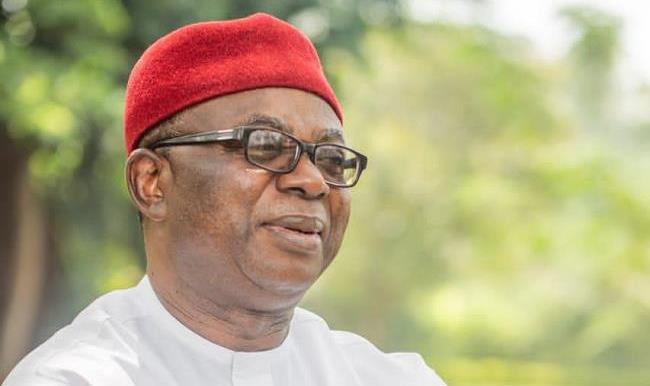
As the sponsor of Nigeria’s Climate Change Act, 2021 – the legal fulcrum for coordinated, cross-sectoral climate action involving public institutions, the private sector, civil society, and development partners – I remain deeply conscious that Nigeria’s future hinges on how effectively climate action is embedded on all sectors of the economy.
President Bola Ahmed Tinubu made this clear when he stated, “The fight against climate change is not merely an environmental necessity but a global economic opportunity.” It is within this robust legal, policy, and institutional framework that the blue economy finds its strongest expression as a catalyst for sustainable growth.
As a futuristic legal framework, the Climate Change Act acknowledges the importance of nature-based solutions by clearly providing for it in Section 27 thus: “The Council shall adopt and promote nature- based solutions to reducing GHG emissions and mitigating climate change issues in Nigeria”.
Interestingly, President Tinubu’s administration has demonstrated commendable resolve in implementing the Climate Change Act as a guiding light for national climate action. A key initiative that stands out among these is the establishment of the Federal Ministry of Marine and Blue Economy. The ministry is strategically designed to enhance the country’s ocean resources while promoting sustainable economic growth by maximizing Nigeria’s 853 kilometres of coastline and an expansive maritime area of 46,000 square kilometres.
The Ministry aims at sustainable use of ocean, sea, coastal, and inland water resources for economic growth, improved livelihoods, and job creation, while preserving the health of aquatic ecosystems. It reflects a deliberate policy shift toward recognising marine and aquatic resources as central to sustainable national development.
Through this dedicated ministry, the government created a focused framework for managing and developing sectors, such as maritime transport, fisheries, aquaculture, coastal tourism, offshore energy, and inland waterways in a coordinated and sustainable development programme.
The Climate Change Act 2021, particularly with its emphasis on nature-based solutions, as well as integrating Natural Capital Accounting, is a forerunner in the establishment of the ministry. By recognising ecosystems, such as mangroves, wetlands, oceans, and coastal habitats as essential tools for climate mitigation and adaptation, the Act underscored the need for institutional structures capable of managing these natural assets sustainably. In Section 29(1), the Act stipulates that the Council shall collaborate with and equip the National Bureau of Statistics for developing Nigeria’s Natural Capital Accounts.
Other remarkable initiatives of the current administration include:
- The National Carbon Market Activation Policy (NCMAP) which aims at generating $2.5–$3 billion annually by 2030 in line with Section 4(i) and (j) of the Act;
- The National Carbon Registry to strengthen emissions reporting and transparency; the Operationalisation of the Climate Change Fund as stipulated in Section 15 of the Act;
- The Presidential Committee on Climate Action and Green Economic Solutions; the updated Nationally Determined Contributions (NDC 3.0) targeting a 32% emissions reduction by 2035;
- The Climate-Resilient Livelihoods Empowerment Programme, a 10-year $250 million intervention;
- Nigeria’s engagement at Abu Dhabi Sustainability Week (2026) to unlock $25–$30 billion in green finance;
- Participation in the Mission 300 Africa Energy Summit to electrify 300 million Africans by 2030; and,
- Engagement on climate-induced mobility through the Rabat Process.
The blue economy therefore represents far more than the sustainable use of marine and aquatic resources – it is a gateway to economic diversification, climate resilience, job creation, and long-term national competitiveness.
Dr. Chukwudi’s work speaks powerfully to these imperatives, offering timely insights that will enrich policy formulation, guide industry practice, and advance academic and professional discourse.
I, therefore, wholeheartedly enjoin this august gathering and others who could not attend in-person to purchase this seminal work and enrich their knowledge. I commend her thought leadership and applaud the organisers and stakeholders for this laudable initiative, which further strengthens Nigeria’s climate and sustainability architecture.
At this juncture, let me plead with Nigerians and policy makers to ensure that they mainstream climate actions in all their development plans. On this note, I wish to call on the Federal Ministry of Education to explore avenues to implement Section 26 of the Act, which mandates the integration of climate change into the various disciplines and subjects across all educational levels.