

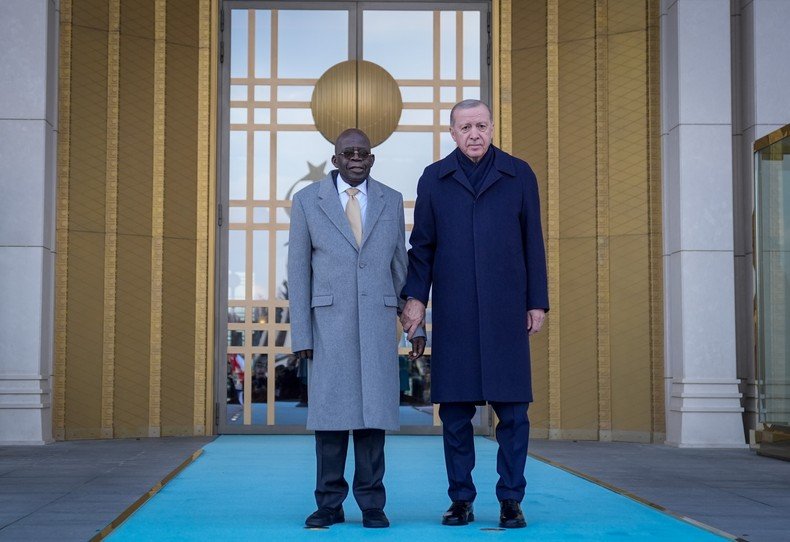
Tinubu’s visit to Ankara marked a renewed diplomatic push to translate Nigeria’s economic reforms into tangible capital and technology inflows.
During the trip, both countries signed nine memoranda of understanding covering trade, energy, defence, media, education, and agricultural standards.
Speaking alongside Turkish President Recep Tayyip Erdoğan, Tinubu said the two countries had agreed to create a Joint Economy and Trade Committee to accelerate investment flows.
“We also discussed opportunities to support our investments in Nigeria. We believe that the joint Economy and Trade Committee, which we agreed to establish today, will be instrumental in this regard,” he said.


Another aspect of the deal
Beyond trade, the agreements include cooperation in energy development, higher education, and Halal Quality Infrastructure, a framework designed to help Nigerian agricultural products meet international certification standards and access new markets.
Tinubu framed the Ankara talks as part of a broader economic vision focused on inclusion and shared prosperity.
“What is very important to the countries is being discussed, trade, business, no restrictions, giving opportunity to those who are ready to learn to work and prosper,” he said, adding that economic reform must also address vulnerability and global peace.
The Turkey visit comes amid growing international pressure on Nigeria to actively pursue foreign investors, following sweeping economic reforms, including the removal of fuel subsidies and exchange rate liberalisation.
“What I would like to see is a continued effort to attract investment into the country, because there is an opportunity now to attract these supply chains,” she said during a panel discussion on financing Nigeria’s role in digital trade and infrastructure.
She added that Nigeria must deliberately pursue investors across global markets to reposition itself as a credible destination for capital.
Security alliance
Erdoğan expressed Turkey’s support for Nigeria’s counterterrorism efforts, saying, “We stand by the friendly people of Nigeria in their fight against terrorism.”
He noted that both countries had identified opportunities for closer collaboration in military training and intelligence exchange.
Nigeria has increasingly turned to Turkish defence technology, including Bayraktar drones and counter-drone systems, to strengthen surveillance and border security.
While Tinubu’s frequent foreign trips have drawn domestic criticism, his administration argues that active economic diplomacy is essential to unlocking growth, easing unemployment, and improving security.
The broader question now is whether the Ankara agreements will translate beyond signatures into investment, jobs, and improved living standards for Nigerians, as the government seeks to turn reform momentum into measurable economic relief.


