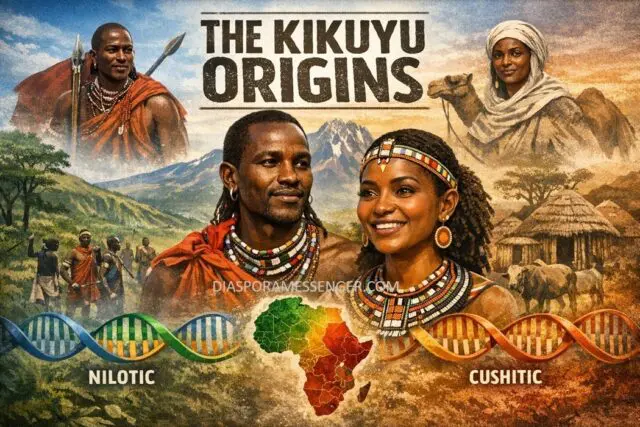
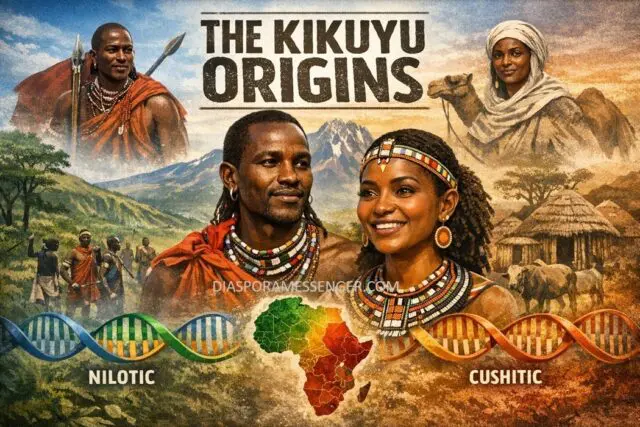
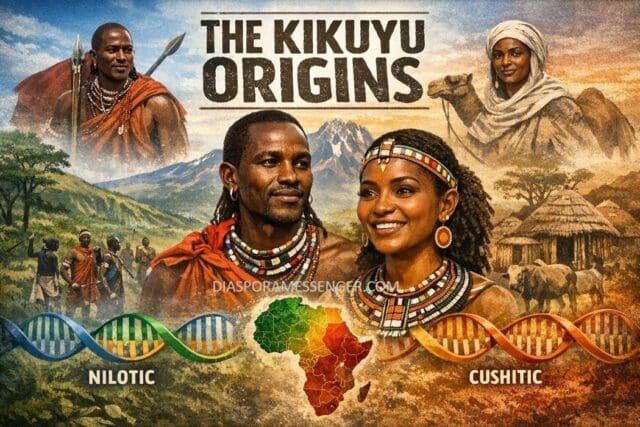
The Kikuyu people (Agĩkũyũ), Kenya’s largest ethnic community, have long been classified as an Eastern Bantu-speaking group. However, modern DNA studies and anthropological research increasingly show that the Kikuyu are not a genetically monolithic population, but rather a highly diverse community shaped by centuries of migration, intermarriage, and cultural integration with neighboring Cushitic and Nilotic groups.
In short, while linguistically Bantu, the Kikuyu are genetically a blended population with deep roots across East Africa.
Bantu Origins: The Core Ancestry
Historically, the Kikuyu trace their linguistic and cultural foundations to the Bantu expansion, a major prehistoric migration that began in West-Central Africa (around the Congo Basin) and spread eastwards into modern-day Kenya.
Genetic research confirms that:
- Most Kikuyu individuals have a significant Bantu genetic component, often the largest single ancestry block.
- This Bantu component links Kikuyu ancestry to other Eastern Bantu populations such as the Meru, Embu, Kamba, Luhya, and parts of the Great Lakes region.
This supports oral traditions that place Kikuyu origins in Central Kenya highlands, after migrating eastward and settling around Mount Kenya.
Nilotic Admixture: A Strong Genetic Influence
One of the most striking findings from modern DNA testing is the high level of Nilotic (Nilo-Saharan) ancestry among Kikuyu people.
Multiple genetic studies and consumer DNA platforms indicate that:
- Nilotic ancestry ranges between 24% and 33% on average.
- In some individuals, Nilotic components reach up to 40–44%.
This reflects centuries of interaction with Nilotic groups such as:
- Maasai
- Luo
- Kalenjin
- Samburu
Historically, Nilotic groups were dominant pastoralists in much of Rift Valley and Central Kenya before Bantu settlement. Intermarriage, adoption, assimilation, and trade led to extensive gene flow into the Kikuyu population.
Cushitic Influence: Horn of Africa Genetic Markers
Another major component of Kikuyu DNA is Cushitic ancestry, associated with populations from the Horn of Africa, including ancient groups related to the Oromo, Somali, Rendille, and Borana.
Genetic findings commonly show:
- 20% to 35% Cushitic / Horn of Africa ancestry among Kikuyu individuals.
- This component reflects earlier Cushitic populations that lived in Kenya before Bantu and Nilotic expansions.
- Archaeological evidence suggests Cushitic-speaking communities were among the first agro-pastoralists in East Africa.
This means the Kikuyu genetic story includes very ancient East African lineages, predating many modern ethnic identities.
A Genetically Mixed People, Not a “Pure” Group
Modern population genetics paints a clear picture:
The Kikuyu are not genetically “pure Bantu”, but rather a hybrid East African population shaped by multiple ancestral streams.
| Ancestral Component | Estimated Range |
|---|---|
| Bantu (Central African) | 35% – 50% |
| Nilotic (Nilo-Saharan) | 24% – 33% (up to 44%) |
| Cushitic (Horn of Africa) | 20% – 35% |
This makes the Kikuyu one of the most genetically diverse communities in East Africa.
Anthropology Confirms What DNA Shows
Anthropologists have long observed that Kikuyu culture reflects borrowed traditions and shared heritage, including:
- Age-set systems similar to Nilotic societies
- Pastoral and agricultural hybrid practices
- Linguistic loanwords from Cushitic and Nilotic languages
- Clan structures linked to assimilation of outsiders
Historically, Kikuyu society absorbed individuals and entire groups through adoption, marriage, and integration — a process known as ethnogenesis.
This explains why the Kikuyu identity is more cultural and linguistic than genetically exclusive.
What This Means for Kikuyu Identity
Rather than diminishing Kikuyu identity, genetic evidence strengthens it by showing that:
- The Kikuyu are a product of East Africa’s shared history.
- Their identity represents unity through diversity.
- Kikuyu culture emerged from coexistence, not isolation.
In essence, the Kikuyu are a living example of African integration, blending Bantu, Nilotic, and Cushitic roots into one of the most influential communities in Kenya.
Conclusion
DNA studies and anthropology agree on one fundamental truth:
The Kikuyu people are a genetically diverse, historically blended population, shaped by ancient migrations and regional interactions across East Africa.
They are Bantu by language, but East African by ancestry — carrying within their DNA the story of Nilotic pastoralists, Cushitic pioneers, and Central African migrants who collectively formed the modern Kikuyu nation.
Published by: DiasporaMessenger.com
Your trusted source for Kenyan diaspora stories, history, and global identity.