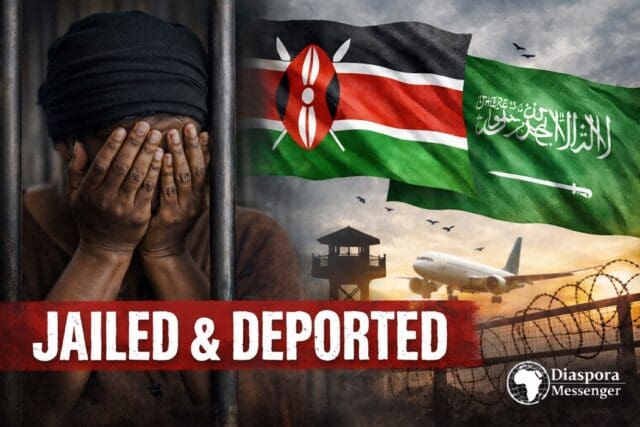
A 34-year-old Kenyan domestic worker, Susan Njeri, has recounted a harrowing ordeal in Saudi Arabia after she was arrested, jailed, and later deported for leaving an abusive employer and falling outside the country’s legal labor system.
Njeri travelled to Saudi Arabia in 2021 in search of better employment opportunities after struggling to support her family in Kenya through irregular casual jobs. At the time of her departure, she was solely responsible for paying school fees for her two children, who were in upper primary and lower secondary school.
– Advertisement –
With no savings to cover travel expenses, she relied on a Nairobi-based recruitment agent who arranged her placement in Saudi Arabia without requiring upfront payment. Like many migrant workers, she accepted the opportunity believing it would offer financial stability for her family back home.
Broken promises and abuse
However, upon arrival, Njeri says the working conditions were drastically different from what had been promised. She was employed in a private household where she alleges that:
- Working hours far exceeded contractual limits
- Rest days were routinely denied
- Wages were paid inconsistently
- Her passport was confiscated by her employer
- Communication with her family in Kenya was severely restricted
Unable to speak Arabic and unfamiliar with local customs, Njeri became increasingly isolated and vulnerable.
– Advertisement –
After seven months of what she describes as “inhumane treatment,” she made the difficult decision to leave her employer in search of alternative work.
Arrest, detention, and deportation
Her situation worsened when she later encountered her former employer. Shortly afterward, Saudi authorities arrested her for residing and working in the country illegally.
Njeri says detention conditions were harsh, citing:
- Severe overcrowding
- Poor sanitation
- Limited access to medical care
- Minimal legal assistance
After an extended period in custody, she was eventually deported back to Kenya.
A broader migrant labor crisis
Njeri’s case highlights persistent concerns over the treatment of African domestic workers in the Gulf region, including Saudi Arabia, where thousands of Kenyan women work under the kafala (sponsorship) system—a system widely criticized by human rights groups for enabling exploitation.
Advocacy organizations have long warned that migrant domestic workers are at high risk of abuse, passport confiscation, wage theft, and restricted movement.
Kenyan labor officials and diaspora advocacy groups continue to urge:
Call for action
Human rights advocates say Njeri’s story is not unique and are calling on both the Kenyan government and Saudi authorities to strengthen worker protections and ensure fair treatment for migrant laborers.
For many families in Kenya, overseas domestic work remains a lifeline—yet stories like Njeri’s underscore the urgent need for reform.


Related
– Advertisement –