

As Africa accelerates toward a 5G future, ambition alone is no longer enough. While many countries across the continent have articulated bold digital and connectivity goals, progress now hinges on the fundamentals and the ability to translate technology into real economic impact.
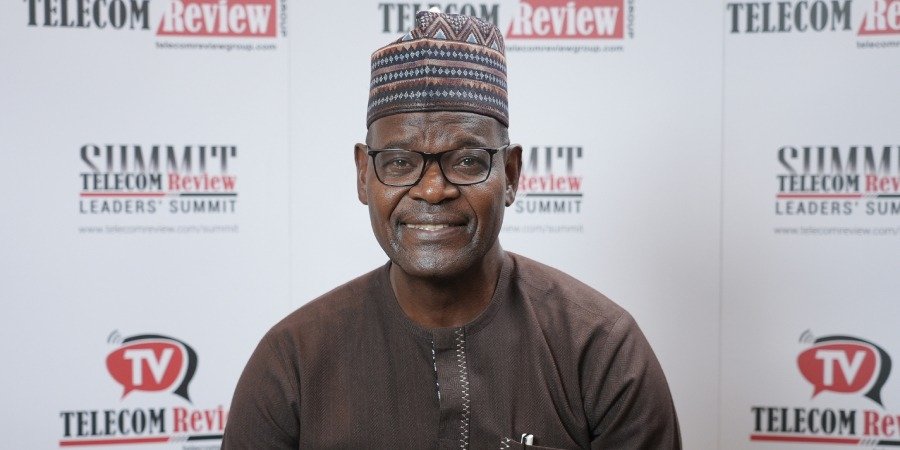
In an exclusive interview during the 19th edition of the Telecom Review Leaders’ Summit, John Omo, Secretary General, African Telecommunications Union, elaborated on Africa’s readiness for 5G rollout, digital sovereignty and cross-border data flows in an African context, and SME development.
Earlier this year, the ATU published a report assessing African nations’ readiness for 5G rollout. Given the technical, regulatory, and infrastructure challenges, what are the ATU’s top priorities to accelerate 5G adoption across the continent?
We are prioritizing the harmonization of spectrum planning and licensing so that operators can commit to long-term goals. Spectrum is where 5G either fails or progresses. The report shows that countries have expressed 5G ambitions, but have yet to publish clear broadband plans to refarm legacy 2G and 3G networks, or spectrum, and set license terms that would match the risk and payback period associated with very expensive 5G networks.
So, our priority is to help regulators agree on which bands, or airwaves, should be used for wide-area 5G coverage, and for high-capacity urban and industrial zones, and then release them under stable, technology-neutral licenses with predictable fees and sufficient duration.
The second priority is to coordinate regional action and track progress towards 4G or 5G across the continent by 2030. The third one is to lower the effective cost of 5G-class connectivity and devices for users and SMEs. The fourth one is to focus 5G deployment on high-impact African use cases and sectors. These include port operations, logistics, the health sector, industrial zones, and so on.
We are actively working with our membership to ensure that the use cases being tested on the continent involve these possible high-impact areas, so that we can then commercially deploy 5G in Africa.
With major investments in subsea cables, data centers, and cloud infrastructure underway across Africa, how does the ATU plan to support member states in building digital sovereignty?
I think digital sovereignty has basically three aspects. The first one is the opportunity for a country to build its own infrastructure and be able to operate it, the second one is services, and the third one is data flows, specifically, how a country manages its data.
So, the first and major priority is capacity building. We are using a number of opportunities to ensure that we build Africa’s capacity in terms of understanding the concept itself and the various variables that play into it.
What role does the ATU play in facilitating cross-border data flows in an exclusively African context?
We are a union of 52 member states in Africa—just about three countries are not members—and that gives us the opportunity to build a coherent, continent-wide platform where people can have conversations on data policy and data management.
Of course, this is banking on the Malabo Convention by the African Union. We are working with operators on the continent, with various governments, and with the African Union to ensure that whatever data practices and data management systems are used on the continent conform to international best practices, while also ensuring that African culture and African data are mined in a respectful way and used in a manner that makes economic sense for the continent.
How is the ATU supporting and accelerating digital transformation initiatives for small and medium-sized enterprises across Africa?
I think the first and most important step is to understand the level of SME involvement in ICT and how ICT can help SMEs in terms of upscaling their operations. We are in talks with a number of international partners about creating a formal research base where we can gather information. Based on the information that we have cleaned and analyzed, we can then intervene accordingly.


