

Australia has significantly tightened scrutiny of international student visa applications following similar crackdowns in the United States, the United Kingdom, and Canada, as governments move to curb abuse of student migration pathways.
Under Australia’s Simplified Student Visa Framework (SSVF), the Department of Home Affairs has moved India, Nepal, Bangladesh, and Bhutan from Evidence Level 2 to Evidence Level 3. This is the strictest verification tier.
The change means applicants from these countries will now face far more intensive financial and academic checks. It marks one of the most significant student visa policy shifts in recent years.
What Has Changed
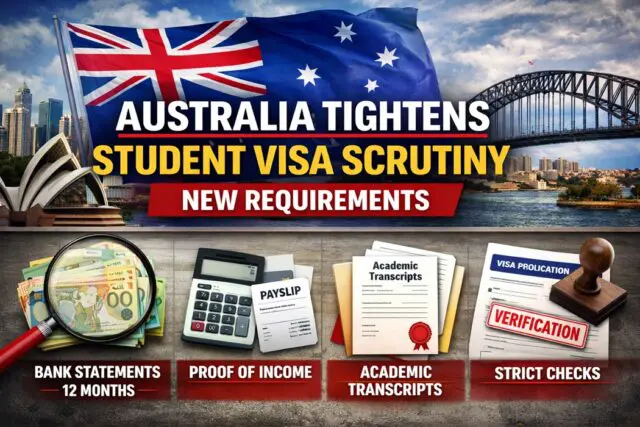
Applicants under Evidence Level 3 must now submit:
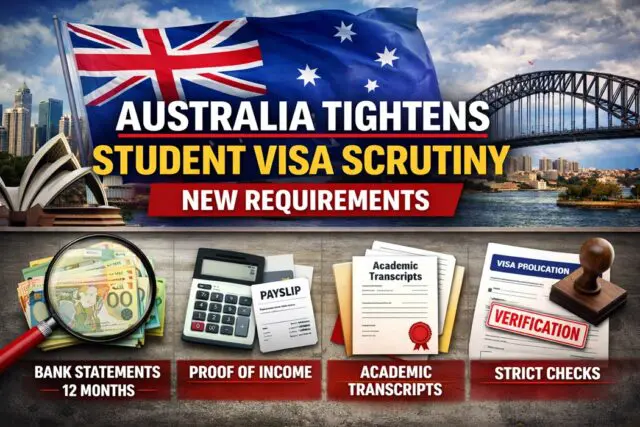
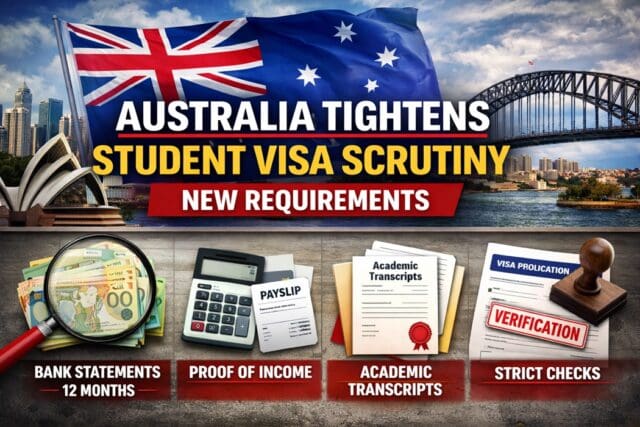
- Up to 12 months of detailed bank statements
- Proof of income and source of funds
- Authenticated academic transcripts and certificates
- Strong evidence of genuine student intent
In addition, visa officers are now mandated to manually verify bank statements. They are explicitly authorised to contact banks, academic institutions, employers, and referees directly to confirm the authenticity of submitted documents.
– Advertisement –
This manual verification process is expected to extend visa processing times from an average of about three weeks to six to eight weeks or longer, depending on case complexity.
Why Australia Is Tightening Controls
Australian immigration authorities say the changes are driven by a sharp rise in fraudulent financial documents and falsified academic records. This is particularly among applicants seeking to use student visas primarily as a pathway to employment or permanent residency rather than for genuine study.
Officials also point to a surge in applicants redirected from other countries.
With the US, UK, and Canada tightening their own international student visa regimes, Australia has seen a growing number of applications from individuals previously refused elsewhere. This situation places increased strain on Australia’s verification systems.
“We are seeing more cases where student visas are being used as a migration strategy rather than for education,” an Australian government source said. “This undermines the integrity of the international education sector.”
Global Trend of Student Visa Tightening
Australia’s move mirrors a broader global trend:
- Canada has slashed international student intake and introduced stricter financial proof rules.
- The UK has restricted dependants for most student visa holders and tightened sponsor compliance.
- The US has increased fraud detection, interviews, and institutional monitoring.
Together, these measures signal a coordinated shift by major destination countries to reassert control over student migration flows. This is particularly amid housing shortages, labour market pressures, and political concerns over migration levels.
Impact on Students and Institutions
For genuine students, the changes mean:
- Longer waiting times for visa decisions
- Higher documentation burdens
- Greater risk of refusal if records are inconsistent or unverifiable
Universities and colleges may also feel the impact, particularly those heavily dependent on enrolments from South Asia.
Education sector analysts warn that while the reforms may protect system integrity, they could also reduce Australia’s competitiveness in the global education market and hurt institutions already facing declining international enrolments.
What Applicants Should Do
Prospective students are being advised to:
- Ensure all financial documents are legitimate, complete, and traceable
- Use only official banks and recognised financial institutions
- Submit verifiable academic transcripts directly from issuing institutions where possible
- Avoid agents offering “guaranteed visas” or shortcuts
Australian authorities have warned that fraudulent documentation can lead not only to visa refusal but also multi-year bans from reapplying.




