
The security landscape of the Horn of Africa and the Great Lakes region continues to be defined not only by conventional conflicts but by the international community’s uneven responses to terror. In the case of the Democratic Republic of Congo, while global attention remains firmly fixed on politically charged AFC/M23 movement in the eastern part of the country, one of Africa’s most lethal and ideologically driven terrorist organizations, the Allied Democratic Forces (ADF) continues to operate in asymmetric fashion.
The ADF today bears little resemblance to its origins as a Ugandan rebel movement. Founded in 1995 and currently under the command of Hood Lukwago and the supreme leadership of Jamil Mukulu, the outfit has evolved into a transnational terrorist organisation formally aligned with the Islamic State’s Central Africa Province (ISCAP). With an estimated 1 500 members, including women and children, its operational conduct reflects classic jihadist doctrine: indiscriminate violence against civilians, systematic targeting of Christian communities, attacks on churches and displacement camps and the deliberate use of terror to fracture social cohesion. On the 29th of October 2025, eight Christians lost their lives during a brazen attack in Gwado. On the 14th of November, the group targeted a health centre run by the Catholic Church, killing 17 people in Byambwe. During the same attack, they set ablaze a maternity block after hacking female patients with machetes. In 2025, the ADF is reported to have killed an estimated 967 civilians, mainly in various attacks predominantly targeting Christian villagers, specifically in Lubero. These are not incidental acts of violence but are strategic tools designed to erase civilian confidence in the state and international protection mechanisms.
Unlike AFC/M23 which, without excusing its violations, demonstrates a degree of command structure, administrative control and governance, the ADF pursues no political legitimacy. It governs nothing and represents no constituency. Its sole currency is fear with open aggression to Christians. One of the group’s leaders, Bonge La Chuma issued a stern warning to Christians, presenting them with three options: “convert to Islam, pay the jizya [tax on non-Muslims], or die”. This distinction matters because international responses have disproportionately leaned towards and made progress in terms of engaging political insurgencies over terrorist outfits, inadvertently according the ADF latitude to operate with limited global attention.
The precedence for decisive international action now exists. In Nigeria, the United States through its department of War, in collaboration with the government of Nigeria, responded forcefully to ISIS-aligned groups operating in Sokoto and Zamfara states. The air strikes targeted ISIS Sahel and the Lukarwa group camps allied to the larger ISIS. The operation was executed through precision strikes conducted from a US Navy vessel in the Gulf of Guinea from which an estimated one dozen Tomahawk cruise missiles were launched. In support of the naval assault, an additional sixteen GPS-guided missiles were launched from MQ-9 Reaper drones.
These actions were justified by clear ideological affiliation with the terror network, persistent mass casualty attacks against civilians, and the demonstrated challenges of local forces to dismantle terrorist leadership structures. By any objective measure, the ADF meets and exceeds these same criteria.
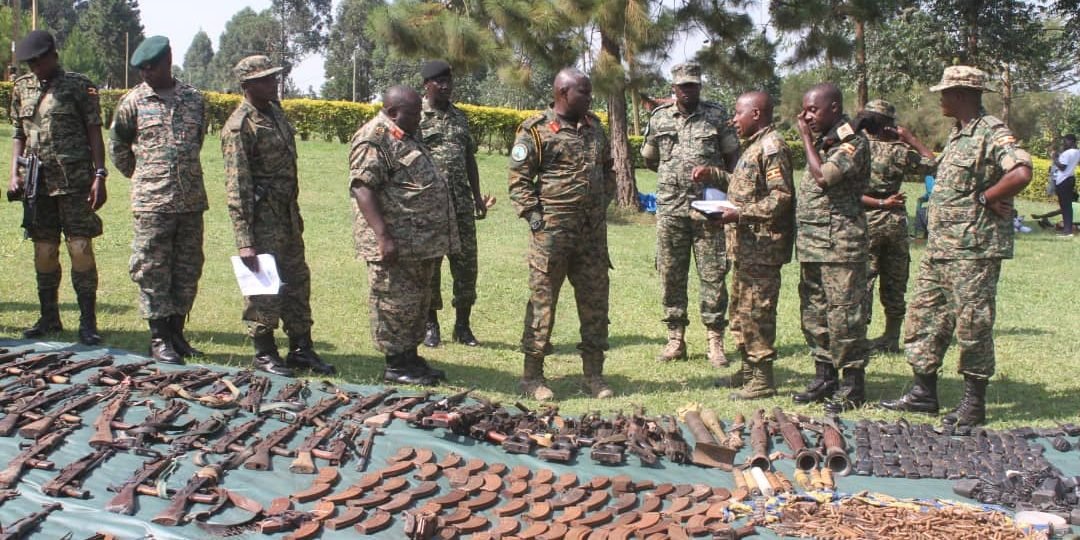
One of the most complicating factors is ADF’s historical association with Uganda. The group’s origins most likely continue to shape how offensive operations are perceived and constrained. Joint UPDF–FARDC operations, particularly under Operation Shujaa, have yielded operational and tactical gains but limited strategic impact. ADF has adapted by dispersing, relocating leadership and shifting its centre of gravity into Ituri Province. The result is a pattern of violence that persists despite sustained military presence, reinforcing the perception of a conflict that is being managed rather than resolved.
For communities in Ituri, this distinction is meaningless. Civilians endure night raids, mass executions, abductions and forced displacement with alarming regularity. ADF’s sporadic attack pattern is not random but calibrated to maintain constant psychological torture. Farmers abandon fields, children miss school and entire villages empty at the mere rumour of an impending attack. Terror for territory, is the objective, according the group control of minerals such as gold as well as timber and coffee which is smuggled across borders through Uganda onwards to the global market.
The United Nations Organization Stabilization Mission in the DRC (MONUSCO) has played a critical role in Ituri with contingents from troop contributing countries such as Bangladesh, Brazil, Indonesia, Kenya, Morocco, and Nepal. Its deployments have protected major population centres, secured displacement camps and enabled humanitarian access in otherwise inaccessible areas. In several instances, MONUSCO’s presence has prevented mass-casualty scenarios and provided early warning that saved lives. However, United Nations Security Council-sanctioned Force’s limitations are equally clear. Mandate restrictions, timely response as a result of limited logistical capabilities, political pressure to draw down, and limited counter-terror intelligence capabilities have reduced its deterrent effect against a highly mobile terrorist adversary. The Mission’s Quick Reaction Forces also fall short in terms of rapid deployment that sometimes takes hours to deploy upon receiving distress calls, further compounded by bureaucratic hurdles prior to response. Equally, procedural bottlenecks such as non-use of drones past 1700hrs curtails the Forces’ abilities to degrade the rebel movement. The ADF therefore exploits these constraints with ease, operating just beyond effective patrol radii and adapting faster than defensive postures can respond. The gap between mandate and threat reality continues to widen.
Lieutenant General Johny Luboya N’kashama, Military Governor of Ituri commanding the FARDC troops in the province has equally registered some successes in his operations, securing the town of Bunia through robust kinetic operations against the ADF and other groups such as MaiMai Nyamilima. His intelligence collection apparatus has further linked various political figures to the instability in the province. He however has fallen short of surmounting the ADF challenge as he faces personnel shortfalls who are ill-equipped and logistically handicapped in terms of basics such as food rations. The welfare schemes in place are struggling as even widows of fallen soldiers face challenges in accessing benefits of their late spouses. Further, the Military Governor has also come under attack from Kinshasa when the former President of the DRC’s National Assembly, Vital Kamerhe, called for the shutdown of the FARDC radio operation in Ituri and dismissed a list of notable politicians that were fuelling violence caused by the ADF and other rebel movements. All these dynamics play out in Ituri’s theatres of combat where troop morale takes a hit.
The people of Ituri experience this neglect as abandonment. Their suffering rarely generates sustained headlines or emergency summits. In strategic terms, a characteristically lethargic and laisse faire approach by the international community has become a force multiplier for ADF. Every unpunished massacre reinforces the group’s narrative of inevitability and divine sanction, while eroding confidence in both national and international protection frameworks.
This is where the Sokoto precedent becomes strategically instructive. US actions against ISIS-aligned groups in North Western Nigeria demonstrated that limited, intelligence-driven operations precision strikes, ISR support, leadership decapitation and financial disruption can reshape terrorist behaviour without large scale intervention. Applied judiciously, such measures alter cost benefit calculations for extremist groups and restore deterrence.
A similar approach toward ADF would not constitute escalation but it would represent strategic consistency. Precision counter terror actions, conducted in coordination with Congolese authorities and regional mechanisms, would signal that ideological terrorism in Africa is met with the similar intensity regardless of geography. Such action would also relieve overstretched forces that currently lack the technological capabilities to strike deep ADF command and logistics nodes.
Equally important is the role of strategic communications and soft power. Terrorist groups thrive in invisibility and misrepresentation. Elevating the voices of Ituri’s survivors, supporting faith leaders and amplifying community-based resilience initiatives are essential components of any sustainable response. Counter-terrorism is not won by force alone; it is sustained by legitimacy and narrative dominance. Peace has also got to be made more profitable than war.
International actors must therefore recalibrate their messaging. ADF violence should be framed unequivocally as transnational terrorism and a crime against humanity, not as a peripheral security nuisance. This reframing matters not only for policy alignment but for restoring dignity to communities whose suffering has been strategically side-lined.
Ultimately, the question confronting the international community is not one of capacity but of will. The tools exist. The legal frameworks exist. The precedents exist. What remains absent is the resolve to apply them consistently. If ISIS-aligned militants in Sokoto warranted decisive action, then ADF by ideology, conduct, and consequence deserves no exemption. In Ituri, that cost is paid daily by civilians who have learned that global silence can be as deadly as the machete. Ending that silence is not merely a moral imperative; it is a strategic necessity. The ADF do merit a Christmas if not, an early Valentines gift from Trump.
Written by Mugah Michael Sitawa PhD, Researcher, Central Africa Observatory on Organized Crime and Violence, Institute for Security Studies; and Major Beautah Mwanza Suba, Kenya Defence Forces, Peace and Security Consultant, Specialist- Soft Power Doctrine.