


Welcome to Foreign Policy’s Africa Brief.
The highlights this year: Africa adjusts to the shifting global order under the second Trump administration, Gen Z-led protest movements roil several governments, citizens respond to sham elections across the continent, and other major stories that stood out in 2025.
Welcome to Foreign Policy’s Africa Brief.
The highlights this year: Africa adjusts to the shifting global order under the second Trump administration, Gen Z-led protest movements roil several governments, citizens respond to sham elections across the continent, and other major stories that stood out in 2025.
Africa Adjusts to Trumpism
Ahead of last year’s U.S. elections, Africa Brief predicted that the battle against China for critical minerals in Africa would be the primary driver of U.S. foreign policy in the region—regardless of who won the presidency.
That turned out to be true—as did our analysis that a victory by President Donald Trump would spell disaster for trade, immigration, and the President’s Emergency Plan for AIDS Relief (PEPFAR), one of the most successful global health programs launched by a president within the U.S. Republican Party.
Still, Trump’s “America First” policies have been far more disruptive than many envisioned. The suspension of funding for PEPFAR and the U.S. Agency for International Development has shuttered clinics and disrupted lifesaving services across Africa. Talk from analysts that these cuts would force African governments to be independent of foreign aid in health care was mostly full of hot air. In Malawi, HIV/AIDS services have all but disappeared.
Predictably, Trump has committed to backing the Lobito Corridor, a railway project intended to export critical minerals from central Africa, and brokered a critical minerals-for-peace deal with the Democratic Republic of the Congo and Rwanda. A Washington summit in July with leaders from five African nations was also dominated by critical minerals talk.
Yet U.S.-African trade relations have been disrupted by Trump’s global tariffs and the end of the African Growth and Opportunity Act, a preferential trade agreement that expired in October. The law had been the foundation of U.S. trade policy with most African nations since it was enacted in 2000.
Importantly, there has also been an acrimonious split between the United States and two of Africa’s biggest economies—Nigeria and South Africa—over the White House’s false allegations of widespread “killing of Christians” and a “white genocide,” respectively.
U.S.-Nigerian tensions peaked in early November, when Trump threatened to go “guns-a-blazing” into the country. As Abuja navigates this friction and seeks to recover from years of sluggish economic growth, it has sought to diversify its trade relationships from Washington, forging closer economic ties with other African nations, Europe, and China.
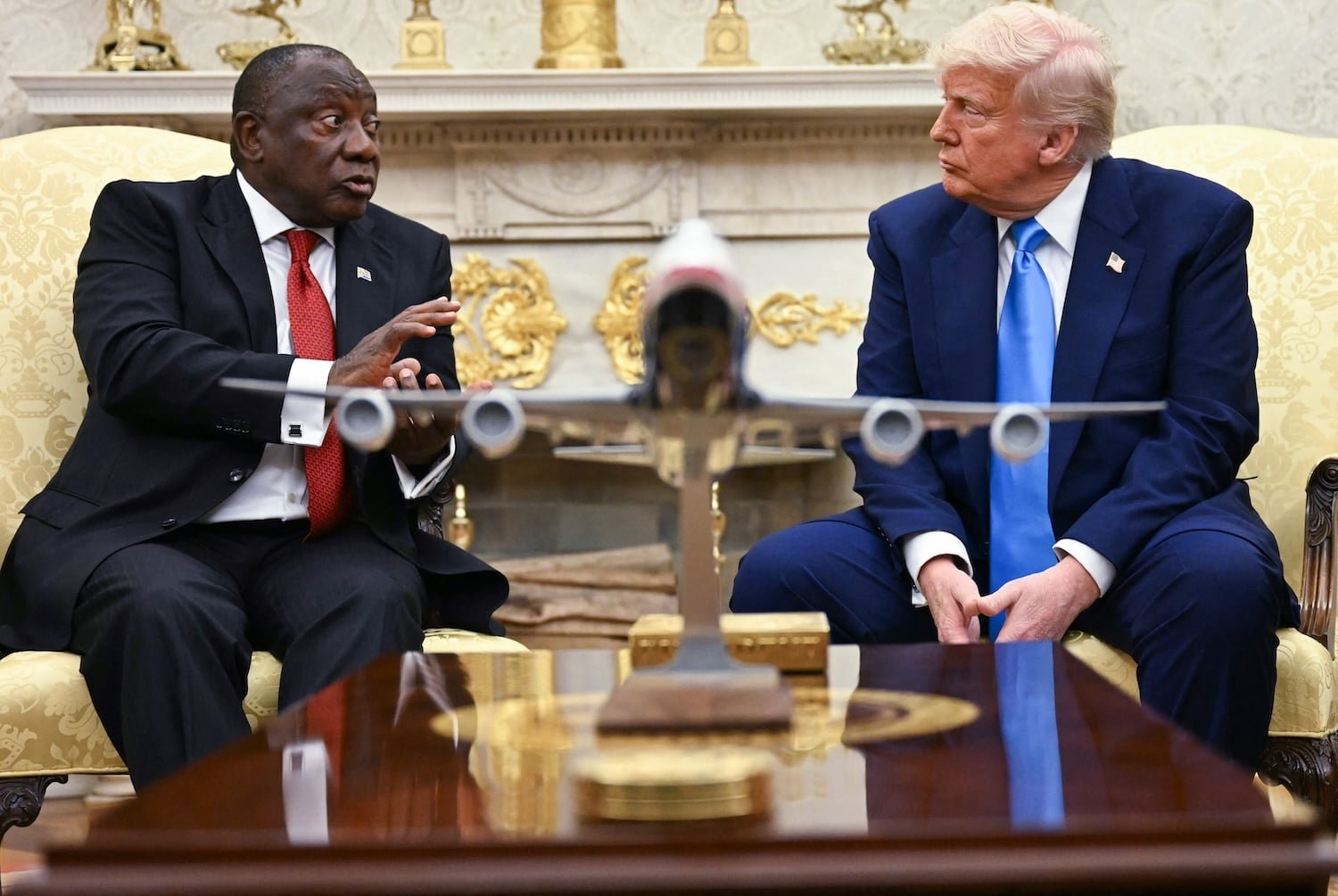
Meanwhile, Pretoria has looked to strengthen trade with its fellow BRICS member nations after an explosive standoff between Trump and South African President Cyril Ramaphosa at the White House in May. Last week, Pretoria deported seven Kenyan workers who were processing U.S. refugee applications in Johannesburg for white South Africans—one of the only communities in the world granted refugee status under Trump’s second administration.
Other African nations have sought to adapt to Trump-style transactional diplomacy to further their own strategic interests. For instance, several countries have struck multimillion-dollar deals to receive third-country migrants deported by the United States—including Equatorial Guinea and Eswatini, which have received $7.5 million and $5.1 million from Washington, respectively.
Morocco has had notable success in leveraging Trump’s return to office. In October, the United Nations Security Council voted in favor of a U.S.-sponsored resolution backing Morocco’s plan for sovereignty over the disputed Western Sahara region, where Rabat is building a $1.2 billion trading port.
Gen Z Demands Change
Across the continent, youth-led movements leveraged social media this year to organize mass protests. These included demonstrations against high taxes and disregard for citizen rights in Kenya, poor health care services in Morocco, and a lack of electricity in Madagascar. Many of those protests grew into larger anti-government movements.
The widespread protests represented deep-seated frustrations with corruption, poor governance, and high levels of youth unemployment. Only 24 percent of the region’s jobs are salaried, according to a World Bank report released in October.
Amid high public discontent, militaries in some countries used the chaos to seize power, as happened in Madagascar in October and Guinea-Bissau in November.
Sham Elections Across the Continent
The public dissatisfaction in Guinea-Bissau over electoral processes and the country’s subsequent coup reflected another trend across Africa this year: rigged elections designed to keep unpopular leaders in power.
In January, Mozambique experienced widespread protests in the wake of the election of President Daniel Chapo and the ruling Frelimo party, which has been in power for 50 years.
Some of the largest protests began on Tanzania’s election day in October, when President Samia Suluhu Hassan effectively ensured her reelection by jailing opponents and violently cracking down on dissent. Hassan claims that she won an eyebrow-raising 98 percent of the vote. The country’s opposition and rights activists said that at least 1,000 protesters were shot dead during the unrest.
There is also unease ahead of Guinea’s Dec. 28 presidential elections, which Gen. Mamady Doumbouya, who seized power in a 2021 coup, is almost guaranteed to win.
Insecurity in Mali
In November, the African Union called for urgent international intervention in Mali over an ongoing fuel blockade in the capital of Bamako by al Qaeda-linked Jama’at Nusrat al-Islam wal-Muslimin, which has paralyzed businesses and led to school closures.
Mali is facing worsening humanitarian conditions and isolation after its junta-led government pushed out international partners in recent years, including the U.N. and France, and deepened ties with Russia and Turkey. With the African Union’s calls going largely unheard, atrocities in Mali are likely to continue unchecked.
Africa on the Global Stage
The Group of 20 summit in Johannesburg in November was historic, as it was the first to be hosted on African soil. It was also boycotted by the United States. In Washington’s absence, Pretoria issued a G-20 declaration that largely focused on issues that are important to the continent but opposed by U.S. officials, including climate change and global wealth inequality.
Meanwhile, some African nations have struck deals with emerging middle powers beyond the region. These include Ethiopia’s security pact with Iran and South Africa’s renewable energy deal with Saudi Arabia.


