The launch of the G20 Clean Cooking Legacy Programme in KwaZamokhuhle, Mpumalanga, in October 2025 offered a practical glimpse of what clean cooking can achieve in Africa when it is designed with communities in mind.
In KwaZamokhuhle, a last-mile Liquid Petroleum Gas (LPG) distribution box with a five-ton holding capacity was deployed and five schools have been retrofitted with high-pressure LPG cooking systems. Twenty young people from the community are also undergoing accredited training to sustain the initiative. The model also enables Small, Medium, and Micro Enterprises (SMMEs) in the community to host 250kg of gas in a spaza shop, so that residents can easily access LPG locally.
What this project demonstrates is not only that clean cooking technologies work, but that their impact multiplies when technology is paired with skills development and local value chains enablement. Access to modern cooking solutions not only improves safe energy access but also creates jobs and has the potential to build local businesses.
The challenge now is to take this proven model and build the systems, financing pathways and national structures that can carry it across South Africa, and ultimately, the continent. This was highlighted at the inaugural African Energy Efficiency Conference in December 2025 hosted by the African Energy Commission (AFREC), where the Energy and Water Sector Education and Training Authority (EWSETA) was part of a panel discussion on scaling clean cooking investments in Africa.
The G20 Clean Cooking Legacy Programme was deliberately designed in phases, driven by EWSETA and Eskom under the guidance of the Department of Electricity and Energy. Phase 2 will align with Eskom’s ongoing Air Quality Offset initiative across the Highveld, with plans to reach up to 96,000 households.
Achieving scalability in clean cooking initiatives requires both funding and coordinated efforts. Crucially, the funding exists. Institutions like the OPEC Fund the World Bank and the African Development Bank’s Mission 300 initiative have funding earmarked specifically for clean cooking. Some funding agreements are already under discussion at the National Treasury level. The opportunity now lies in putting the right national structures in place to channel this support into impact at scale.
Establishing a dedicated clean cooking programme unit would create a central point for policy alignment, implementation and financing. A programme unit would make it easier to coordinate efforts, attract international funding and support the communities and small businesses ready to adopt these solutions.

With the right structure in place, communities and SMMEs would have a clear place to access blended funding, grants and affordable loans specifically designed to support clean cooking and local businesses. This is the shift clean cooking has been waiting for. Not charity, but investment that encourages real businesses for real jobs.
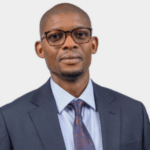
Teslim Mohammed Yusuf, Executive for Planning Monitoring and Evaluation at EWSETA
Beyond policy and financing, scale ultimately depends on people. Clean cooking must be integrated into skills pipelines so that adoption is supported by a capable, local workforce.
This means building awareness at a national level, encouraging women and young people to see clean cooking as a sector worth entering. It also means working with higher education institutions to integrate clean cooking, through short courses, research, the development of standards and digital learning options that make this knowledge easy to access.
The Clean Cooking Outcome is the only Energy Transition Working Group outcome to have been endorsed by all G20 member states, giving clean cooking unprecedented global momentum. For Africa, where more than 900 million people still lack access to clean cooking, the implications of getting this right are significant.
KwaZamokhuhle shows what is possible when clean cooking is implemented thoughtfully at community level. The technology is there, the models are tested, and the funding exists. What we now need are the structures that help governments and communities absorb that funding and turn it into sustainable long-term change.
By Teslim Mohammed Yusuf, Executive for Planning Monitoring and Evaluation at EWSETA