


Jami Nash, founder of Electronic Cemetery
As E-waste grows, so does the effort to combat its harmful impact. Electronic Cemetery, an e-waste recycling company, reflects this as it grew from an essentially informal small-scale operation into a structured and compliant company.
Founded by Jami Nash, Electronic Cemetery started out as a one-person venture with a bakkie and a handful of clients. Nash explains, “In the early days, it was ad hoc. I was doing everything myself: collections, dismantling, sales, and eventually, I burnt out. Registering the company brought structure and delegation. That’s when things really started moving. The operations were also greatly improved in 2021, when the Extended Producer Responsibility (EPR) regulations came into effect.
Despite this operational expansion, Nash attributes the company’s resilience to its community-based approach.
“We’ve always been community-focused,” he says. “Most of our staff come from people we know and trust. We pay above minimum wage where possible and invest in training. That’s what builds a loyal, skilled team.”
Training is facilitated through Refurb SA, Electronic Cemetery’s sister company, responsible for refurbishment, repairs, and learnership placements. “Some of the learners who started with us are now full-time employees,” Nash notes. “It’s about capacity building, giving people the chance to learn, grow, and stay in the sector.”
Infrastructure development in Hammersdale
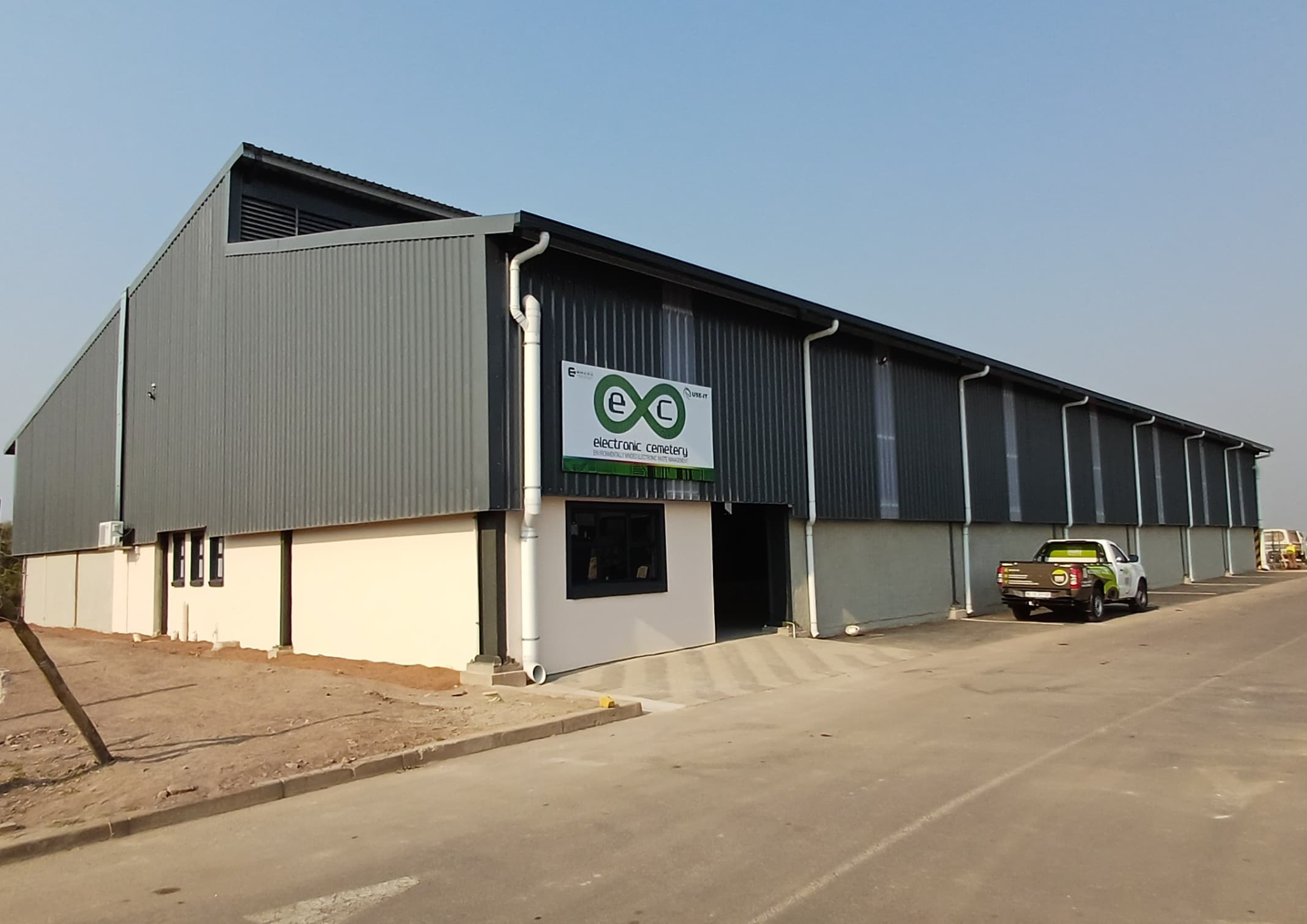
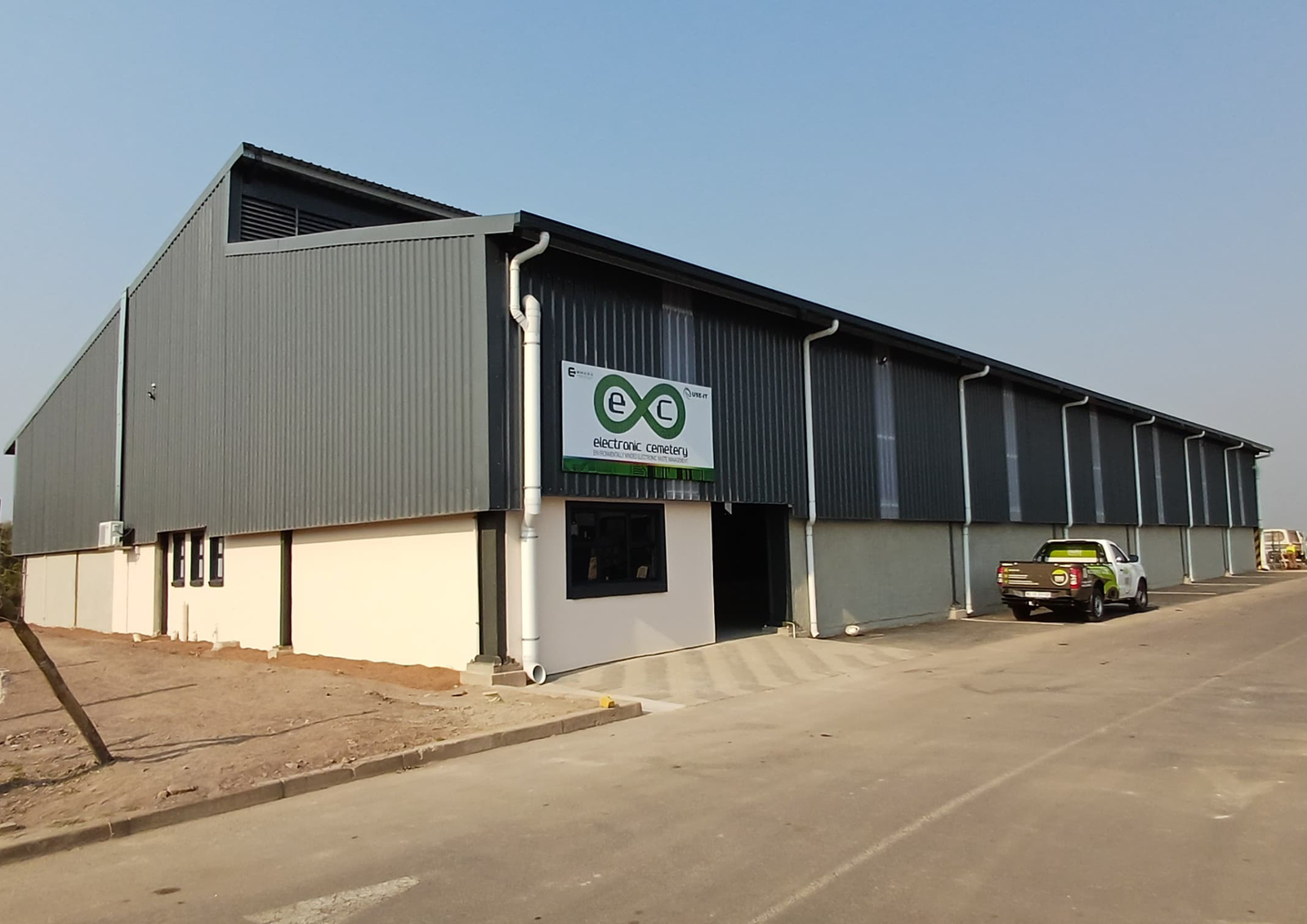
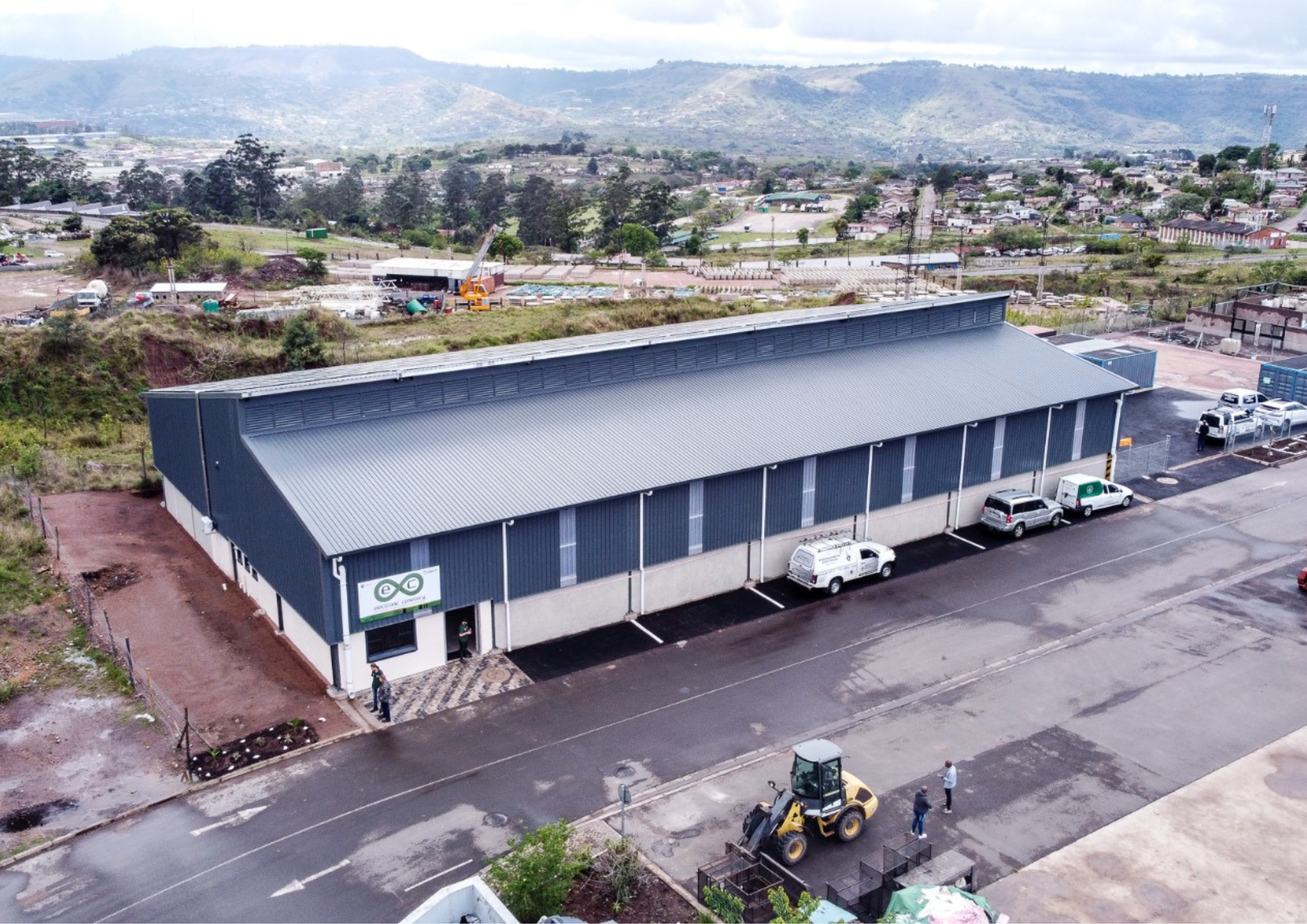
The facility in Hammersdale was made possible by understanding EPR and how Electronic Cemetery’s PRO, eWASA, could help them grow
A major milestone for the company was the development of its Hammersdale facility, a R9-million project supported by eWASA, the non-profit Use-It and the Nedbank Green Fund. The new site, equipped with solar power and modern machinery, significantly increases processing capacity.
“Use-It’s support was massive; they gave us free rental for a year post-build,” says Nash. “We also received capex funding via the Green Fund, which meant we could finally buy essential equipment, including a forklift. I honestly don’t know how we operated without one before.”
The project was made possible through EPR partnerships, particularly with eWASA.
“At first, we didn’t fully understand EPR,” Nash admits. “But once someone explained it properly, we realised it could help us reinvest in staff, capacity, and better systems. It’s not about profit, it’s about breathing room and sustainability.”
The solar and build of the R9 million facility was funded by eWASA, showcasing the real strength of the EPR regulations, and the Producer Responsibility Organisations that enable them.
Electronic Cemetery adheres to strict legal and environmental compliance. Each item undergoes a mandatory one-week holding period under the Second-Hand Goods Act. “It serves a dual purpose,” Nash explains. “It allows law enforcement to check for stolen goods, and it gives customers a chance to recover items they may have accidentally given us.”

The dismantling process is largely manual, using simple tools to separate components by hand. “It’s slower, but it ensures we separate every fraction properly,” he says. Reusable devices are refurbished through Refurb SA, while non-functional materials are classified into copper, aluminium, circuit boards, plastics, and steel before being sent to approved local recyclers. “It used to bother me that we had to ship circuit boards overseas,” Nash notes. “Now we’ve partnered with a local processor, which means the material stays in South Africa and our carbon footprint is smaller.”
Managing hazards and ensuring data security
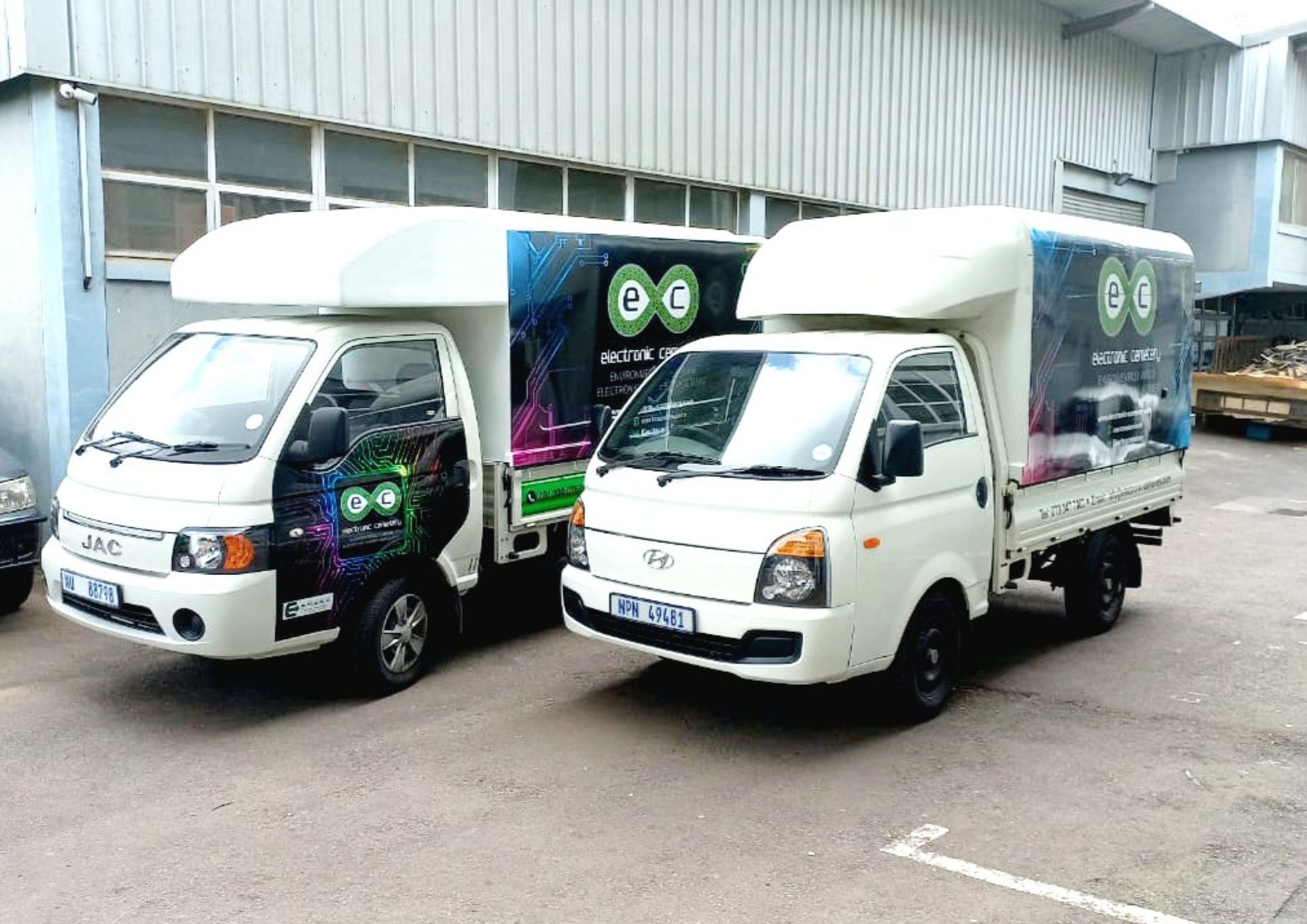
What started out as one ‘bakkie’ operation has turned into a multi-vehicle thriving business
E-waste management involves specific safety and data protection measures. Nash emphasises that only a small fraction of materials handled are hazardous. “In its original form, it’s not dangerous, unless it’s dumped and exposed to the elements. Less than one percent of what we handle is truly hazardous.” Materials such as leaded glass and lithium batteries are processed through licensed partners like EnviroServ, while the facility maintains impermeable flooring and high health-and-safety standards.
“Honestly, the biggest risk in this job is dropping something heavy on your foot,” he jokes.
As the company’s registered POPIA officer, Nash oversees all data destruction processes. “If a hard drive passes testing, it’s wiped with KillDisk using Department of Defence standards. If not, it’s manually dismantled or shredded,” he explains. “We can process around ten drives a day and issue certificates of sanitisation. Once a drive has been ground into fragments, recovery is impossible.”
Electronic Cemetery processes between 15 and 20 tonnes of e-waste per month, with general waste averaging 600–800 kilograms. “We try not to send plastics to landfill,” Nash says. “We’re working with Use-It to turn brominated plastics into asphalt or structural material – it’s about finding real circular solutions.”
The company uses an internally developed digital management system to track operations. “It records daily inputs, collections, drop-offs, and fractions, and helps us report to eWASA accurately,” Nash explains. “It keeps us transparent and data-driven.”
Education and sectoral collaboration
Public education is central to Electronic Cemetery’s operations. The company uses social media platforms to promote responsible disposal practices and conducts talks at schools, industry seminars, and community events. “There’s huge value in getting people to think differently about their old tech,” says Nash. “A lot of people don’t realise how much recoverable material there is in what they throw away.”
Looking ahead, Nash views collaboration, not competition, as key to the sector’s future. “I don’t believe in infinite growth,” he states. “We’re happy being a strong KZN operator. Nationally, logistics become complicated, and collaboration is the future.” He also stresses the importance of the right-to-repair movement in addressing e-waste at its source.
“If devices were built to last, there’d hardly be an e-waste problem. You can still find fridges from the 1960s that work perfectly, that’s what good design looks like.”
Towards a circular future
From a small informal operation to a solar-powered facility handling tonnes of material each month, Electronic Cemetery exemplifies the shift from a linear to a circular model in South Africa’s waste economy.
“E-waste is still a young industry,” Nash reflects. “We’ve had floods, riots, and Covid to deal with, but we’ve kept growing. The most important thing is collaboration; no single company can fix the e-waste problem alone. But together, we can make a real difference.”


