
Researchers studying South Africa’s military past face serious barriers when trying to access post-1970 Department of Defence (DoD) records — a situation academics warn is eroding the country’s collective military memory.
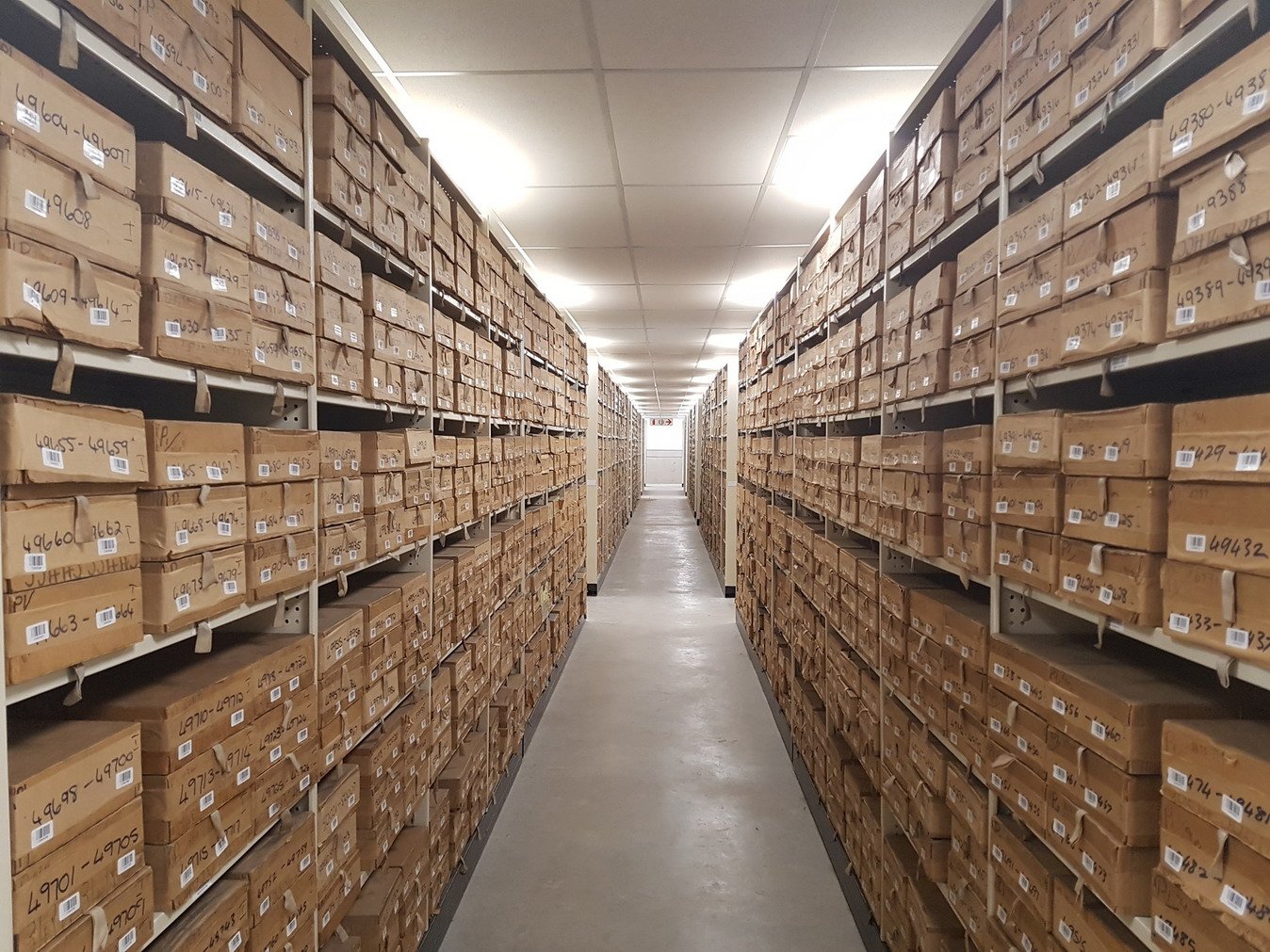
Speaking at the inaugural Military Heritage Symposium at the Castle of Good Hope at the end of October, Professor Evert Kleynhans of Stellenbosch University’s Faculty for Military Science said the DoD Archives, though the “major custodian of South Africa’s military identity,” has become hampered by “legislative disconnect,” “structural deficits” and “analogue inertia.”
The DoD Archives document the Union Defence Force, South African Defence Force and South African National Defence Force from 1912 to the present.
While the repository theoretically documents the full military history from 1912, “the current reality is characterised in many ways by a failure in effective custody that results in what I would like to call institutional gatekeeping,” he said. “It’s not that there’s physically somebody standing there preventing you from access, but there’s a nominal institutional gatekeeping taking place of South Africa’s military past.”
Kleynhans explained that researchers are blocked from accessing records created after 1978.
“The most significant challenge is the promotion of the archive’s holdings, and this stems from the effective cessation of public access for post-1970s documentation,” he said. “If you show up there today and you want to look at a document that’s generated after the 31st of December 1978, good luck. You’re not going to get it.”
He criticised the use of the Promotion of Access to Information Act (PAIA) as an access mechanism. “The very name of that Act says promotion, but often that PAIA Act is thrown at you like a shambok or something. It’s not to promote access, it’s to try and prevent you from getting access.”
Beyond access issues, the archives suffer from staff and funding shortages. “The Department of Defence Archives has not had a deputy director since 2015 when the former director retired. The post was never advertised. It became unfunded and now it’s frozen on the structure,” he said. “To run an organisation like this, you really need professional staff to be appointed there.”
He said digitisation is vital. “There’s no central database where you can type in a keyword to find that information,” he noted. “The continued reliance on physical storage and analogue finding aids leads to ineffective retrieval. This severely compromises the SANDF’s own ability to quickly and accurately retrieve and utilise its institutional memory.”
Kleynhans appealed for a clear declassification policy, dedicated funding for digitisation, and the appointment of a research liaison officer to help bridge the gap between researchers and the bureaucracy.
Calling for reform, Kleynhans proposed that the DoD work with the Defence Intelligence Division, Stellenbosch University, and parliamentary committees to “establish a clear declassification policy and a phased reduction of the post-1970 restricted period.”
“The Department of Defence Archives is not merely a storeroom for old papers,” he concluded. “It is the physical manifestation of South Africa’s military identity and institutional memory.”
Lieutenant Colonel (Dr) Jean-Pierre Scherman, also of Stellenbosch University, presented on Military Heritage in the SANDF: A Case Study of Operation Mistral, South Africa’s long-running deployment to the Democratic Republic of Congo. He too highlighted the absence of accessible, contemporary SANDF records.
“Currently I cannot, as an historian, go to the military archives and go and draw whatever files, photographs, notes, documents there are about any of the SANDF’s operations,” he said.
“So what I did use was the United Nations online database, the Parliamentary Monitoring Group, the DoD Annual Report, a few academic journals, news articles (including that from DefenceWeb) and social media.”
He described the result as “quite disturbing.”
“This is our total collective knowledge that is available at the moment for 50 years of military service,” he said. “For a youngster now in high school who is considering a career in the military… how does that person go and find out what we do?”
Scherman warned that “without immediate intervention, the SANDF’s military heritage is going to be lost forever.”
He urged that historians be allowed to brief contingents prior, during and post-deployments in the art of historical record keeping, interview participants to preserve their historical information, and visit contingents to accurately record how their situation looks on the ground.
“Without immediate intervention,” he said, “South African National Defence Forces military heritage is going to be lost forever.”