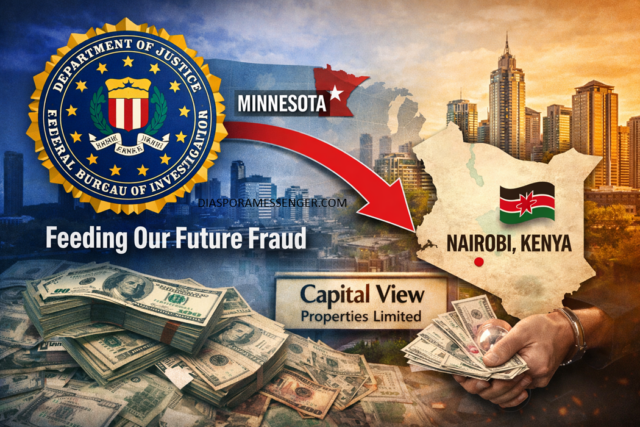

Investigations by the United States Federal Bureau of Investigation (FBI) and Kenyan law enforcement agencies have identified Capital View Properties Limited, a Nairobi-based real estate firm, as a key entity allegedly used to launder proceeds from the $250 million “Feeding Our Future” COVID-19 food aid fraud in Minnesota.
According to multiple investigative reports, individuals connected to the Minnesota fraud scheme are suspected of channeling millions of dollars through the Kenyan company. They used these funds to purchase high-value real estate assets in Nairobi. This effectively moved illicit funds out of the United States and into Kenya’s property market.
The total value of the funds and assets involved in the alleged laundering operation has been estimated by Kenyan media at approximately KSh 39 billion (about $250–300 million). This makes it one of the largest cross-border financial crime cases ever linked to Kenya.
How the Scheme Allegedly Worked
U.S. prosecutors say the original fraud involved the diversion of COVID-19 emergency food relief funds. These funds were meant to support vulnerable children during the pandemic. The “Feeding Our Future” program in Minnesota was responsible. However, instead of reaching intended beneficiaries, large sums were allegedly siphoned off by fraudsters using fake invoices, shell companies, and inflated contracts.
Investigators now believe some of those funds were transferred abroad and used to acquire property in Kenya through Capital View Properties Limited, allegedly allowing the perpetrators to conceal the origins of the money and integrate it into legitimate-appearing investments.
– Advertisement –
Kenya–U.S. Cooperation Intensifies
Kenyan authorities, including the Directorate of Criminal Investigations (DCI) and the Asset Recovery Agency (ARA), are working alongside U.S. agencies. They aim to trace the financial flows and identify properties and bank accounts linked to the scheme.
U.S. officials have publicly emphasized the importance of cross-border cooperation in fighting financial crime. This is especially crucial when illicit funds are moved into emerging markets through real estate. Such assets are often used for money laundering because of high values and limited transparency.
While several suspects in the U.S. have already been charged and convicted, local prosecutions in Kenya related to the funds are still limited or under development, according to analysts familiar with the investigations.
Political and Public Reaction in Kenya
The case has sparked widespread public and political attention in Kenya. Lawmakers and civil society organizations are calling for stronger financial oversight. They also demand transparency in the property sector and tougher enforcement against money laundering.
Some Kenyan leaders have urged the government to ensure that the country does not become a safe haven for illicit foreign capital, especially money linked to humanitarian aid theft.
What Happens Next
Authorities are now focused on:
- Identifying all assets in Kenya allegedly purchased with the stolen funds
- Freezing and potentially seizing properties and bank accounts
- Determining whether Kenyan nationals or institutions knowingly facilitated the laundering
- Expanding prosecutions as evidence emerges
If confirmed, the case could lead to major asset forfeitures in Kenya and set new precedents for international financial crime enforcement between the U.S. and East Africa.