
Russian mercenaries, like the Wagner group, have a poor reputation. Multiple western outlets have reported on their military ineffectiveness, their abysmal human rights record, and their exploitative nature.
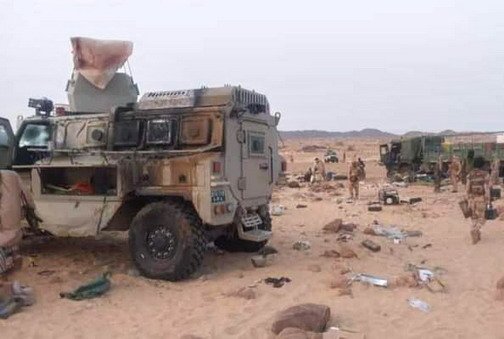
For example, in July 2024, the Wagner Group faced a military setback in northern Mali. It lost dozens of mercenaries, including a senior commander and a well-known Russian military commentator.
Since 2014, multiple reports have linked Russian mercenaries to massacres, sexual violence and crimes against humanity.
Moreover, it seems that Russian mercenaries are mostly interested in exploiting their host countries by taking over natural resources like minerals.
Despite their poor reputation and self-interested motives, an increasing number of African countries have invited Russian mercenaries in the last five years. One was Equatorial Guinea, where up to 200 Russian troops were said to have been deployed in August 2024 to protect the president and train presidential guards.
The Russian mercenaries provide security services at the expense of traditional alliances with the west. French and American forces have been pushed or expelled, leaving behind military bases for the Russians.
The question we, as security scholars, ask is: in view of these drawbacks, why do countries still use mercenaries?
We attempted to answer this using the case of the Central African Republic. To assess Wagner’s performance, or efficacy, we studied the Central African Republic’s civil war and compared the French military intervention (2013-2016) to the Wagner intervention (2021-2024).
We found that in the short term, the Wagner intervention was more effective for the country’s regime than the French intervention. But we argue that it created risks for the longer term. Wagner’s long-term impact likely adds to instability, undermining sustainable development and security.
Military effectiveness
Traditionally, about 20 sub-Saharan countries have depended on France and other western allies for military support. In the last three years, however, Central African Republic, Sudan, Libya, Burkina Faso, Niger and Mali have turned to the Wagner Group or other Russian mercenaries (such as Africa Corps) for security assistance.
To understand the appeal, one might look to studies of their performance. These present a mixed outlook. Some researchers see it as effective (in that they perform military missions successfully).
But it is also associated with consistent harm to civilians and an increase in conflict severity.
Generally, academics and professionals see mercenaries as destabilising forces, often intensifying violence without resolving underlying security problems.
Our study of Wagner’s performance in the Central African Republic (CAR) civil war challenges those trends.
Since independence, CAR has experienced frequent coups and instability. The current phase of the conflict began in 2013, when President François Bozizé was ousted by the Séléka, a Muslim rebel coalition, sparking a civil war.
This sectarian violence between Séléka and Christian militias, known as the anti-Balaka, led the United Nations to launch the Minusca peacekeeping mission, with support from a French-led force, Operation Sangaris.
While Sangaris succeeded in securing certain areas, it struggled to establish control nationwide. The French operation ended in 2016 and was followed by a period where some of Sangaris’ achievements were eroded by the rebels. In 2018 CAR leadership pivoted to Russia, inviting the Wagner Group to provide training and security functions.
For their support the Wagner Group gained state concessions, taking a hold over natural resources (mostly in rebel-held territory). By 2020, the Russian mercenaries were established in the country and became the main security providers, leading the state’s counterinsurgency efforts. During that period the state increased its territory, pushing the rebels further into rural areas.
Our study assesses various metrics, like territorial control, reduced civilian casualty count, and indicators for state sovereignty. Wagner appeared to produce better outcomes for the ruling military junta than the French intervention did. Wagner’s higher tolerance for risk and disregard for collateral damage allowed it to operate aggressively. It reclaimed more territory and brought rebels to the negotiation table more swiftly than the French did.
Our analysis, which draws from Armed Conflict Location and Event Data on the conflict, found that during the French operation Sangaris, fatality rates among combatants and civilians were higher. Rebels gained more territory and the government recaptured less territory, compared with the Wagner intervention.
The traditional critique of mercenaries as ineffective and destabilising does not align with Wagner’s actions in Central African Republic.
Our assessment is that Wagner allowed the regime to survive, protected the most populated and valuable areas of the country, and secured economic and geopolitical assets.
Economic exploitation
Economically, the Russian mercenaries have been portrayed as exploitative.
Wagner demands economic concessions, particularly control over gold mining operations, in return for military support. This strategy allows it to sustain operations. But it deprives African countries of resources they need for national development.
Wagner’s operational model undermines Central African Republic’s prospects for long-term stability and self-sufficiency. Experts estimate that Wagner’s profit from mining and forestry operations in CAR ranges between US$1 billion and US$2 billion.
Yet we suggest that, at least in the client’s eyes, the deal is a bargain. In Central African Republic, the economic concessions were for resources located in rebel-held territory. Territory and resources that the government could not use and that were financing their political rivals.
Local perceptions
Regardless of the Russians’ crimes and human rights violations, they enjoy relative support among the urban population in the country. Some urban populations reportedly support Wagner, as its presence has brought visible security improvements compared to periods under rebel control.
However, in rural areas, especially near mining zones, Wagner’s brutal tactics drive displacement and instil fear. It seems that the locals decouple Wagner’s military activities from its economic activities.
Wagner and Russian authorities engage in propaganda campaigns, promoting Wagner’s image through local media, sponsoring cultural events and producing pro-Wagner films.
These efforts cast Wagner as a stabilising force despite its negative international reputation. Popular surveys show that Russia is viewed positively in the region.
Moreover, in Central African Republic, Wagner empowered the ethnic group associated with the leadership, providing them with arms and training.
Countering Wagner
Sub-Saharan African regimes find Wagner appealing because it lacks the political constraints of western forces and proved that it can deliver security. This preference reflects a broader trend among African states to forge non-western partnerships. This is evident in increasing economic alliances with China and security partnerships with Russia.
The stakes are high. Russia is redefining the boundaries of warfare and introducing a form of modern colonialism. Tolerating mercenary groups’ abuses can foster local grievances and instability.
Wagner’s model cannot be sustained indefinitely.
To counter mercenary groups, it’s essential to understand and measure their appeal to both the elite and local populations. It’s also important to recognise that African countries are not mere pawns in a larger geopolitical game. They have agency.
A nuanced approach is essential for addressing mercenary groups in Africa. Western countries and international organisations must consider local perceptions and the mercenaries’ perceived effectiveness in specific contexts, rather than relying on broad condemnation alone.
Practical solutions must address security needs and should combine military support with impactful fast development initiatives to diminish the appeal of mercenary groups.
While labelling Wagner as a criminal or terrorist organisation emphasises its abuses, this strategy alone does not address the factors that drive African states to engage such forces.
Written by Ori Swed, Assistant Professor of Sociology, Anthropology, and Social Work, Texas Tech University, and Alessandro Arduino, Affiliate Lecturer, King’s College London.
Republished with permission from The Conversation. The original article can be found here.