

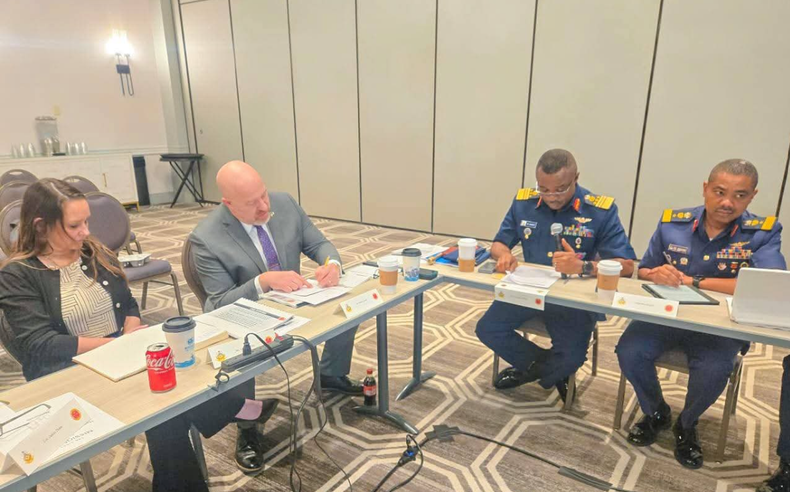
The effort was reinforced this month when the Chief of the Air Staff, Air Marshal Sunday Kelvin Aneke, led a high-level Programme Management Review meeting with senior US government officials and Bell Textron, the helicopters’ manufacturer, in San Diego, California.
“We deeply value the professionalism and openness demonstrated throughout this process, and we remain fully committed to working closely with our partners to ensure the timely and successful delivery of these platforms,” the CAS stated.
The January 5–6, 2026 engagement focused on timelines, logistics and technical readiness, as Nigeria works to bring the advanced attack aircraft into service as quickly as possible.
The AH-1Z Viper is a modern combat helicopter designed for precision strike, close air support and battlefield surveillance, giving the Nigerian military a major upgrade in its ability to track, target and neutralise insurgent groups operating across difficult terrain.
The push follows similar talks held in June 2025 under the previous air force chief, Air Marshal Hasan Bala Abubakar, who also led a Nigerian delegation to the United States to review progress on the same acquisition.
Why US helicopters still matter in Africa’s crowded arms market
Nigeria’s choice of the AH-1Z highlights how the United States remains a critical supplier of high-end military hardware in Africa, even as Russia and China expand their footprint across the continent.
While Moscow and Beijing have aggressively marketed cheaper drones, fighter jets and armoured vehicles, US platforms are still seen by many African militaries as offering superior reliability, advanced targeting systems and stronger long-term support.
Beyond their firepower, the deal also deepens operational cooperation between Abuja and Washington, strengthening intelligence sharing, training and maintenance support.
This comes amid recent diplomatic and policy frictions between Nigeria and President Donald Trump’s administration, particularly over visa restrictions, migration enforcement, and Washington’s tougher posture toward West African governments it views as weak on security and border control.


