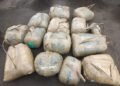
On a recent Wednesday at a pet crematory on the outskirts of Johannesburg, South African authorities destroyed nearly a metric ton of lion bones.
The destruction of the confiscated remains was part of South Africa’s effort to end the captive breeding of lions and the trafficking of their bones to be used in traditional Chinese medicine (TCM).
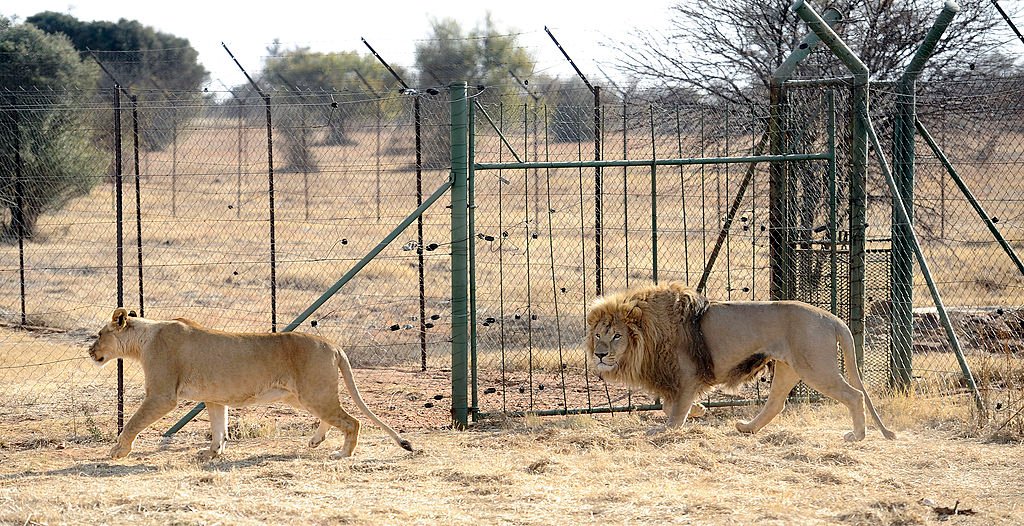
South Africa effectively banned the export of lion bones this year by setting the export quota for them at zero. South Africa has an estimated 12,000 lions raised on farms to be hunted compared to a wild population of about 3,000. Lions killed during the hunts are butchered and their parts trafficked, often in place of tiger bones used in TCM formulations.
South Africa has long been a hub for the illicit trade in lion bones, rhino horn, elephant ivory, and other animal parts and products, many of them shipped to Asian markets for use in TCM.
The South African government banned the export of lion bones in 2019 and announced in 2024 that it was shutting down the country’s lion farms, citing the unsanitary conditions in which most animals live. However, no firm deadline was set for farms to close. Authorities said at the time that trophy hunts would continue for an undetermined period.
In a new report, researchers with the Global Initiative Against Transnational Organized Crime (GI-TOC) worked with wildlife monitoring organizations around the world to examine ways in which the illicit wildlife trade moves animals and animal parts around the globe, with much of that traffic centered on China.
The study covered the period from April 2024 to August 2025 and included three African countries: Cameroon, Nigeria and South Africa.
Much of the illicit wildlife trade is happening in plain sight online with Facebook carrying most of the advertising that promotes live animals (typically birds) and parts (typically from mammals).
The GI-TOC study found that Facebook accounted for nearly 84% of more than 13,200 advertisements reviewed worldwide. That was down from 95% a few years ago. Two-thirds of those advertisements promoted animal parts, 84% of which were from animals protected under the United Nations Convention on International Trade in Endangered Species (CITES).
“This highlights the continuing centrality of Facebook in monitoring efforts and enforcement of regulatory interventions,” GI-TOC researchers wrote.
In some cases, advertisers use coded emojis to secretly identify the wildlife products they are offering.
GI-TOC researchers recommend that Facebook and other social media or e-commerce sites tighten their own rules for advertising wildlife products by requiring documentation that shows that the products are exempt from trade bans.
In August, South Africa indicted six people on charges of trafficking nearly 1,000 rhino horns to Asian markets using falsified documents. Authorities said the traffickers claimed to be selling the horns domestically when they actually were shipping them abroad.
Illicit wildlife traffic frequently involves transnational criminal organizations. Escalating profits at each step of the trafficking process makes the activity attractive to those involved. The study uses the case of North Korea, which sells TCM products with miniscule amounts of rhino horn in order to evade international sanctions and generate hard currency income.
GI-TOC researchers note that North Korea has used illegal wildlife trafficking to generate income for many years. A United Nations investigation suggests that North Korean diplomats are at the center of smuggling rhino horn and other illicit wildlife materials. One diplomat is accused of attempting to traffic $65 million in rhino horn to China via Mozambique.
Rhino horn bought from traffickers is sold as Angong Niuhuang Wan (ANW) with a markup 30 to 40 times the value of the horn that went into it.
A single illicit kilogram of trafficked rhino horn bought for $22,300 in Vietnam ultimately can bring the country up to $830,000 in revenue in Chinese and other Asian markets.
“This makes ANW highly profitable for traffickers and strengthens the incentive to continue sourcing rhino horn,” GI-TOC researchers wrote. “North Korea’s role in rhino horn trafficking elevates the situation from a conservation challenge to an international security concern.”