

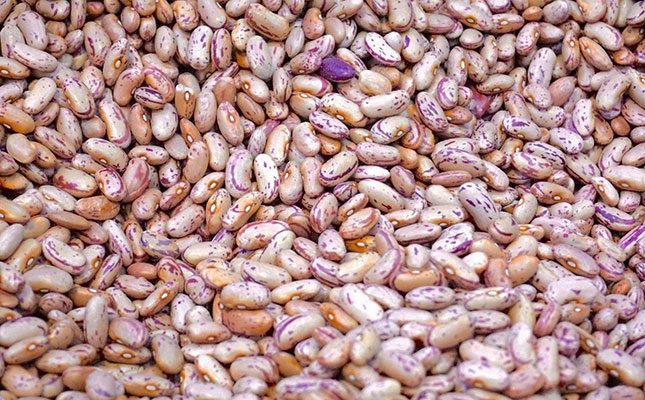
Dry beans are important for crop rotation and make a significant contribution to the country’s economy, as domestically grown beans are also in demand internationally.


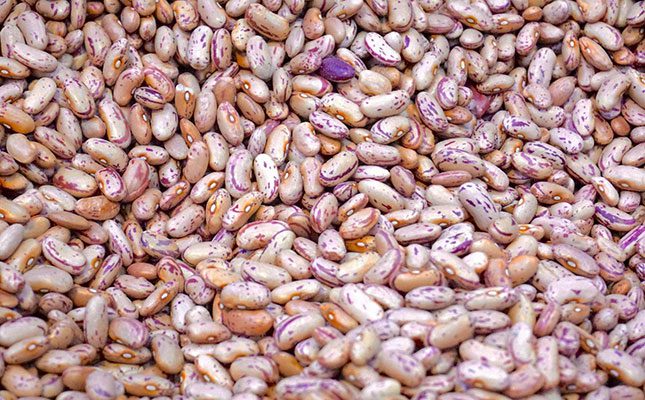
Photo: Pexels
In South Africa, dry beans are mainly produced in the eastern Mpumalanga Highveld, the eastern Free State, North West, and Limpopo. Red speckled beans, also known as speckled sugar beans, represent 50% to 60% of all local bean production.
According to the Crop Estimates Committee’s ninth production estimate for summer crops in the 2025/26 production season, the dry bean production forecast remained unchanged at 90 556t. The area planted to dry beans in the 2024/25 season totalled 45 620ha, with an expected yield of 1,99t/ha.
Intentions to plant
Producers’ intentions to plant summer crops are mainly based on the results of a non-probability survey conducted by the Department of Agriculture’s Directorate of Statistics and Economic Analysis, and reflect the position as at mid-October 2025.
According to the survey results, expected dry bean plantings are estimated at 36 420ha, which is 20,2% or 9 200ha less than in the previous season.
Speaking to Farmer’s Weekly, Rossouw Grobbelaar, sales manager at the Dry Bean Producers’ Organisation (DPO), said the 2023/24 season was characterised by severe drought in large parts of South Africa.
“This led to low plantings, poor yields, and consequently a shortage of local supplies. The limited availability of beans caused prices to rise to the same level as high international prices, at about R30 000/t.
Grobbelaar said that during the 2024/25 season, the production of red speckled beans presented unique challenges as well as significant opportunities.
“Although the season began with an early drought, favourable conditions developed later. Good rainfall during the growing season led to excellent yields in many areas. The sugar bean harvest almost doubled, from about 30 000t [in 2023/24] to about 59 000t [this season].”
He said excessive late rainfall had a significant negative impact on bean quality and early availability.
“At one point, it even looked as if large parts of the eastern Free State and Mpumalanga could lose their crops,” he added.
The uncertainty surrounding local availability therefore forced buyers to import beans.
“Internationally, supplies were plentiful, but low dollar prices limited export opportunities. At the same time, grade 2 beans could be imported at about R20 000/t, while the first locally available beans were still trading at about R27 000/t,” Grobbelaar explained.
He indicated that the combination of high local production and large volumes of imported beans led to an oversupply in the market, leaving farmers unable to sell their product on their terms.
Poor quality caused by weather damage made exports difficult. “Eventually, because of cash flow needs and low international prices, farmers started selling grade 2 beans at R17 500 to R21 000/t.”
Local beans available, but quality is low
According to Grobbelaar, a large quantity of beans is still available on farms, and although they are edible, they appear less attractive, making marketing difficult.
“The timeframe in which this stock will move in the market, as well as possible prices, remain uncertain. However, grade 2 beans that look attractive are scarce, and supplies are not expected to carry over into the new season.”
Looking at the 2025/26 production season, he said preliminary estimates suggest plantings of red speckled beans will decline by between 30% and 40%.
“Many growers are moving to alternative crops or small white beans, which are mostly grown on a contractual basis,” he added.
He explained that a partial recovery in the US dollar price for red speckled beans is expected, saying: “In combination with lower local stocks, this could push prices upwards again to about R23 500/t to R24 000/t. This improvement is not likely to be felt until later in 2026.”
He pointed out that this outlook provides a favourable opportunity for farmers willing to continue planting red speckled beans.
Advice for farmers
Grobbelaar advises producers to:
- Plant only on the best soils
- Ensure combine harvesters and threshing machines are utilised in a timely and optimal manner to ensure the best quality
- Avoid fields that are excessively wet
- Focus on optimal production per hectare
- Group beans of similar quality to offer a uniform product to buyers
He noted that while the red speckled bean industry faced significant challenges in 2024/25, exceptional production was achieved in many areas. With declining plantings and an expected recovery in prices, the 2025/26 season offers potential for farmers who take a strategic, quality-driven approach.
Chris Kleingeld, general manager of the DPO, reminded farmers that, as legumes, dry beans can be successfully used in rotation with maize or wheat.
“Including dry beans in crop rotation significantly benefits soil health. The extensive root system of legumes improves soil structure by increasing porosity, reducing compaction, enhancing water infiltration and retention, improving aeration, and reducing surface runoff and soil erosion,” he explained.
He added that dry beans can also contribute to crop diversity, support farmers’ cash flow, and ultimately play an important role in sustainability.
“This is something that should be kept in mind when planning production for any season,” he concluded.


