• Business
  • Markets
  • Politics
  • Crypto
  • Finance
  • Intelligence
    • Policy Intelligence
    • Security Intelligence
    • Economic Intelligence
    • Fashion Intelligence
  • Energy
  • Technology
  • Taxes
  • Creator Economy
  • Wealth Management
  • LBNN Blueprints
  • Business
  • Markets
  • Politics
  • Crypto
  • Finance
  • Intelligence
    • Policy Intelligence
    • Security Intelligence
    • Economic Intelligence
    • Fashion Intelligence
  • Energy
  • Technology
  • Taxes
  • Creator Economy
  • Wealth Management
  • LBNN Blueprints

How Do Astronomers Find Planets in Other Solar Systems?

Simon Osuji by Simon Osuji
December 14, 2025
in Artificial Intelligence
0
How Do Astronomers Find Planets in Other Solar Systems?
0
SHARES
0
VIEWS
Share on FacebookShare on Twitter


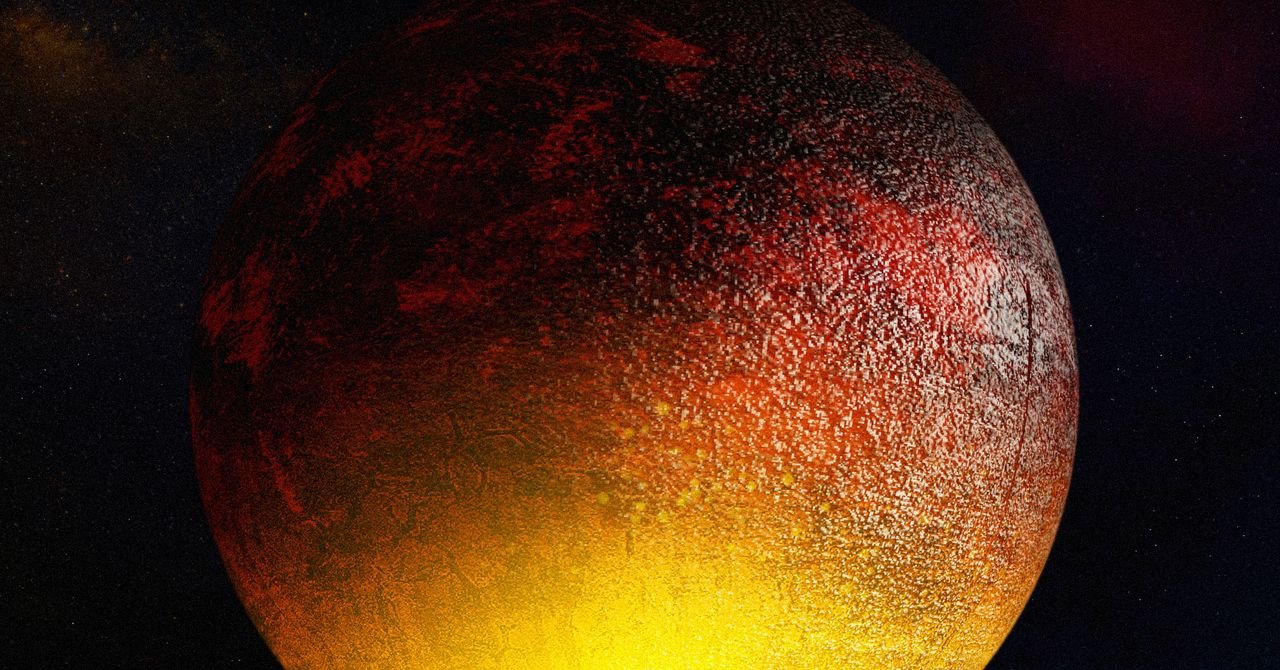
It was almost 100 years ago that Clyde W. Tombaugh discovered Pluto. That was the last planet found until 1992, when humans found another one. But this new planet wasn’t in our solar system—it was orbiting another star. We call this an extrasolar planet, or “exoplanet” for short.

Since then, astronomers have cataloged more than 6,000 exoplanets. If you thought it was hard to remember the names of our own planets, try all the planets, with names like HD 189733b. (A jolly place where it rains molten glass and the wind blows 9,000 kilometers per hour.)

Even the closest exoplanets are more than 4 light years away (36 trillion miles), which makes it doubtful that we’ll ever visit one—so why bother? The reason is, it helps us answer an age-old question: Are we alone in the universe? As far as we understand, you need a planet to have life, and the race is on to locate one with Earth-like qualities.

Why Are They Hard to Find?

The problem is, you can’t just take your best telescope and start looking around the sky. Telescopes have a limited resolving power—the smallest angular size they can “see.” For the Hubble Space Telescope that’s 0.05 arc second, which is incredibly tiny—about 1/72,000th of a degree. The HST could make out a giant, Jupiter-size planet at a distance of 590 billion kilometers. That’s amazing, but it’s just 0.06 light year, and the nearest star, Proxima Centauri, is 4.25 light years away.

Another problem is the dimness of planets. Sure, Jupiter is easy to see in our own night sky, because of the sunlight reflecting off its surface. But you can’t see Jupiter at all during the day, because that reflected light is much dimmer than direct sunlight. It’s the same for exoplanets. When we’re looking at the light from a star, the planets around it just aren’t bright enough to be discernable.

Luckily, there are other methods, and I’m going to explain the two that were used to find most of the exoplanets we know today. There’s a bunch of cool physics here, so let’s go!

Orbits, Jiggly Stars, and Blue Shifts

What happens when a planet moves around a star? First, there’s a gravitational interaction that pulls the planet in the direction of the star. The magnitude of this force (FG) depends on the mass of the star (M) and the planet (m), as well as the distance (r) between them:

Image may contain Stencil

Illustration: Rhett Allain


Source link

Related posts

Apple’s New MacBook Air and MacBook Pro Have New Chips, More Storage, and Higher Prices

Apple’s New MacBook Air and MacBook Pro Have New Chips, More Storage, and Higher Prices

March 3, 2026
Best AI security solutions 2026: Top enterprise platforms compared

Best AI security solutions 2026: Top enterprise platforms compared

March 3, 2026
Previous Post

China’s Jasan Group to build $100mln integrated textile complex in Egypt’s Qantara West

Next Post

Tanzania Looks to Amend Income Tax Act to Tax Crypto Trades

Next Post
Tanzania Looks to Amend Income Tax Act to Tax Crypto Trades

Tanzania Looks to Amend Income Tax Act to Tax Crypto Trades

Leave a Reply Cancel reply

Your email address will not be published. Required fields are marked *

RECOMMENDED NEWS

Shiba Inu Forecasted To Hit $0.05, Bitcoin Pundit Predicts When

Shiba Inu Forecasted To Hit $0.05, Bitcoin Pundit Predicts When

2 years ago
Apple AirPods Pro 3 Review: Still The Best for iOS

Apple AirPods Pro 3 Review: Still The Best for iOS

5 months ago
OCH and GIM drive vision 2030 forward

OCH and GIM drive vision 2030 forward

1 year ago
Oil prices fall on easing Mideast tensions, OPEC+ supply plan

Nigeria’s oil output surpasses OPEC quota as 3 month average rises to 1.68 million bpd

5 months ago

POPULAR NEWS

  • Ghana to build three oil refineries, five petrochemical plants in energy sector overhaul

    Ghana to build three oil refineries, five petrochemical plants in energy sector overhaul

    0 shares
    Share 0 Tweet 0
  • Mahama attends Liberia’s 178th independence anniversary

    0 shares
    Share 0 Tweet 0
  • The world’s top 10 most valuable car brands in 2025

    0 shares
    Share 0 Tweet 0
  • Top 10 African countries with the highest GDP per capita in 2025

    0 shares
    Share 0 Tweet 0
  • Global ranking of Top 5 smartphone brands in Q3, 2024

    0 shares
    Share 0 Tweet 0

Get strategic intelligence you won’t find anywhere else. Subscribe to the Limitless Beliefs Newsletter for monthly insights on overlooked business opportunities across Africa.

Subscription Form

© 2026 LBNN – All rights reserved.

Privacy Policy | About Us | Contact

Tiktok Youtube Telegram Instagram Linkedin X-twitter
No Result
View All Result
  • Home
  • Business
  • Politics
  • Markets
  • Crypto
  • Economics
    • Manufacturing
    • Real Estate
    • Infrastructure
  • Finance
  • Energy
  • Creator Economy
  • Wealth Management
  • Taxes
  • Telecoms
  • Military & Defense
  • Careers
  • Technology
  • Artificial Intelligence
  • Investigative journalism
  • Art & Culture
  • LBNN Blueprints
  • Quizzes
    • Enneagram quiz
  • Fashion Intelligence

© 2023 LBNN - All rights reserved.