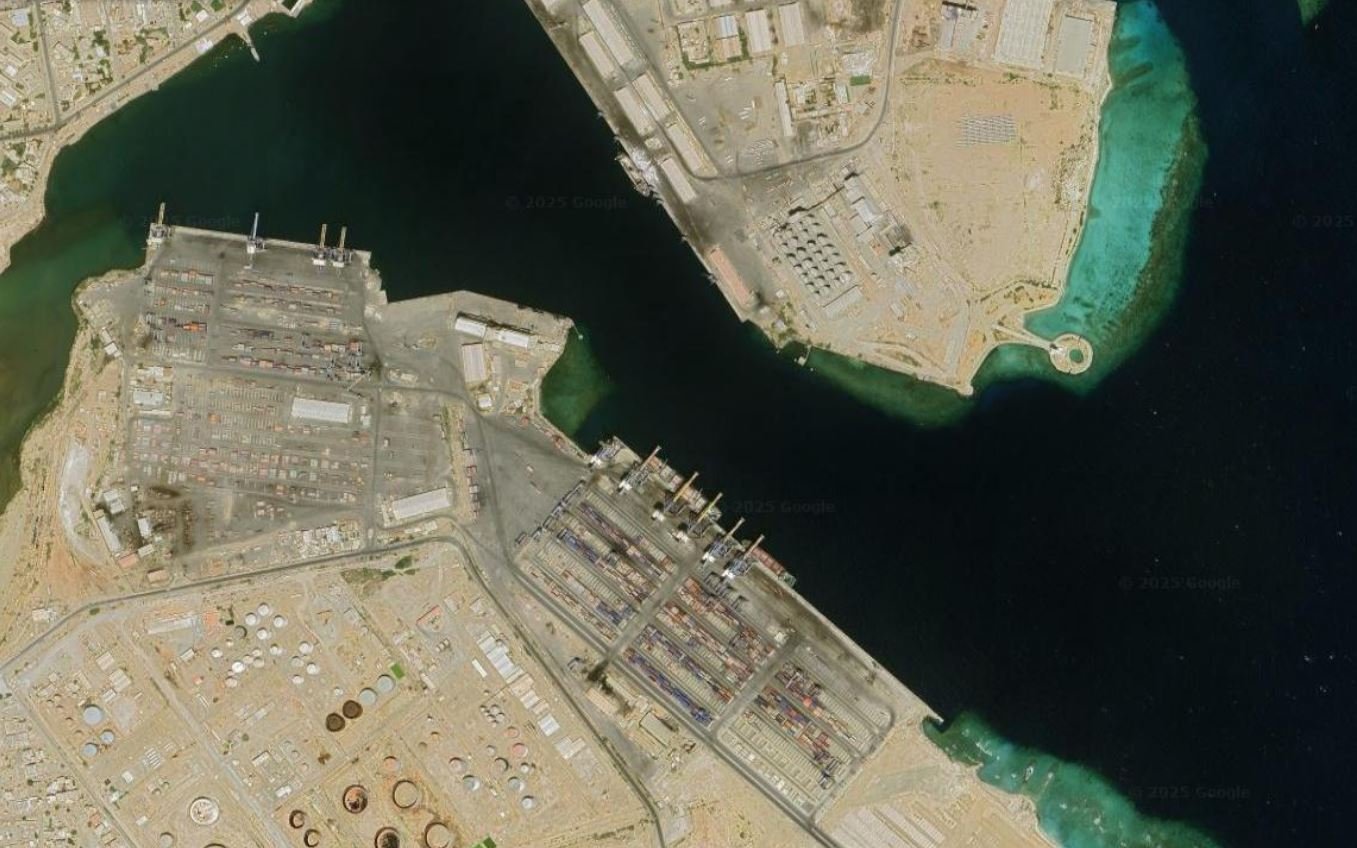

Sudan and Russia have reportedly resumed discussions over a long-delayed 2017 agreement that would provide Moscow with its first naval installation in Africa, offering military access to the Red Sea in exchange for Sudan receiving advanced weaponry.
The Wall Street Journal on 1 December reported that following a visit by Sudanese Foreign Minister Ali Youssef Ahmed al-Sharif to Moscow, the deal had evolved into a wider transactional arrangement, with terms submitted by Sudan in October offering 25-year basing rights for 300 military personnel and up to four vessels, including nuclear-powered warships.
In exchange, the Sudanese Armed Forces (SAF) would receive advanced air defence systems and a potential supply of Su-30 and Su-35 fighter jets, critical for improving the SAF’s ability to launch long-range precision strikes against the Rapid Support Forces (RSF).
This latest move marks a significant shift from the original framework proposed in 2017 during a trip by former Sudanese President Omar al-Bashir to Moscow. Bashir had primarily sought security guarantees and Russian protection at the UN Security Council in exchange for a modest logistics hub similar to Russia’s smaller-scale naval operations in Syria prior to Tartus expansion in 2015.
Sudan had previously expressed interest in Su-35 fighter jets; however, any discussions were preliminary as Russia maintained a primary interest in the Middle East and Mediterranean.
Complications have consistently arisen, halting any progress in these preliminary dissections. Most recently, on 12 November, Russia’s Ambassador to Sudan, Andrey Chernovol, announced a suspension of all construction planning for a naval facility in Port Sudan due to complications with the ongoing conflict.
Reported by Business Insider Africa, Chernovol stated that “given the current military conflict, movement on this issue has for now been halted.” A resumption of talks now suggests Sudan is willing to expand concessions in exchange for foreign military assistance.
Sukhoi modern fighter aircraft have gained growing popularity across North Africa and the Horn of Africa, with leaked reports in early October detailing Russia’s deals, including the sale of 16 Su-35 jets to Ethiopia and 12 Su-57 jets to Algeria. Reportedly, Egypt has also attempted to place orders for Su-35s; however, rescinded these requests following pressure from the United States.
The Sudanese Air Force’s ageing Cold-War era MiG-29 and Su-24M fleet has become increasingly ineffective, limited by maintenance constraints and increasing exposure to drone attacks. Securing deliveries of Su-35 and Su-30 would provide the SAF with substantial improvements in range and precision-strike performance.
RSF offensives launched in October have pushed the SAF on the back foot, with the seizure of strategic cities such as El-Fasher, restricting SAF supply routes. These advances have been powered by access to UAE-supplied sophisticated drones and vehicle-mounted weapons systems. The RSF’s expanding aerial capacities have exposed a critical weakness for the SAF – the lack of modern fighter jets and integrated air defence systems.
If successful, the deal could open the way for further supply arrangements of Russian air-defence systems, potentially including S-300 variants capable of countering the RSF’s expanding drone fleet.
The immediate need for aerial combat upgrades has pushed Sudanese leadership to expand concessions on critical resources. As noted by The Wall Street Journal, “the Kremlin would also get the inside track on lucrative mining concessions in Sudan, the third-largest gold producer in Africa.”
Gold plays a central role in the agreement, with Sudan providing access to mining sites to offset the high costs of advanced weaponry. As one of the few assets the government can trade for strategic support, it offers Russia a sanction-resistant stream of revenue. Since 2022, the Kremlin has reportedly earned over $2.5 billion in gold in exchange for mercenary contract missions in Mali and the Central African Republic.
These contracts had also included Wanger Group deployments to Sudan in support of the RSF, which Russia initially backed to gain access to gold deposits. However, amid a chaotic mess of shifting alliances, the RSF began opening contacts with Ukrainian intelligence, and Russia’s Wagner operations fell apart following Yevgeny Prigozhin’s failed 2013 rebellion.
The SAF’s current situation, facing a desperate need for military upgrades, successful RSF advances, and lacking strong Western support, has provided Russia with a new opportunity to reassert a foothold in the region.
Establishing a naval base in the region would allow Russia to monitor vessels passing through the Suez Canal, which accounts for around 12% of all global trade. Furthermore, it would provide the Kremlin with a visible military presence in an already crowded area of competing military interests.
A Russian-operated naval port in Sudan would neighbour the United States Africa Command’s military installation at Camp Lemonnier, Djibouti, which currently hosts around 4,000 personnel. Only six miles from Camp Lemonnier is a military base operated by China’s People’s Liberation Army Navy, which includes a deep-water pier capable of hosting aircraft carriers and a logistic hub for operations in the Red Sea and Indian Ocean.
As reported by The Wall Street Journal, retired U.S. Air Force Maj. Gen. Mark Hicks noted that establishing a naval base in the region “increases Russia’s leverage by giving them more international prestige and clout.”
Continuing security conditions around Port Sudan in the coming months will likely determine whether this 25-year framework translates into a genuine deal. Russian Foreign Minister Sergey Lavrov has so far remained silent on the matter, suggesting caution from the Kremlin against premature commitments until the SAF demonstrates its ability to sufficiently stabilise the area. Should the agreement move forward, it would provide SAF with much-needed military upgrades while granting Russia unprecedented access to the Red Sea – shifting the dynamics of an already hotly contested strategic zone.
James Robert Loughton is Managing Director of Global Weekly, a London-based geopolitical intelligence platform.