– Advertisement –
More than 600 experts appointed to the three Working Groups of the Intergovernmental Panel on Climate Change (IPCC) are gathering in Paris this week to commence work on the first draft of IPCC’s Seventh Assessment Report (AR7). This is the first time in IPCC’s history that the three Working Groups are holding a joint Lead Author Meeting.
At the invitation of the French government, through the Ministry of Ecological Transition, Biodiversity, and International Negotiations on Climate and Nature, the Ministry of Education and Research and the Ministry for Europe and Foreign Affairs, the IPCC’s Lead Author Meeting, held jointly by the three Working Groups, is taking place from 1 to 5 December.
The authors, from more than 100 countries, will focus their work on the initial drafts of the three Working Group contributions to AR7 and cross-cutting topics. Bringing together authors from all three Working Groups in a single venue aims to enable the IPCC to take an ambitious qualitative leap in assessing key interdisciplinary questions related to climate change.
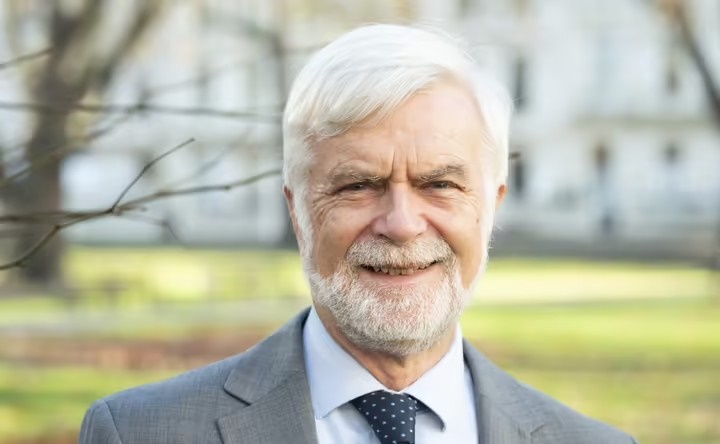
“It is apt that France is hosting our first Lead Author Meeting for the Seventh Assessment Report on the 10th anniversary of the Paris Agreement. The meeting marks the beginning of our assessment of the latest science related to climate change. From here on, our focus will be on delivering scientifically robust and actionable findings relevant for the world’s policymakers,” said IPCC Chair Jim Skea.
The IPCC provides the world’s policymakers with comprehensive summaries that synthesise and contextualise what is known about the drivers of climate change, its impacts and future risks, and how adaptation and mitigation can reduce those risks. Through its assessments, the IPCC identifies the strength of scientific agreement in different areas and indicates where further research is needed.
“In this year marking the 10th anniversary of the Paris Agreement, France is proud to host the very first joint meeting of all IPCC authors. This is an opportunity to send a strong message of support for science, which must remain the foundation of our decisions to reduce our emissions everywhere across the world,” said Monique Barbut, Minister of Ecological Transition, Biodiversity and International Negotiations on Climate and Nature.
France’s Minister for Europe and Foreign Affairs, Jean-Noël Barrot, said: “Ten years after the Paris Agreement, France is proud to champion climate and scientific diplomacy informed by the work of the IPCC. In an era marked by growing information warfare, France stands as a steadfast bulwark against attacks on science. We will continue to act with strength and determination to ensure that science and climate action remain inseparable.”
IPCC assessments aim for the highest standards of scientific excellence, balance, and clarity. Appointed experts volunteer their time and expertise as IPCC authors to assess the tens of thousands of scientific papers published each year.
“The sheer volume and high level of interest that we received from the scientific community to participate in the IPCC is a positive indication of a global commitment to advance climate action policies that are rooted in science,” said Robert Vautard, Co-Chair of Working Group I and senior climate scientist at the National Centre for Scientific Research at Institute Pierre-Simon Laplace, Paris.
IPCC reports are subject to multiple stages of review to ensure a comprehensive, objective and transparent assessment of the current state of knowledge of the science related to climate change. An open and transparent review by experts and governments around the world is an essential part of the IPCC process, to ensure an objective and complete assessment and to reflect a diverse range of views and expertise.
The IPCC’s first joint Lead Author Meeting will be opened by Monique Barbut, Minister of Ecological Transition, Biodiversity and International Negotiations on Climate and Nature.