

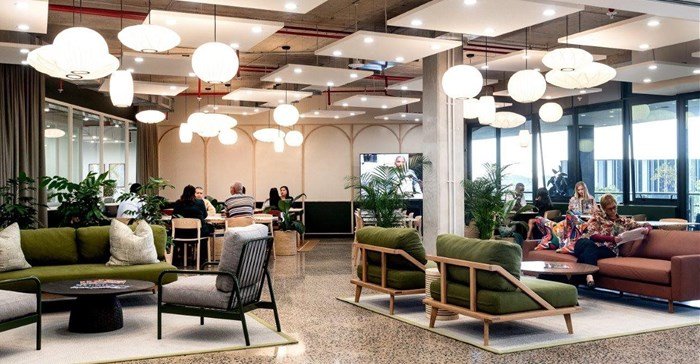
The idea that creativity is all about the people in the room has dominated how we think about innovation for decades. Hire the right minds, assemble dynamic teams, mix seniority and junior energy; and the ideas will follow. But the physical space where this thinking takes place is often treated as secondary. A blank canvas. A neutral backdrop. It isn’t.



Source: Supplied.
Where we work shapes how we think. It influences our interactions, our focus, our willingness to speak up – even our mood. It follows that space is not just the container for collaboration; it is one of its key ingredients.
Neuroscience shows that our surroundings, from light and noise to the presence of others, have a direct impact on how we think and feel. Behavioural design builds on this, revealing how subtle shifts in layout or atmosphere can reshape how people move, interact and focus.
Organisational psychology connects the dots, reminding us that culture is not just defined in strategy documents. It is experienced daily, through spatial cues like furniture placement, sound and the invisible norms a room encourages or suppresses.
Enter the open-plan office. This work solution concept was once championed as the answer to innovation. Tear down the walls, the thinking went, and ideas will flow. But while open spaces may encourage visibility, they can also erode privacy and focus.
The constant proximity to others, the background noise, the lack of boundaries; these often lead not to spontaneous collaboration but to quiet withdrawal. People find ways to disappear in plain sight: headphones go on, requests for remote days increase, people begin to seek polite distance. The cost of bad design isn’t just discomfort – it’s disengagement.
Design enables performance
A better model acknowledges that different types of work demand different environments. Focused tasks need quiet. Strategy sessions need stimulation. Informal exchanges – where some of the best ideas begin – need somewhere relaxed, without the pressure of being seen to perform.
The most effective workspaces are zoned, flexible and intentional. They offer choice, not just space. They offer places, not space: places to be comfortable, focused and connected to achieve what you set out to achieve. They follow the natural ebb and flow of creativity instead of forcing it in one common, soulless space.
What matters even more than layout is the emotional signal a space sends. Does it invite people in or push them away? Does it communicate that individuals are trusted to manage their time and energy, or that they are being monitored, measured and contained? Some may even say it feels like being observed for behavioural changes—more like lab animals than people—which is the antithesis of inspired thought.
In one industrial-era factory, workers began queuing to clock out at 3.45pm, long before the 4pm end of shift. Not because they were lazy, but because the environment trained them to value time over contribution. They were managed by the minute… and they responded in kind. Innovation doesn’t happen when people are watching the clock. It happens when they lose track of time because they’re absorbed in what they’re doing.

The new urban oasis: How a hat factory became Cape Town’s latest luxe aparthotel
Compare this with spaces designed for movement and encounter. A person grabbing a coffee ends up in conversation with someone working on something completely different and unexpected connections are made. These collisions don’t happen by accident. They happen because the environment was built to encourage them, subtly and respectfully.
A case in point would be when Workshop17 was in its formative years, the founders were intent that their workspaces would welcome everyone from solo entrepreneurs to corporate executives. The aim wasn’t just flexibility; it was to remove the invisible barriers that keep people in silos. The thinking was simple: new ideas often come from unlikely conversations. So why not design a space that encourages them?
Human-centred workspaces
There’s also a growing recognition that the traditional one-size-fits-all approach to workspace design fails to serve the reality of neurodiverse teams. Bright lights, loud conversations and rigid routines may suit some but overwhelm others. A truly creative space must accommodate variation – not just in work styles, but in sensory needs and social energy. Offering pockets of calm, tools for privacy and spaces for quiet recharge is not a perk – it’s essential for inclusive thinking.
Control is another overlooked factor. Research consistently shows that when people have autonomy over how, where and when they work, they perform better. This applies to the physical environment too. Being able to choose your seat, adjust the lighting, close a door, or move to a different room gives people a sense of ownership; and that, in turn, nurtures psychological safety.
The post-pandemic shift to hybrid work has only sharpened the need for environments that feel human. People who’ve worked from home know the value of comfort, autonomy and quiet. In order to bring them back into a shared space, employers can’t rely on obligation. The office has to offer something better – not just in terms of resources, but in terms of experience. It has to earn people’s presence.
That means getting rid of outdated binaries like “work/life balance”, which assume the two are separate and in competition. People don’t stop being parents, partners or creatives when they enter the office. The best workspaces acknowledge this; not with gimmicks, but with thoughtful design that supports the full range of human needs.
Even rituals matter. Weekly check-ins, shared meals, open brainstorming hours – all these signal values, set tone, and help people align without needing to over-communicate. The environment can support these rituals or subtly undercut them. If there’s no place to gather comfortably, the informal sync stops. If it’s hard to find a quiet corner, deep thinking is replaced with shallow tasks.
Spaces shape trust
Psychological safety is often spoken about in terms of leadership or management style. But it’s also physical. When people feel overheard, exposed or crowded, they shut down. When they feel at ease; when they have space to think, speak, and sometimes just be, they open up.
So, what makes some spaces more creative than others? It isn’t the presence of a whiteboard or a brainstorm room. It’s whether people feel they belong. Whether they feel safe to suggest something half-formed. Whether they sense that the environment is on their side.
True innovation doesn’t just need talent. It needs trust. And trust is built – not just by people, but by places too.


