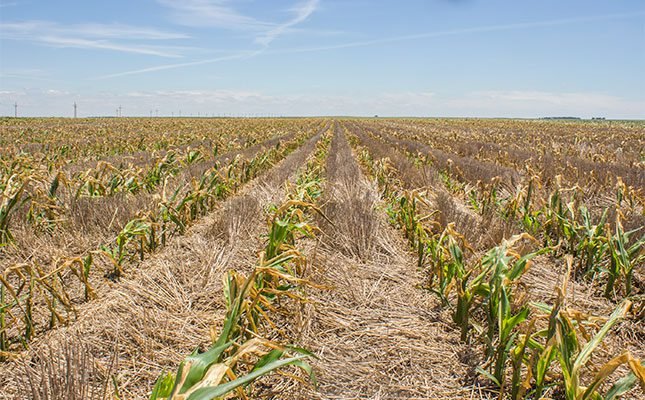
The increase in frequency and severity of climate disasters has meant that farmers are increasingly unlikely to recover from adverse weather events. The agriculture sector has therefore reiterated calls for government to provide subsidised insurance to maintain food production.


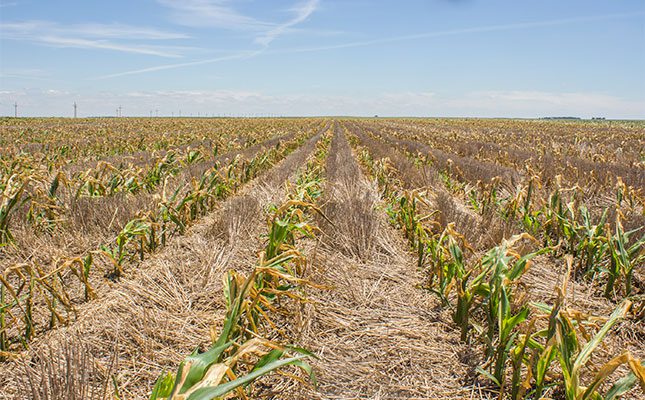
Photo: Wikimedia Commons
“Internationally there is growing recognition that the financial impact of losses that occur because of natural disasters is becoming excessive. No economy or industry can carry it alone,” said Andries Wiese, national business development manager at Hollard.
He told Farmer’s Weekly that despite this increase in risk, the number of farmers insuring their crops against crop failure has decreased over the last 50 years. Today, only around 30% of crop farmers insured their crops.
“The principle behind insurance is that the many pays for the few. If there are too few that have insurance, the premium is much higher, making it unaffordable for many.”
Calls for subsidised insurance
Wiese noted that South Africa was one of the few countries where the government did not subsidise insurance costs for farmers.
“The conversation to have a SASRIA [South African Special Risks Insurance Association] type insurance for farmers was introduced some 20 years ago by Thoko Didiza, during her tenure as agriculture minister. But, we have yet to see any appetite from government to reignite the discussion and make the funds available.”
Richard Krige, chairperson of Grain SA, emphasised the need for such a subsidised insurance instrument to maintain food security.
“Failed crops bring increased financial burdens. It takes longer to repay loans, and financiers are requiring exponentially higher security before providing a loan. Higher interest rates increase carry-over debt from one season to the next, and from one generation to the next. It used to take a year for a farmer to recover from adverse weather, now it is taking up to five years because of the increasing costs,” he said.
He noted that while all sectors were affected by climate change, the ripple effect for the grain industry was especially concerning, since it impacted the livestock industry, and the price of staple foods.
Helping farmers survive climate-related catastrophes was also necessary to see greater progress with transformation. Krige said that new farmers especially needed a safety net.
“We are losing investments we are making in new farmers because they can’t recover from adverse weather. They struggle to get financing as it is because they don’t have title deeds. If the risk of crop failure is increasing, then financing is only set to become more difficult to come by for these farmers.”
Hybrid solutions
Wiese noted that the insurance industry globally had developed products to mitigate against the increasing climate risk. This included hybrid solutions like parametric insurance, alternative risk transfer, and in the case of countries like the US and in the EU, a government subsidised insurance.
“If we had the latter in South Africa, it would mean more farmers would survive climate catastrophes. The payouts might not be substantial, but it would at least mean that they would not have to exit the industry,” said Wiese.
South Africa currently offers parametric insurance, where a group of farmers in a geographical area could band together to insure their crops against disasters. Unlike traditional insurance, farmers in the group each receive the same payout when a disaster occurs, regardless of each farmer’s level of damage.
Wiese added that alternative risk transfer was a relatively new insurance product for large-scale farmers, which allowed for the transfer of risks to entities outside the traditional insurance market, often involving the capital markets or customised structures.
“These two products, in addition to conventional insurance, can help to mitigate against climate-related risk. The challenge is that they can’t all be combined into one product currently. Ideally, farmers would at the very least be covered by a government-subsidised product which they can use as a base and then insure up from there as their budgets allow,” he explained.