

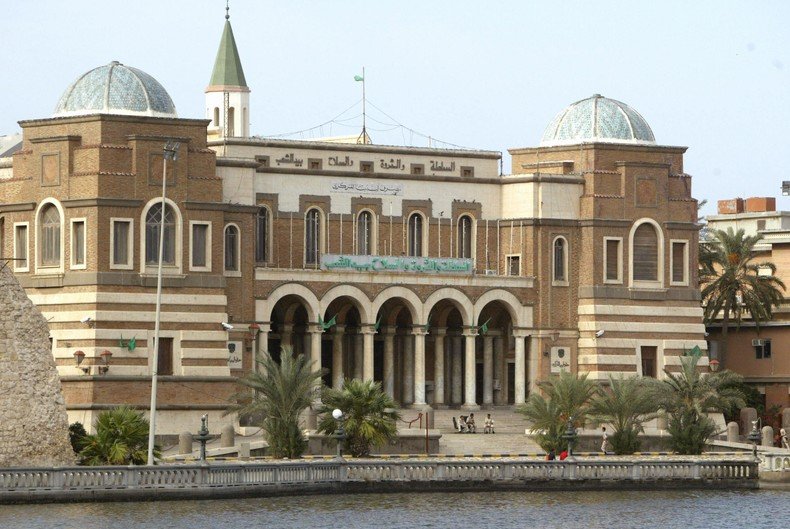
According to the end of the year Global Firepower Index of 2025, a handful of African countries have emerged as the continent’s financial anchors, backed by billions of dollars in foreign exchange and gold reserves.
These reserves serve as a buffer during global shocks, support currency stability, and influence investor confidence.
The latest figures show that while a few countries dominate the list, others are steadily climbing, reflecting broader changes in regional trade, commodity cycles, and monetary reforms.


1. Libya
At the top of the ranking is Libya, which leads Africa with reserves valued at more than $ 92 billion.
Despite years of political turbulence, the country’s substantial oil wealth continues to generate substantial foreign currency earnings.
This places the country well ahead of many of its peers, underscoring the resilience of its oil-driven economy.
2. Algeria
Algeria takes second place with over $81 billion in reserves. Like Libya, Algeria depends heavily on hydrocarbons, but recent policy adjustments have helped the country rebuild its foreign assets after periods of strain.
High global energy prices, reduced external debt, and tighter import regulations have all contributed to strengthening Algeria’s financial position.
For a country balancing economic reform and social pressures, these reserves offer an essential buffer.
3. South Africa
South Africa’s reserve levels help anchor its financial markets, which are among the most liquid on the continent.
Although the country faces structural economic challenges, its reserves continue to provide stability during a time of global uncertainty.
4. Nigeria
Nigeria ranks fourth with $41.3 billion, achieving a 4.23% GDP growth in the second quarter of 2025, marking its strongest expansion in ten years, excluding the post-COVID rebound.
The country has been under pressure in recent years due to currency reforms, high import demand, and fluctuations in oil revenue.
Even so, its foreign assets remain substantial and play a critical role in supporting ongoing economic adjustments.
5. Morocco
Morocco appears in fifth place with reserves of $ 36.3 billion.
Morocco’s proactive monetary policy and exchange rate flexibility have also helped stabilise its external balance, keeping its reserves at healthy levels.
6. Egypt
Egypt takes the sixth position with $ 33.07 billion in this year’s Global Firepower Index.
Although external pressures persist, especially in relation to debt obligations and import needs, Egypt’s reserves remain a central pillar of its financial stability strategy.
7. Angola
Angola takes the seventh spot with $ 13.9 billion in foreign reserves.
Angola’s reserves have grown in tandem with oil price recoveries and improved fiscal discipline, offering a stronger foundation for its long-term diversification goals.
8. Tunisia
Tunisia appears in eighth place with $ 9.24 billion.
Despite economic and political challenges, the country’s reserves have remained stable due to international support packages, currency controls, and efforts to revive key sectors, including tourism and agriculture.
9. Ivory Coast
The world’s number one cocoa producer, the Ivory Coast, takes the ninth spot with $ 7.58 billion in foreign reserves and gold deposits.
Stability within the regional monetary union has also helped bolster its external reserves.
10. Kenya
This development further solidifies their position in the 2025 Global Firepower Index, ranking Kenya 10th on the list.
While external debt pressures remain notable, Kenya’s reserves continue to provide the Central Bank with space to manage currency shocks.


