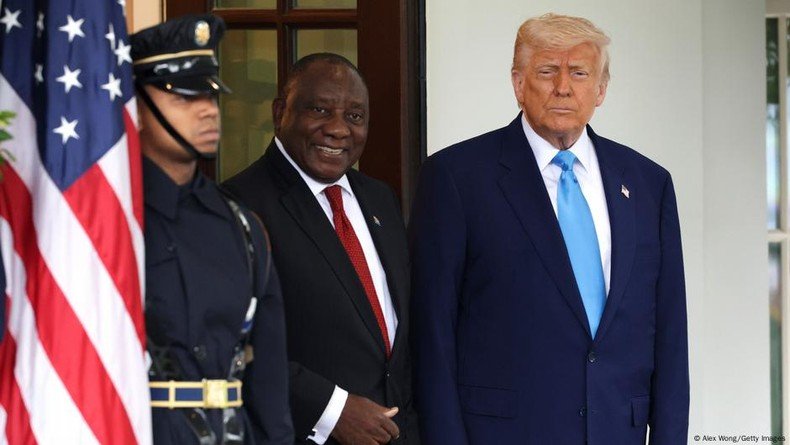
South African President Cyril Ramaphosa has strongly criticised US President Donald Trump’s decision to skip the G20 leaders’ summit in Johannesburg, warning that “boycott politics doesn’t work.”
The announcement comes amid Trump’s repeated and widely discredited claims that white South Africans, particularly Afrikaners, are being persecuted, allegations that Pretoria says have no basis in fact.
Speaking outside parliament, Ramaphosa said the US’s “absence is their loss” and stressed that the boycott would not prevent the summit from going ahead, according to BBC. He added that Washington was “giving up the very important role that they should be playing as the biggest economy in the world.”

Trump Frames South Africa Criticism Around ‘White Genocide’
President Trump continues to employ genocide rhetoric to advance his wider geopolitical criticisms of South Africa, framing the country’s recent engagement with China and Russia as a challenge to US interests, while using claims of Afrikaner persecution to justify Washington’s disengagement.
He also described South Africa’s hosting of the G20 summit as a “total disgrace” and questioned the country’s place in the forum.
Although Trump initially planned to send Vice-President JD Vance in his stead, that decision was subsequently reversed.
Historic G20 Summit on African Soil
The summit, scheduled for 22–23 November 2025, marks the first time the G20 will be held on African soil. Each year, a member state hosts the summit and sets the agenda for global economic discussions, with the US due to assume the presidency next.
Pretoria Rejects US Claims as ‘Regrettable’
Before President Ramaphosa’s response, South Africa had already condemned Trump’s remarks and his decision to withdraw US participation as “regrettable,” emphasising that claims of white genocide are “widely discredited and unsupported by reliable evidence.” The government also reaffirmed that no white farmers have had their land confiscated without compensation.
The boycott follows a reported confrontation between Ramaphosa and Trump in the Oval Office over these allegations, which have been consistently debunked by international observers, including some Afrikaner groups.
The situation is further complicated by South Africa’s growing role in BRICS, a platform whose broader objectives are seen by some as challenging the dominance of the US dollar.
Trump’s Criticism of Africa Expands
Trump’s tough rhetoric on African governance has intensified in recent months. Last week, he threatened Nigeria with possible military action over alleged Christian persecution in the country’s northern regions, a move that strained Abuja’s diplomatic efforts in Washington.
Meanwhile, senior US political figures have urged Trump to prioritise domestic economic issues over foreign policy disputes, warning that such rhetoric could undermine US engagement with Africa on trade, investment, and security matters.