– Advertisement –
The UN Framework Convention on Climate Change (UNFCCC) says that Nationally Determined Contributions (NDCs) will reduce emissions by 12 per cent in 2035.
The NDCs are commitments that countries make to reduce their greenhouse gas emissions as part of climate change mitigation.
The UNFCCC said this in its NDC Synthesis report, released on Monday, November 10, 2025, on the sidelines of COP30 in Belém, Brazil.
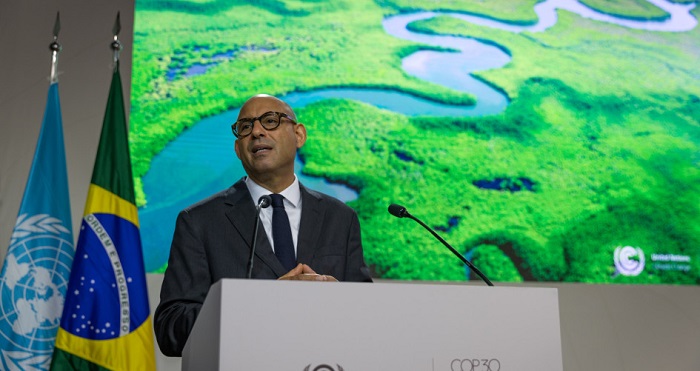
A sense of cautious optimism marked the first day of COP30, following the announcement that dozens of new national climate plans – known as NDCs – pushed the tally to 113 countries, including Nigeria now committed to curbing global warming.
Together, they represent nearly 70 per cent of global greenhouse gas emissions; a significant step forward in the race to keep temperatures in check.
The report shows that new NDCs, including many received in recent days, will reduce emissions by 12 per cent in 2035.
UNFCCC highlighted that every fraction of a degree of heating avoided will save millions of lives and billions of dollars in climate damages.
UNFCCC, which convenes the yearly COPs, suggests these pledges could cut emissions by 12 per cent, but not yet enough to guarantee the 1.5°C goal.
According to the UN climate change agency, the challenge now is turning promises into action at a pace that matches the scale of the crisis.
Speaking at the opening of COP30, the Brazilian President, Luiz Inácio Lula da Silva, called for a decisive defeat of climate denial and faster action to keep the 1.5°C goal alive.
”This is the moment to match opportunity with urgency.
Silva, however, warned that ”climate change is not a threat to the future; it is a tragedy of the present”.
Citing Hurricane Melissa in the Caribbean and a tornado in Paraná, the President declared this ”the COP of truth”, denial and delay are no longer options.
”We are moving in the right direction, but at the wrong speed,” he said, adding that Crossing 1.5°C is a risk we cannot take”.
He called strongly for an end to climate denialism, underscoring that in the age of disinformation, obscurantists reject not only scientific evidence but also the progress of multilateralism.
They control algorithms, sow hatred, spread fear, and attack institutions, science, and universities. It is time to impose a new defeat on denialists.
“Without the Paris Agreement, the world will be heading toward catastrophic warming of nearly 5°C by the end of the century,” he said
He pressed world leaders to adopt ambitious climate pledges and keep adaptation at the heart of national strategies.
He also called for a roadmap for humanity to overcome in a just and planned way, its dependence on fossil fuels, reverse deforestation, and mobilise the resources needed to do so.
To back that vision, he announced a new fund to support energy transitions in developing countries, financed by revenues from oil exploration.
Meanwhile, André Corrêa do Lago, COP30 President, presided over the official opening of the summit following a musical performance by members of the Guajajara Indigenous People.
He urged delegates to make this the ”COP of implementation, adaptation, and economic integration of climate policy and above all, the COP that listens to and believes in science”.
He acknowledged the crucial role of Indigenous Peoples as guardians of the Amazon, the region now at the centre of the world’s attention.
COP30 opened on Monday and runs through Nov. 21.
By Cecilia Ologunagba