Changing drinking habits, the rise of younger consumers, and supermarket dominance are reshaping how wine is sold and enjoyed. With traditional marketing losing traction and digital competition intensifying, producers are rethinking how to reach customers and keep their brands relevant.


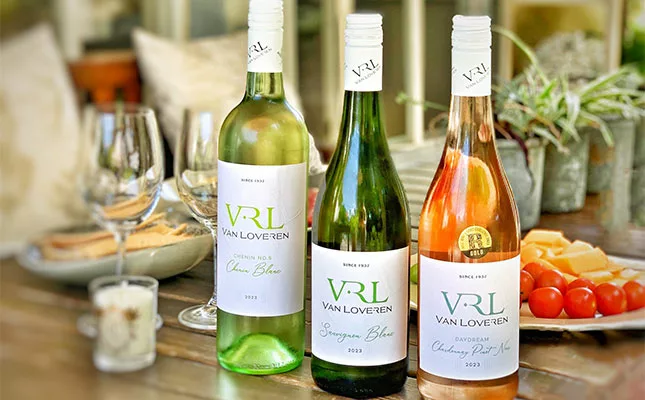
Photo: Supplied
Consumer research undertaken earlier this year by international drinks market analysts IWSR found that in mature markets such as the US and Europe, persistently high inflation continues to squeeze consumer purchasing power.
Emerging economies, however, appear more buoyant. Countries such as India, South Africa, and several across Southeast Asia and Latin America are benefitting from younger consumers, expanding middle classes, and increased urbanisation.
Nonetheless, South Africa has not escaped the realities of reduced consumer spending power.
According to Phillip Retief, CEO of Van Loveren Vineyards, economics play a central role in how consumers buy and consume wine.
“Consumers are buying down, looking for cheaper wines or smaller units. The industry gives them plenty of opportunity to do so, and promotions have become an important part of boosting sales, driven by both wineries and supermarkets,” he tells Farmer’s Weekly.
Not quite so sober
Generation Z (Gen Z), those born between the mid-1990s and mid-2010s, has presented a particular challenge to alcohol brands, having been labelled the most sober generation of all. With a stronger focus on health and wellness, alcohol consumption among this group has been lower than that of other generations at the same age.
IWSR research found that in March 2023, only 66% of Gen Z adults across the 15 markets surveyed – the US, Canada, Mexico, Brazil, the UK, Germany, France, Italy, Spain, South Africa, India, China, Japan, Taiwan, and Australia – had consumed alcohol in the previous six months. By March 2025, that figure had risen to 73%.
“There is evidence that the propensity to go out and spend more is recovering among this group, challenging the idea that this generation is abandoning alcohol,” Richard Halstead, chief operating officer of consumer insights at IWSR, says.
Alcohol consumption has climbed in key markets: in the US, Gen Z consumption has risen from 46% to 70% over the past two years, with similar increases in the UK, India, and Australia.
Van Loveren’s Almost Zero wine range, with an alcohol content of just 0,3%, has maintained its appeal despite a slowdown in the teetotalling trend.
“There are many reasons people might not drink – health, pregnancy, driving, or cultural – so the market remains there. It’s small, but it’s there,” adds Retief.
Capturing the imagination
The biggest challenge facing wine marketers today is capturing the imagination of a post-2000 generation. Retief says younger consumers don’t necessarily feel the nostalgia for or connection to wine traditions and history that older generations do.
“Their drinking habits have changed, influenced by different lifestyles and social media, which shape their worldviews in a way that traditional media never did,” he adds.
The stories behind the label still matter, but the way they are told must evolve. “It’s perhaps no longer about the origin story or the history but about how the wine speaks to the desired experiences and opinions of the youth.
“Keeping messaging simple and fun is important. On-farm tastings and tourism experiences can play a big role because they give you an opportunity to connect with consumers and build brand loyalty,” explains Retief.
The influence of younger drinkers is also visible in label design. Retief notes a clear shift towards modern, colourful designs: “While many [brands] have removed the traditional family crest, others have modernised it to balance tradition and modernity.”
However, he cautions that new labels must still communicate value. “The quality of paper and use of embossing can help signal value, even on a non-traditional label.”
The right channel
Modernising wine labels and websites and increasing social media spend are popular strategies among marketers. However, Retief warns that social media can be deceptive.
“You see your own content online and think you have good visibility. Impressions and followers can be measured, but how effective is an advert that’s seen for a split second before someone scrolls past?”
With winery income under pressure, marketing budgets have tightened. Careful decisions must be made about where to spend money – whether on in-store promotions, festivals, or online campaigns.
Retief says he believes targeted marketing will define the future. “Checkers, for example, targets a 37-year-old black female. Whoever else they capture in the process is a bonus. This approach avoids the shotgun style of marketing that can be wasteful.”
According to IWSR, digital platforms are playing a pivotal role in driving offline sales, with more consumers using online research to guide in-store purchases. Some 63% of online alcohol buyers conduct extensive research before buying – a behaviour increasingly seen among offline shoppers, too.
Price comparison and product discovery remain key drivers, with brand websites, reviews, and delivery apps influencing purchasing decisions across all channels.
Meanwhile, supermarkets continue to dominate the retail space. Retief notes that while they offer unmatched reach, they also create challenges for wineries.
“With the contraction of liquor store chains, we’ve lost many independently owned outlets that could easily list individual products. Supermarkets require bulk listings to supply every branch, which limits opportunities for smaller producers,” he explains.
He adds that supermarkets often expect brands to align with their own promotions. “The cost to take part is high, since the brand must absorb the discount offered to consumers. Often, you barely break even. The only way to counter that loss is through economies of scale.”
Despite the headwinds facing the wine industry, from shrinking marketing budgets to shifting consumer habits, there are opportunities for growth. Wineries that stay agile, embrace digital engagement, and find creative ways to connect with younger, value-conscious consumers are likely to remain resilient in an evolving market.