
• Business
  • Markets
  • Politics
  • Crypto
  • Finance
  • Intelligence
    • Policy Intelligence
    • Security Intelligence
    • Economic Intelligence
    • Fashion Intelligence
  • Energy
  • Technology
  • Taxes
  • Creator Economy
  • Wealth Management
  • LBNN Blueprints
  • Business
  • Markets
  • Politics
  • Crypto
  • Finance
  • Intelligence
    • Policy Intelligence
    • Security Intelligence
    • Economic Intelligence
    • Fashion Intelligence
  • Energy
  • Technology
  • Taxes
  • Creator Economy
  • Wealth Management
  • LBNN Blueprints

As algorithms learn from famous artists, researcher questions boundaries of artistic ownership and originality

Simon Osuji by Simon Osuji
November 6, 2025
in Artificial Intelligence
0
As algorithms learn from famous artists, researcher questions boundaries of artistic ownership and originality
0
SHARES
1
VIEWS
Share on FacebookShare on Twitter


When AI paints like van Gogh, who gets the credit?
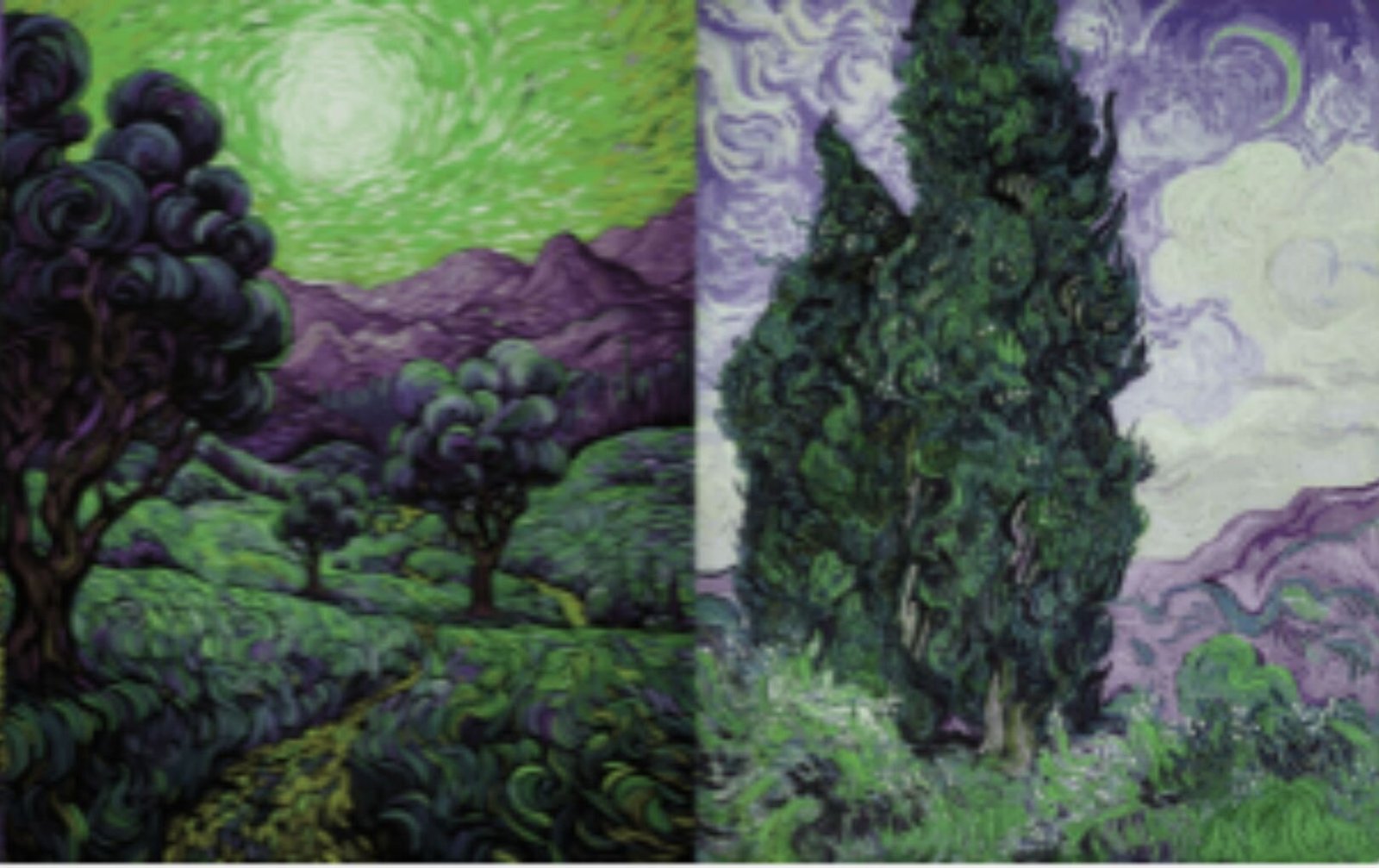
Manipulated image generated with AI (left), van Gogh’s “Cypresses” (right). Credit: Ananya Singh

Vincent van Gogh, Leonardo da Vinci and Pablo Picasso created some of the most recognizable works of art in history. Their masterpieces have been displayed around the world, admired by millions and inspired generations of artists.


Related posts

AI, Fancy Footwear, and All the Other Gear Powering Olympic Bobsledding

AI, Fancy Footwear, and All the Other Gear Powering Olympic Bobsledding

February 15, 2026
CurrentBody LED Hair Growth Helmet Review: Baby Hairs Abound (2026)

CurrentBody LED Hair Growth Helmet Review: Baby Hairs Abound (2026)

February 15, 2026

But if artificial intelligence generated an image mimicking their distinct styles and techniques, would their original work still stand apart? And if AI draws on their creations to produce something new, should those artists receive credit for the inspiration their work provides?

As in many other fields, the arts have seen AI become increasingly more popular, with the technology reshaping the way creators produce and generate art. Naturally, questions of creative authenticity and originality have stirred debate about whether art created—or co-created—using AI merits the same value as work made solely by humans.

In new research published in Journal of Information, Communication and Ethics in Society, Ananya Singh, assistant professor of visual communication design at The University of Texas at Arlington, explores how AI is reshaping the boundaries of creativity and authorship in the arts. She advocates for “a system that encourages innovation and protects the rights of artists and creators.”

“If someone were to take the ‘Mona Lisa,’ which was originally created by Leonardo, and modify or use it to create something new using AI, who receives credit for what’s been generated,” Dr. Singh asked. “In most cases, AI is receiving the credit, and the real artists are not being appreciated or acknowledged for the use of their original works.”

In her research, Singh found growing acceptance for AI-generated art. She recognizes that artists should have room to experiment with new software and applications when creating; however, she argues that when human-made art is used as a source for AI creations, the original artists should be credited and recognized for their work.

“I visited a couple art museums in New York and Washington recently,” Singh said. “I was shattered when I saw artwork that had clearly been created with AI, but there was nothing I could reference or read about the original artwork. Increasingly, creators are also running art through these programs without any knowledge of the original works or the artists— it’s devastating.”

Her solution is to use AI to create data files within AI-generated art that identify and credit the original artwork and artist.

“As more and more people use AI to create—especially non-artists—there is a lack of awareness about how to appropriately give credit to artists,” Singh said. “With art all around us, there needs to be way to give credit and have it live with the original work as it gets modified, replicated and distorted.”

More information:
Ananya Singh, Creativity reimagined: ethical authorship, ownership and social impact of AI-generated art, Journal of Information, Communication and Ethics in Society (2025). DOI: 10.1108/jices-06-2025-0137

Provided by
University of Texas at Arlington

Citation:
As algorithms learn from famous artists, researcher questions boundaries of artistic ownership and originality (2025, November 5)
retrieved 5 November 2025
from https://techxplore.com/news/2025-11-algorithms-famous-artists-boundaries-artistic.html

This document is subject to copyright. Apart from any fair dealing for the purpose of private study or research, no
part may be reproduced without the written permission. The content is provided for information purposes only.


Source link

Previous Post

Sharjah Startups Secure Over AED 4 Million at Seal the Deal 2025

Next Post

This startup’s metal stacks could help solve AI’s massive heat problem

Next Post
This startup’s metal stacks could help solve AI’s massive heat problem

This startup's metal stacks could help solve AI's massive heat problem

Leave a Reply Cancel reply

Your email address will not be published. Required fields are marked *

RECOMMENDED NEWS

DWS Responds to Study on ARV Traces in Water, Prioritises Investigation with Health Experts

DWS Responds to Study on ARV Traces in Water, Prioritises Investigation with Health Experts

7 months ago
Uganda, TZ Ranked Among World’s Fastest Growing Economies

Uganda, TZ Ranked Among World’s Fastest Growing Economies

2 years ago
Figma Pauses AI App Designer Over Apple iOS Copy Concerns

Figma Pauses AI App Designer Over Apple iOS Copy Concerns

2 years ago
BRICS antitrust watchdogs turn against Covantis

BRICS antitrust watchdogs turn against Covantis

1 year ago

POPULAR NEWS

  • Ghana to build three oil refineries, five petrochemical plants in energy sector overhaul

    Ghana to build three oil refineries, five petrochemical plants in energy sector overhaul

    0 shares
    Share 0 Tweet 0
  • The world’s top 10 most valuable car brands in 2025

    0 shares
    Share 0 Tweet 0
  • Top 10 African countries with the highest GDP per capita in 2025

    0 shares
    Share 0 Tweet 0
  • Global ranking of Top 5 smartphone brands in Q3, 2024

    0 shares
    Share 0 Tweet 0
  • When Will SHIB Reach $1? Here’s What ChatGPT Says

    0 shares
    Share 0 Tweet 0

Get strategic intelligence you won’t find anywhere else. Subscribe to the Limitless Beliefs Newsletter for monthly insights on overlooked business opportunities across Africa.

Subscription Form

© 2026 LBNN – All rights reserved.

Privacy Policy | About Us | Contact

Tiktok Youtube Telegram Instagram Linkedin X-twitter
No Result
View All Result
  • Home
  • Business
  • Politics
  • Markets
  • Crypto
  • Economics
    • Manufacturing
    • Real Estate
    • Infrastructure
  • Finance
  • Energy
  • Creator Economy
  • Wealth Management
  • Taxes
  • Telecoms
  • Military & Defense
  • Careers
  • Technology
  • Artificial Intelligence
  • Investigative journalism
  • Art & Culture
  • LBNN Blueprints
  • Quizzes
    • Enneagram quiz
  • Fashion Intelligence

© 2023 LBNN - All rights reserved.