As the mobile industry rapidly transitions into the era of AI-driven networks, microwave technology is emerging as a crucial enabler of high-capacity, efficient, and flexible connectivity.
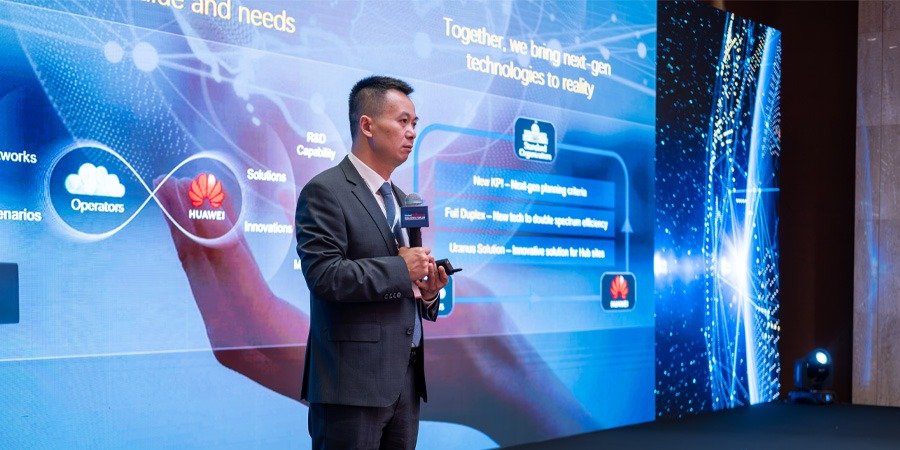
In an exclusive interview with Telecom Review Africa, Zeng Chuang, President of Huawei’s Microwave Product Line, discussed how microwave solutions are adapting to meet the demands of mobile AI, the importance of cross-industry collaboration, and the transformative potential of Full-Duplex microwave technology for operators worldwide.
The Global Microwave Industry Forum 2025 explored the theme ‘Microwave, Empowering Mobile AI’. What do you think are the key changes that will occur in the network environment in the mobile AI era? How can microwave technology evolve to better adapt to the needs of network construction?
It’s true that everyone is talking about mobile AI, and the discussion generally approaches it from two perspectives, particularly regarding the network. AI is expected to generate additional traffic, which is something anticipated since the very beginning of 5G. Mobile AI, particularly AI-generated content (AIGC), needs to transmit very high-resolution, high-quality content over the network. As a result, the bandwidth demands increase significantly due to mobile AI.
This raises the question: Is the network itself prepared for AI? The answer is: Not fully. We already observe some limitations. For example, in the future, we expect more interaction between consumers and machines, with large AI models running in the cloud. To ensure a good user experience, response times need to be very short. This means networks need further optimization to reduce latency and jitter. Microwave links are part of this chain, even though the latency contribution is not huge; it still needs to be optimized carefully.
Another consideration is that AI-supported devices will generate more content locally, but this data also needs to be uploaded to the cloud for processing. Therefore, uplink link speed and delay become important.
In summary, microwave transmission is central to these challenges. Latency, link bandwidth, and E2E uplink speed all need to be addressed to fully support mobile AI and reshape the capabilities of microwave networks.
Since its launch, the Full-Duplex Microwave Solution has garnered widespread attention from global operators and is currently undergoing extensive field testing and deployment in more than 20 operators. Which areas do you think its future application scenarios will focus on? What core pain points in future network development can it help customers address? What value and significance do you think the widespread application of this groundbreaking technology will bring to the industry?
We are talking about Full-Duplex, the latest innovation. If you attend the forum, you can see that every operator is discussing spectrum efficiency, network capacity, and the associated challenges. Meanwhile, anyone with a technical background understands how difficult it is to improve spectrum efficiency. For example, higher modulation schemes can only achieve about a 6% increase.
Full-Duplex, however, can effectively double spectrum efficiency without increasing spectrum costs for the operators. There are three key benefits of this technology:
Firstly, it enables ubiquitous 5G deployment. Not every operator has sufficient spectrum resources in the cases fiber is not accessible. Full-Duplex can work in these scenarios, providing an effective solution for operators.
Secondly, it unlocks real-world scenarios that were previously limited, i.e., FTTH backhaul. Operators have options like satellite, fiber, and microwave. But traditional microwave often cannot deliver sufficient bandwidth. Full-Duplex can deliver up to 50 Gbps, enabling operators to deploy in these challenging scenarios, unlock new potential applications, and achieve significant economic benefits.
Thirdly, and most importantly, Full-Duplex is a revolutionary technology with a strong positive impact. Currently, it is applied in the E-band. But lower frequency bands, increasingly allocated to IMT, have limited spectrum resources. Applying Full-Duplex technology to these lower bands could dramatically improve microwave capabilities, opening up tremendous possibilities for the future.
In summary, Full-Duplex offers three major advantages: enabling ubiquitous 5G deployment, unlocking real-world scenarios, and providing transformative potential for the future of microwave technology.
The forum proposed that the future development of microwave technology cannot be separated from multi-party collaboration among industrial organizations, operators, regulatory authorities, and equipment vendors. What dimensions do you think stakeholders across the industrial chain should strengthen cooperation in?
You are asking a very critical question. Microwave networks have a relatively independent ecosystem, but cooperation is essential. Let me explain my point of view.
What do we mean by “cooperation”? There are four types of partners. In the middle, we have solution vendors like Huawei, and industry partners. Industry partners provide components and technologies that solution vendors combine from all over the world into devices and solutions for operators.
The second group is operators. They understand their network requirements very well and have extensive experience in areas like maintenance and service delivery.
We also have other partners, such as National Regulatory Administrations, who define spectrum policies and other rules that operators and vendors must follow.
Solution vendors and operators must collaborate closely to identify key points and verify solutions. Once a solution is proven to be useful, they shall also work with regulatory administrations to conduct policy revising or optimization if needed.
Meanwhile, vendors such as Huawei need to encourage industry partners to invest in cost-effective components and the development of enabling technologies. This will help transform conceptual solutions into practical and commercial products that meet real-world requirements in terms of cost, performance, and delivery capabilities.
Recently, there have been many promising innovations in microwave technology driven by close collaboration between operators and vendors. However, further cooperation across the industry is still needed to move these technologies forward. For example, CCIC and Full-Duplex can both significantly improve the spectrum efficiency, but their adoption largely depends on national spectrum policies. This is where regulators play a crucial role—helping to bridge the gap between laboratory research and real-world deployment.