

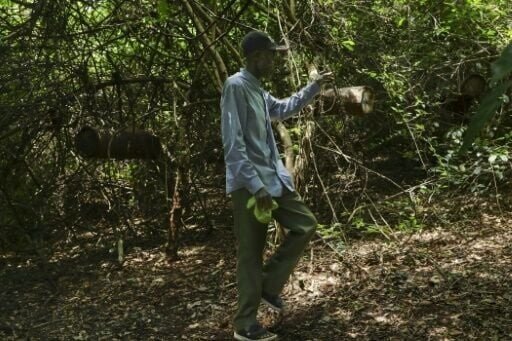
Kenya has become the latest focal point in the global contest for critical minerals, with Mrima Hill on the country’s southern coast identified as one of Africa’s richest sources of rare earth elements used in electric vehicles, renewable energy systems, and advanced electronics.
The 157-hectare forest in Kwale County is estimated to contain mineral deposits worth more than US$62 billion, according to earlier studies by Cortec Mining Kenya, a subsidiary of UK- and Canada-based Pacific Wildcat Resources.
The site holds niobium and other valuable minerals used in steelmaking, aerospace engineering, and clean-tech production.
Foreign Interest Intensifies
The discovery has drawn the attention of global powers seeking to diversify their critical mineral supply chains. In June, Marc Dillard, then interim U.S. ambassador to Kenya, visited Mrima Hill as part of Washington’s diplomatic effort to secure sustainable access to Africa’s rare earths.
South China Morning Post reported that Chinese nationals have also attempted to visit the area in recent months but were turned away by local guards.
Adding to the contest, an Australian consortium of mining firms, RareX and Iluka Resources, has announced plans to explore the site, while land speculators and investors are reportedly flocking to nearby coastal villages.
Local Fears and Cultural Significance
The renewed global interest has stirred unease among residents, mainly from the Digo ethnic group, who fear displacement and exclusion from any future mining benefits.
For the people of Mrima Hill, the attention from foreign investors brings both anticipation and apprehension. The forested hill is more than a potential mining site; it holds sacred shrines, medicinal plants, and ancestral graves that represent the spiritual centre of the Digo community.
Many locals rely on its fertile land for small-scale farming, even as more than half of the area’s population lives below the poverty line, according to recent data.
“People come here with big cars, but we turn them away,” said Juma Koja, a local forest guard, in an interview with Agence France-Presse. “I do not want my people to be exploited again.”
Residents fear that large-scale mining could trigger evictions, environmental degradation, and the erosion of cultural heritage, echoing Kenya’s past challenges with resource extraction.
However, while some fear the loss of heritage, others see opportunity in mining. “Why should we die poor while we have minerals?” said Domitilla Mueni, a farmer who has begun developing her land to increase its value ahead of possible projects.
Kenya’s Troubled Mining Past
Kenya’s mining sector has long been marked by disputes between investors and the government.
In 2013, authorities revoked the licence of Cortec Mining to operate in Mrima Hill, citing environmental concerns and irregularities in the licensing process.
The company claimed it lost the permit after refusing to pay a bribe to then Mining Minister Najib Balala, an allegation Balala denied.
Following years of legal challenges, Kenya imposed a temporary moratorium on new mining licences in 2019 to curb corruption and reassess its regulatory framework.
However, with global demand for rare earths rising and China limiting exports, Nairobi has reopened its doors to investors.
The Ministry of Mining this year announced “bold reforms”, including new tax incentives, improved licensing transparency, and a digital registry aimed at expanding the sector’s contribution from 0.8 per cent to 10 per cent of GDP by 2030.
Africa’s Strategic Resource Role
Across the continent, governments are repositioning their mineral policies as competition for critical resources accelerates.
From Zambia’s copper and cobalt to Namibia’s lithium and the Democratic Republic of Congo’s rare earths, Africa is now central to the global clean-energy transition.
“There’s a romantic view that mining is an easy way to get rich,” Professor Daniel Weru Ichang’i, a retired economic geologist at the University of Nairobi, told reporters. “But corruption and weak governance make it risky. If Kenya wants to benefit, it must strengthen institutions and ensure national interests come first.”
He added that competition between the West and China is pushing prices higher, but Kenya’s long-term gains will depend on adherence to the law and the prioritisation of collective national interests over personal gain.
A Continental Shift Under AfCFTA
As competition for critical minerals intensifies, governments across the continent are rethinking how to manage and profit from their vast mineral wealth.
The African Union has introduced the Green Minerals Strategy, a continental blueprint designed to move Africa beyond the export of raw materials toward local refining, manufacturing, and industrialisation.
Within the framework of the African Continental Free Trade Area (AfCFTA), policymakers are exploring ways to link national economies through regional value chains and promote trade in mineral-based products within Africa itself.
In several countries, new restrictions on the export of unprocessed minerals have already been introduced to encourage investment in processing and value addition.
These efforts are part of a broader recognition that the old model; where Africa supplied the world with raw resources but reaped little benefits, is no longer sustainable.


