By Berit Lolo, Gregory Sikumba & Benard Simiyu



Introduction
The global imperative to feed a growing population while simultaneously combating climate change has catalyzed the development of innovative solutions that merge agriculture with renewable energy. Kenya receives an average of 5–7 kWh/m² of solar radiation daily, yet less than 5% of its agricultural land currently integrates renewable energy solutions. One particularly promising approach gaining significant traction is agri-solar, a hybrid model that integrates solar panels directly with farming activities on the same parcel of land. This co-location strategy aims to optimize land use efficiency, boost farm incomes, and contribute to clean energy generation, creating a synergistic relationship between food and power production. As nations like Kenya actively pursue sustainable development pathways, a critical question emerges: can agri-solar truly be a key to a sustainable future? This blog delves into this question by examining the concept of agri-solar, its multifaceted benefits, the practical challenges to its adoption, illustrative examples within Kenya, and the future prospects for scaling up this innovative approach to support both environmental and social goals.
What is Agri-Solar?
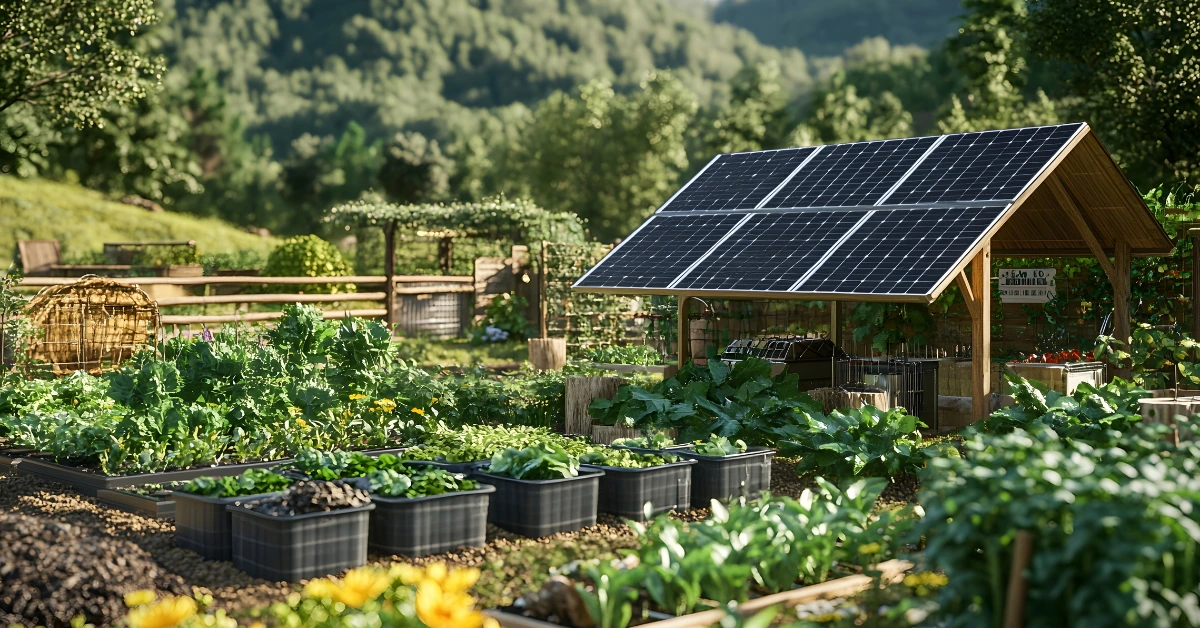
Agri-solar, also known as agrivoltaics, refers to the dual use of agricultural land for both conventional crop cultivation or livestock rearing and solar power generation. This model stands in contrast to conventional standalone solar farms, which dedicate land exclusively to energy production. In an agri-solar system, solar panels are strategically installed above or alongside crops and pastures, allowing farmers to harvest sunlight for electricity while continuing their agricultural operations. A key feature of many agri-solar installations is the elevation of panels, which provides partial shading for crops beneath. This shading can yield significant agronomic benefits, such as improved soil water retention and the creation of more favorable microclimates for certain plant species, particularly in arid and semi-arid regions. Configurations can range from fixed elevated structures to more advanced systems with adjustable panels that track the sun to optimize light exposure for both the plants and the photovoltaic cells. As highlighted in a report by the International Renewable Energy Agency (IRENA), this integrated approach leverages limited farmland more intensively, embodying a powerful synergy that addresses the interconnected challenges of energy and food production.
Potential Benefits of Agri-Solar in Kenya
Kenya presents a fertile ground for the expansion of agri-solar systems due to its abundant solar radiation and an economy heavily reliant on agriculture for livelihoods and employment. The potential benefits are multifaceted. Environmentally, agri-solar directly contributes to reducing greenhouse gas emissions by displacing diesel-powered generators and kerosene lamps commonly used in rural areas. The partial shading from panels can mitigate water stress for crops, a critical advantage in Kenya’s drought-prone regions, potentially leading to higher yields for certain shade-tolerant species. Economically, this model provides farmers with a diversified and more resilient income stream; they can profit from selling surplus electricity to the grid while maintaining their agricultural output. This diversification is a crucial buffer against climate variability and market fluctuations. Furthermore, agri-solar presents a significant opportunity to empower rural communities, including women and youth, by creating decent work in both the farming and renewable energy sectors. Given the high unemployment rates in many rural counties, combined agri-solar projects can be a catalyst for inclusive economic growth and community-level resilience against climate impacts.
Case Study of an Agri-Solar Initiative in Kenya
A leading example of agri-solar application in Kenya is the Distributed Renewable Energy Ecosystem Model (DREEM) project, hosted by the Kenya Climate Innovation Centre (KCIC). This innovative initiative focuses on integrating solar power into critical agricultural value chains, particularly dairy and horticulture, in semi-arid counties such as Isiolo, Kitui, Laikipia, and Makueni. The DREEM project supports smallholder farmers and cooperatives by deploying solar-powered solutions, including milk cooling and processing systems. These technologies directly reduce energy costs and post-harvest losses while enabling cleaner production methods. Beyond the immediate technological benefits, the project empowers youth and women through targeted agri-solar entrepreneurship training and job creation, fostering a new generation of green entrepreneurs. By facilitating access to affordable solar energy and financing, DREEM builds stronger community resilience against climate change impacts and decreases reliance on costly, polluting fossil fuels. This integrated approach aligns closely with Kenya’s national commitments to higher renewable energy penetration and sustainable agriculture development, as outlined in the long-term development blueprint, Kenya Vision 2030, and the strategic Kenya Climate Change Action Plan.
Challenges for Agri-Solar Adoption in Kenya
Despite its considerable promise, the widespread adoption of agri-solar in Kenya faces several practical and policy challenges, as noted in a report by Food and Agriculture Organization (FAO). A primary barrier is the high upfront cost associated with solar technology and its installation, which can be prohibitive for smallholder farmers without targeted financial support or innovative financing mechanisms. Furthermore, policy and regulatory frameworks often have gaps, lacking clear guidelines for connecting these distributed energy systems to the grid and ensuring fair remuneration for fed-in power. There is also a significant lack of technical capacity; farmers and local technicians require training to manage and maintain the dual systems effectively. From an agronomic perspective, a key technical challenge lies in balancing crop yield with energy production. Not all crops are suitable for agri-solar environments; some high-value crops requiring full sun may experience lower yields under partial shading, which can limit the range of viable agricultural products for these systems. Addressing these interconnected challenges through financial innovation, supportive regulation, and targeted research is critical for agri-solar’s broader adoption across the country.
Policy, Institutional Support, and Future Prospects in Kenya
Policy, institutional support, and future prospects are critical pillars shaping the successful adoption and scaling of agrisolar technologies in Kenya, which combine solar energy generation with agricultural activities to boost food security and clean energy.
Policy
A supportive policy framework is essential for agrisolar adoption and scaling. Kenya’s policies increasingly recognize agrisolar as a strategic solution for sustainable development. The National Energy Policy 2025-2034 promotes renewable energy integration in agriculture, emphasizing solar-powered irrigation and value addition to increase farm productivity while reducing carbon footprints. Additionally, Kenya has formulated specific support mechanisms and subsidy schemes designed to increase access to solar technologies among smallholder farmers, facilitating affordability and uptake. The government’s commitment is also reflected in dedicated programs such as the Solar Energy for Agricultural Resilience (SoLAR) project, which channels resources into solar irrigation and processing solutions
Institutional Support
Institutional support in Kenya is robust, featuring collaboration between government agencies, research institutions, innovation hubs, and development partners. The Ministry of Water, Sanitation and Irrigation leads solar irrigation initiatives, while innovation centers like the Kenya Climate Innovation Center (KCIC) provide technical support, financing facilitation, and capacity-building to farmers and enterprises adopting agrisolar technologies. Other institutions such as Sustainable Energy Technical Assistance (SETA) contribute advisory services to align policies and enhance technical expertise, ensuring a conducive ecosystem for scaling solar energy in agriculture.
Future Prospects
The future of agrisolar in Kenya is promising, backed by the country’s vast solar resources and a significant portion of under-irrigated arable land that could benefit from solar-powered irrigation solutions. Advancements in solar technology, coupled with increased local manufacturing and innovative financing models, are expected to lower costs and encourage broader adoption among small-scale farmers. The integration of agri-solar with water management and climate resilience strategies presents a transformative opportunity to simultaneously address food security, energy access, and environmental sustainability. Kenya is poised to become a regional leader in agri-solar deployment, leveraging emerging trends and continuous policy improvements to create resilient and productive farming systems.
Conclusion
Agri-solar presents a promising pathway to a more sustainable and resilient future by combining clean energy production with food security on the same land. While challenges around cost, technology, and policy must be overcome, successful examples in Kenya and beyond demonstrate that the adoption and scaling of agri-solar can deliver environmental, social, and economic dividends. With supportive policies and inclusive programming focused on empowering rural communities, agri-solar can be a powerful tool to achieve climate goals, promote decent work, and advance Kenya’s sustainable development ambitions.