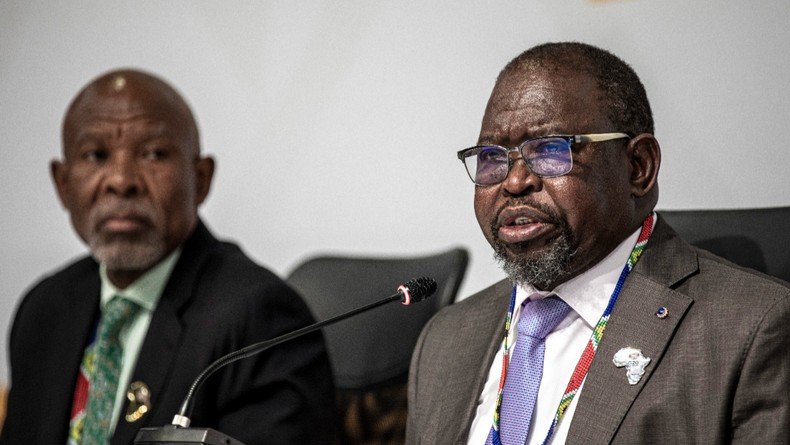
The deputy director-general in charge of the NHI, Dr. Nicholas Crisp, revealed during the department’s 2024/25 annual report presentation that the rebate, valued at around R34 billion ($1.8 billion), will eventually be redirected to fund the NHI.
“There have been discussions with the National Treasury. Once health services are paid for by the NHI fund, it would serve no purpose to continue the rebate. In fact, it would be double funding for the government and the tax authorities to allow that money to be paid back when it’s already covering services under the NHI,” Crisp said.
The medical aid tax credit has long served as a form of relief for South Africans paying into private medical schemes. Its elimination signals the government’s intention to centralise health funding under the NHI, an initiative meant to provide universal healthcare access to all citizens, regardless of income.

NHI funding still clouded by uncertainty
While the government is pressing ahead, key questions remain unanswered. There is no official costing of the NHI, no timeline for its full rollout, and no clear list of services it will cover. Yet, the administration has maintained that tax credits, redirected budgets, and potential new levies, including a payroll tax and surcharge, will form the backbone of NHI funding.
Crisp emphasised that the transition will be gradual, not abrupt.
“The phasing out of the medical aid tax credit will happen systematically. Various thresholds for qualifying for the tax credit could be introduced over time. The intent is to implement these changes without collapsing the current services,” he explained.
Industry bodies representing major medical aids and funders have launched legal challenges to the NHI Act, arguing that it is unconstitutional and undermines private choice.
Crisp dismissed these objections, saying they are based on “misinterpretations” of the department’s phased approach.
‘Stealth tax’ and growing economic pressure
The broader concern is the growing tax burden on South Africans. In the 2025 budget, Finance Minister Enoch Godongwana announced that the medical aid tax credits would not be adjusted for inflation, a move economists say effectively erodes their value over time.
Analysts expect the rebate to gradually lose significance before being completely withdrawn.
Yet critics argue that the plan risks driving professionals and middle-income earners out of private care without ensuring that public facilities can handle the influx.
A pan-African health reform model?
But for now, even as groundwork discussions continue between the NDOH and the Treasury, the timeline and cost of the NHI remain uncertain, leaving taxpayers, healthcare funders, and patients in limbo.
“That clearly can’t all happen at once. But the process has begun,” Crisp admitted.