

– Advertisement –
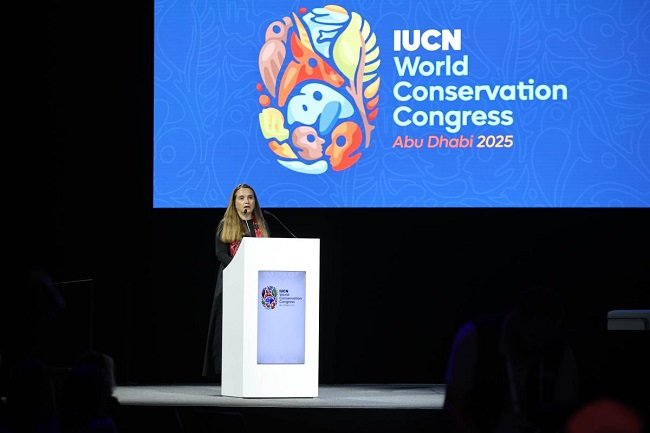
The 2025 IUCN World Conservation Congress is underway in Abu Dhabi, United Arab Emirates, and promises to deliver one of its most consequential debates in recent years that the global conservation community has been preparing for.


At the heart of the debate are two critical motions: Motion 087, outlining IUCN’s policy on synthetic biology in conservation following two years of inclusive consultation, and Motion 133, which advocates caution by seeking a halt or moratorium on genetic interventions in natural ecosystems.

The Congress, which opened on Thursday, October 9, has brought together leaders from government, business, science, and civil society to determine whether synthetic biology is embraced as a tool to address biodiversity loss or restricted through a moratorium.
Setting the Stage: Global Debates on Synthetic Biology
Synthetic biology, which uses advanced genetic techniques to solve ecologically related challenges, presents both opportunities and dilemmas. Over the past two years, IUCN has facilitated an inclusive consultation process on Motion 087 and Motion 133. The deliberation underscores the tension between innovation and precaution, highlighting ethical, ecological, and governance concerns.
To inform discussions on the issue at the Congress, a team of eight global experts were assembled to examine examine governance frameworks, risk assessment practices, and the ethical and societal implications of synthetic biology in conservation at two separate webinars.
The webinars were held on September 8 and 15, 2025, and organised by IUCN’s Conservation Genetics Specialist Group, Violent Conservation, IUCN’s Invasive Alien Species Specialist Group, Rewild, IUCN’s Amphibians Specialist Group and European Bureau for Conservation and Development.
Some Excerpts of the Deliberations
A Lecturer at the Department of Biological and Life Sciences at the Technical University of Kenya, Prof. Dorington Ogoyi emphasized the fragmented nature of global governance, saying no single treaty fully regulates the entirety of synthetic biology.
He highlighted the Convention on Biological Diversity (CBD) as a key forum for integrating the existing multiple treaties, to ensure that innovations are accessible, while safeguarding ecosystems. Prof. Ogoyi stressed the need for “international organisations to collaborate holistically to balance risks and potential benefits of synthetic biology products.”
An adjunct Prof. at the National University of Kiln School of Biotechnology in Argentina, Dr. Martin Lehmer, detailed how national regulatory systems, already managing genetically modified organisms (GMOs), can handle synthetic biology applications. He explained that by using case-by-case risk assessments, regulators evaluate environmental, biodiversity, and human health risks, while considering socioeconomic impacts.
Dr. Lehmer noted that regulators can adapt to new technologies through collaboration, guidance from international protocols, and targeted experiments. “Even with novel applications, existing regulatory frameworks are equipped to assess and manage risks effectively,” he said, stressing that moratoriums may unnecessarily delay beneficial innovations.
A Senior Scientist at the University of Hawaii, Tim Harvey Samuel, shared examples of how genetic interventions can directly support conservation. He cited the ongoing pilot scheme in Hawaii, in which population modification gene drives are being explored to combat avian malaria threatening endangered native birds.
“Such approaches,” Samuel stated, “demonstrate that synthetic biology can complement existing conservation strategies, especially in challenging or remote ecosystems, where traditional approaches may be insufficient.”
A general partner at Perseus 3BV, a company focused on biosafety, biosecurity and biotech, Dr. Patrick Rudelsheim, highlighted the importance of clear objectives in monitoring synthetic biology applications. “Monitoring can reduce uncertainty in risk assessments or act as an early warning system for unforeseen consequences,” he stated, and explained that “biological systems cross political boundaries, making regional collaboration essential.”
Dr. Rudelsheim concluded that ongoing oversight and regional collaboration can ensure responsible use, whether for wild or domesticated species.
Chairman and Executive Director of the African Genetic Biocontrol Consortium, Dr. Willy Tonui, highlighted the promise and complexity of synthetic biology across Africa, saying several countries, including South Africa, Kenya, and Nigeria, have begun developing regulations based on the Cartagena Protocol and the Convention on Biological Diversity.
He observed that despite these moves gaps still remain in public engagement, regulatory capacity, and harmonization with international standards. Dr. Tonui stressed that “cooperation among governments, researchers, and industry is essential to ensure safety, ethics, and equitable benefits while fostering responsible innovation.”
An official of Australia’s Commonwealth Scientific and Industrial Research Organisation (CSIRO), Dr. Aditi Mankad, explored the ethical dimensions of synthetic biology, including moral boundaries, dual-use dilemmas, and potential ecosystem impacts. She said public engagement research conducted by her team across Australia indicates that, when benefits are clearly communicated, communities are open to synthetic biology as a tool for conservation.
She noted that 15,000 participants in the research highlighted improvements in biodiversity, reduced reliance on chemical pest control, and scalable interventions in remote regions. She emphasized that “ethical reasoning is context-dependent, and responsible deployment must weigh potential risks against the pressing biodiversity crisis.”
A Unified Message: Balance, Caution, and Opportunity
Across both webinars, there was a strong convergence among experts that while the global biodiversity crisis demands bold, transformative actions, synthetic biology should not be seen as a replacement for existing conservation efforts. It should rather be seen as a complementary tool that can enhance and accelerate biodiversity protection.
The experts emphasise the need for responsible, well-governed deployment of these technologies: guided by robust risk assessment, continuous monitoring, regional and international coordination, ethical frameworks, transparent public engagement and policies that are adaptive and informed by science.
There was unanimous agreement that integrating scientific innovation with social, ethical, and ecological considerations offers the most promising pathway to halt or reverse.
Meanwhile, over 230 experts and 28 organisations have already signed an open letter urging IUCN members not to close the door on innovation, while opinion pieces such as that by Piero Genovesi of the Italian Institute for Environmental Protection and Research (ISPRA) also advocates for a science-based, case-by-case approach.
Looking Ahead: Congress Decisions to Shape the Future
As the IUCN 2025 Congress continues, the dialogue around synthetic biology is likely to shape global approaches to biodiversity protection for years to come. By Wednesday, October 15, the last day of the Congress, the world would know the outcome of the crucial vote on the motions, determining whether or not synthetic biology can be responsibly deployed in nature conservation.
The outcome will influence global conservation strategies, and shape humanity’s relationship with nature for decades.
By Ama Kudom-Agyemang


