Electricity prices significantly impact various aspects of life in Africa, from the expenses families incur for lighting and cooking to the competitiveness of local industries.
On Friday, September 10, South Africa’s energy regulator apologised for a 54 billion-rand ($3.1 billion) blunder in calculating electricity tariffs, a mistake that will be passed on to consumers.

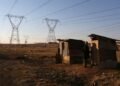
This highlights electricity prices across various African nations.
Key takeaways
- Focusing on 10 African nations, electricity prices in Africa range from some of the cheapest in the world (e.g., Libya, Ethiopia) to some of the most expensive (e.g., Liberia, Sierra Leone, Malawi)
- For households and businesses, affordable electricity boosts comfort, productivity, and growth, while high tariffs force rationing and reliance on costly generators.
Comparative electricity costs in 10 African countries
For this ranking, data was extracted from Global Petrol Prices, tracking the average residential and business electricity rates for the period from 2023 to 2025.
Such averages are better for comparing countries, as they avoid fluctuations in quarter-to-quarter prices.
| African Country | Average Residential electricity price (USD/kWh) | Average Business electricity price (USD/kWh) |
| Algeria | $0.040 (DZD 5.20) | $0.035 (DZD 4.55) |
| Angola | $0.015 (AOA 13.75) | $0.012 (AOA 11.00) |
| Cape Verde | $0.327 (CVE 30.84) | $0.199 (CVE 18.77) |
| Ethiopia | USD 0.005 (ETB 0.658) | USD 0.011 (ETB 1.611) |
| Mali | $0.217 (XOF 121.73) | $0.157 (XOF 88.07) |
| Nigeria | $0.033 (NGN 50.823) | $0.043 (NGN 65.770) |
| Sierra Leone | $0.224 (SLE 5.24) | $0.291 (SLE 6.80) |
| South Africa | $0.186 (ZAR 3.23) | $0.093 (ZAR 1.62) |
| Sudan | $0.007 (SDG 4.20) | $0.035 (SDG 21.02) |
| Zambia | $0.023 (ZMW 0.56) | $0.036 (ZMW 0.87) |
African nations with the lowest electricity rates
Ethiopia runs an electricity system that is almost entirely powered by renewable energy.
According to Global Petrol Prices, Hydropower dominates the mix, contributing about 90% of total generation, while wind, geothermal, and solar also play supporting roles.
Large-scale projects such as the Grand Ethiopia Renaissance Dam form the backbone of its hydropower system, while generous subsidies and abundant renewable resources help keep electricity costs consistently low.
Moreover, Ethiopia implemented major tariff reforms in September 2024 with increases up to 400% planned through 2028.
Sudan comes in as the second lowest, with residential and business prices at $0.006 (SDG 3.60) and $0.029 (SDG 17.41) per kWh, respectively, as of December 1, 2024.
The country’s state-controlled energy system allows for subsidies to keep household electricity costs low. Sudan leverages its oil, natural gas, and the hydropower potential of the Nile to maintain low generation and, by extension, low electricity costs.
Meanwhile, Angola’s electricity prices are as low as 0.013 per kWh (AOA 11.92) and 0.011 per kWh (AOA 10.09).
Zambia’s residential and business prices are 0.026 per kWh (ZMW 0.61) and 0.037 per kWh (ZMW 0.87), respectively. Like Ethiopia, it relies heavily on hydropower for its electricity generation.
In July 2025, Zambia commissioned the 100 MW Chisamba Solar Power Plant, a significant step toward diversifying its energy sources beyond hydro and mitigating the risks posed by drought and climate change.
Countries with the highest electricity prices
In these markets, electricity prices rise significantly above the global average of approximately $0.16 per kWh, placing a substantial burden on households and industries.
Cape Verde
As of December 1, 2024, electricity prices in Cape Verde stood at $0.388 per kWh (CVE 26.71) for residential users and $0.212 per kWh (CVE 20.06) for businesses, which is well above the African average.
The high rates are driven by the country’s heavy reliance on imported fossil fuels.
With limited domestic energy resources, Cape Verde also faces operational and technical challenges, including distribution inefficiencies, theft, and system losses, all of which contribute to higher prices.
Recently, however, Cape Verde has been actively shifting towards clean energy, particularly wind and solar, with ambitious targets to transition to 100% renewable energy by 2050
Mali
Mali’s electricity prices currently stand at $0.234 per kWh (XOF 131.57) for residential consumers and $0.170 per kWh (XOF 95.58) for businesses.
These relatively high rates are driven by the country’s energy mix, which is dominated by fossil fuels. This heavy dependence on fossil fuels leaves Mali vulnerable to fluctuating fuel costs.
To address this, Mali is turning to renewable energy. The Gouina Hydroelectric Plant, commissioned in 2022, has already added 140 MW of hydro capacity, strengthening green generation in the southwest.
Sierra Leone
Sierra Leone, though third on the list, has some of the highest rates, with residential prices at $0.253 per kWh (SLE 5.89) and business prices at $0.342 per kWh (SLE 7.97).
The role of government subsidies
One of the biggest reasons electricity prices differ across Africa is government subsidies.
The Nigerian government allocates over N200 billion each month to subsidize electricity costs. Still, for context, Nigeria’s Band A customers now pay NGN 225/kWh (about $0.15) for premium service.
Nigeria’s electricity tariff system is divided into Five Bands, Designated as A, B, C, D, and E, based on the number of hours of daily power supply customers receive.
Band A customers, who get at least 20 hours of electricity per day, pay the highest tariff, while Band E customers, with 4 hours or less, pay the lowest.
The system is designed to link payment more closely to supply reliability, ensuring those with more consistent power contribute more to grid maintenance.
Another factor is the generation mix. Countries that rely on sustainable sources, such as hydropower or natural gas, often have lower costs, while those dependent on expensive diesel plants or fossil fuels pay significantly more.
For example, hydropower-rich nations in Central Africa enjoy relatively lower rates compared to oil-dependent economies.
Impact of electricity prices across African nations
For households, high tariffs often mean that families spend a disproportionate share of their income on electricity or turn to unsafe alternatives, such as kerosene lamps and firewood.
On the other hand, artificially low tariffs may ease the burden in the short term but undermine grid reliability when utilities cannot recover costs, leading to blackouts and underinvestment.
For businesses, the stakes are just as high. Expensive electricity inflates operational costs, particularly for energy-intensive industries such as manufacturing, data services, and mining.
Ultimately, neither high nor low prices guarantee progress.
What matters is balance. Tariffs must be affordable enough to keep households and businesses connected, but also sufficient to sustain the infrastructure and generation needed for long-term growth.
Note: Exchange rate used for the US dollar/local currencies was as of September 10, 2025.