

The World Public Assembly Defines Global Development Vectors
A Platform for Global Dialogue
The First World Public Assembly became a center of global dialogue. More than 4,000 participants from over 150 countries gathered to discuss the future of humanity.
They included politicians, diplomats, entrepreneurs, cultural figures, writers, scientists, educators, and representatives of social and religious groups.
About 50 sessions and discussion platforms brought together voices from diverse cultures and civilizations.
The central idea of the Assembly was to build a New World of Conscious Unity, a world where people are the main value.
Honoring Service to Humanity
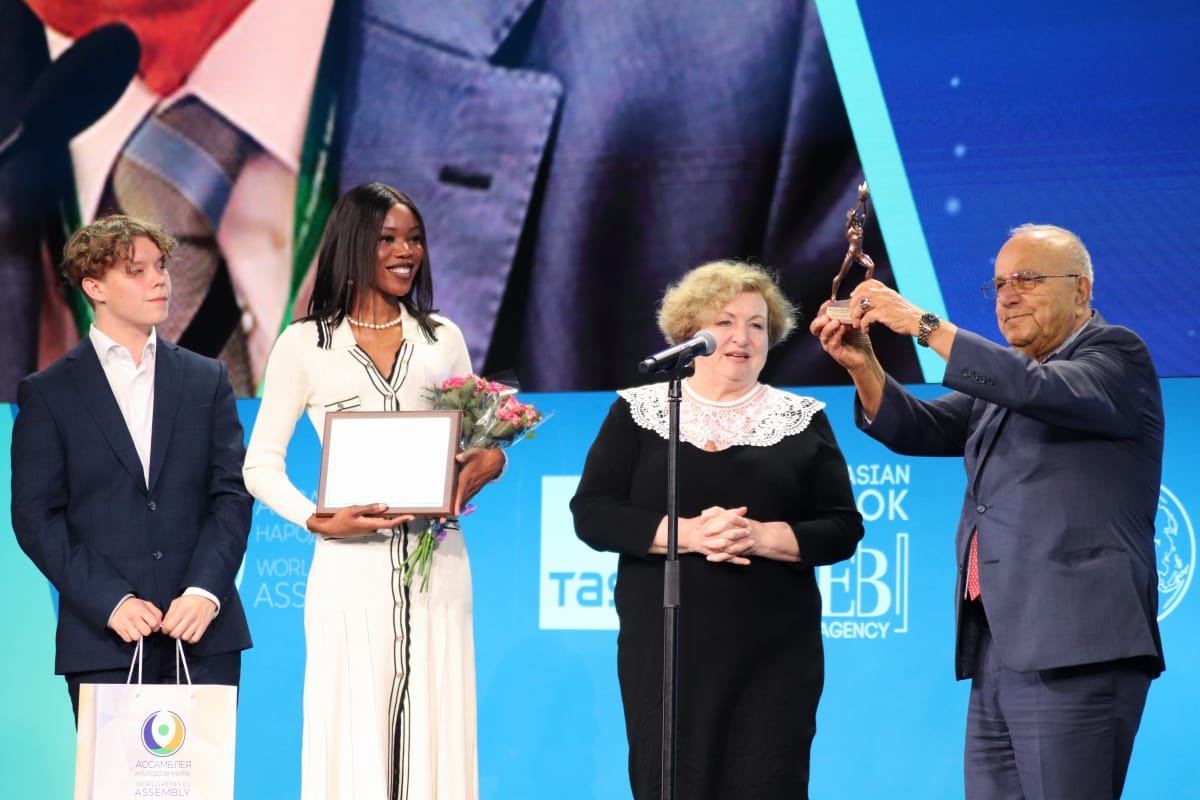
On September 21, the International Day of Peace, the Public Recognition Award “For Service to Humanity” was presented for the first time.
Laureates came from Russia, Jordan, Tajikistan, Kazakhstan, Angola, India, and the United Kingdom.
Honorees included philosopher and writer Alexandra Ochirova, former Jordanian Prime Minister Adnan Badran, former SCO Secretary General Rashid Alimov, composer Tolegen Mukhamedzhanov, public figure Sabena Johannes, diplomat Igor Khalevinsky, Indian politician Dalbir Singh, and Professor Bhai Sahib Mohinder Singh Ahluwalia.
“These names became symbols of leadership and humanism,” said organizers. UNESCO Goodwill Ambassador Alexandra Ochirova added: “No one can resist united minds.”
The Economy of Life
Amid growing geopolitical and economic challenges, WPA experts stressed that sustainable development requires trust.
“Economics begins with the search for meanings. It is based on human beings,” said Svetozar Darnev, Head of the Russian association Osnova.
Sessions highlighted the “economy of life” model, which prioritizes humanitarian values over competition between systems.
Participants agreed that international partnerships must rest on trust and a human-centered approach.

The World Public Assembly Defines Global Development Vectors
Media and Cognitive Warfare
Media’s role in shaping global understanding was a heated topic. Russian journalist Oleg Yasinsky warned: “The cognitive war is against all nations, against spirituality. Media must return our cultural code.”


Filmmaker Silvana Yarmolyuk and producer Olga Azhnakina stressed cinema’s power and the need to honor creative work.
Peace, Energy, and Technology
Peace experts examined the roots of global conflicts. “When the economy comes first, not people, wars follow,” said Alexander Usanin of the Academy of Geopolitical Problems.
Holger Thorsten Schubert of Neutrino Energy Group added: “Whoever controls energy controls peoples.”
Despite these risks, participants pointed to science and technology as tools for peace and progress.
Writers Unite Across Borders
The Second Congress of the World Organization of Writers (WOW) brought together authors from more than 60 countries.
They debated translations, book fairs, support for young writers, and the use of AI.
Bangladeshi poet Aminur Rahman cautioned: “We can use AI as a tool, but we cannot rely on it. Otherwise, we lose emotion.”
At the WOW-2025 awards, authors from Brazil, China, Indonesia, Syria, France, and Russia were honored.
“Values are higher than differences, and cooperation is stronger than rivalry,” said WPA Secretary General Andrei Belyaninov.
Humanitarian Cooperation at the Core
UNESCO’s “Uniting Humanity” project gained strong support during discussions. Delegates agreed that humanitarian cooperation must guide the new peace architecture.
“Student exchanges, volunteer forums, and cross-border support for entrepreneurs all help people live in balance,” said Rasul Omarov of the Youth Forum of Islamic Cooperation.
Ochirova emphasized investment in human capital: “Civilizational continuity is mandatory. The most important investment is in people.”

The World Public Assembly Defines Global Development Vectors
Public Diplomacy and Unity of Hearts
The Leader of Public Diplomacy, 2025 contest honored 25 finalists for international humanitarian projects.
Elena Koreda, a laureate from Japan, summed it up: “Unity of hearts is the Assembly’s main result.”
Natalia Zabolotskikh, Program Director of the WPA, also received the honorary badge “People’s Diplomat” from the SCO Public Diplomacy Center.
Agreements and Final Documents
The Assembly concluded with 71 cooperation agreements, including 35 signed directly by the WPA with organizations from 16 countries. Another 36 agreements came from partner organizations.
Four landmark documents were adopted:
Declaration of a New World of Conscious Unity.
Declaration on Happiness
Manifesto of Conscious Unity
Charter of the New World
“These declarations affirm love, kindness, light, and beauty as universal principles,” said the closing statement.
The First WPA ended with a call for peace and human unity. Its greatest achievement was the spirit of cooperation carried home by participants.
The Second Assembly will be held in Vienna, Austria.


