


– Advertisement –
Nigeria’s decision to earmark SIN taxes – levies on alcohol, tobacco, and sugary drinks – for health financing, signals a firm commitment to prioritising citizens’ health. It also aligns with long-standing calls from Nigerian public health advocates and the World Health Organisation (WHO).

The move could not be timelier. Earlier this year, a major investigation revealed that Nigerians spend about N1.92 trillion (roughly $1.26 billion) annually seeking treatment for non-communicable diseases (NCDs). Almost 30 percent of deaths in the country are linked to NCDs, with tobacco, alcohol, and sugary drinks among the biggest culprits.
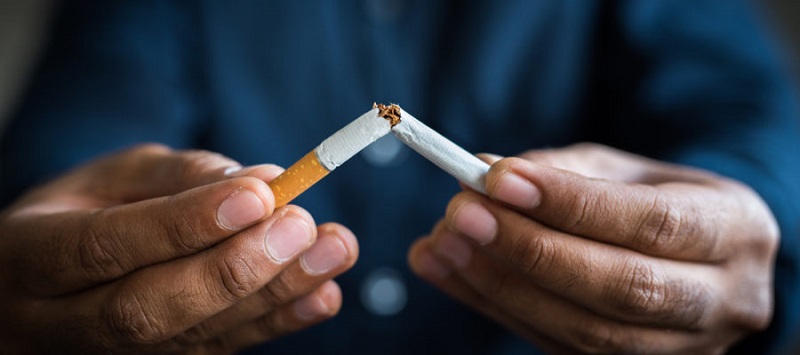
Tobacco use alone fuels a raft of debilitating diseases: cancers of the lung, mouth, bladder, and colon; heart disease and stroke; chronic respiratory illness like COPD; type 2 diabetes; ectopic pregnancy; and premature, low birthweight babies. Globally, tobacco kills more than seven million people annually – 300,000 in Africa alone. Eight in ten smokers live in low- and middle-income countries like Nigeria, feeding Big Tobacco’s multi-billion-dollar profits. In 2015, the six largest cigarette firms raked in $62 billion in profits – more than the annual budgets of several small nations.
These resources bankroll relentless marketing campaigns, youth-targeted advertising, lobbying against regulations, and deceptive promotion of so-called “reduced risk” products such as vapes, heated tobacco, snus, and nicotine pouches. Far from solving the problem, these new products hook a new generation on nicotine while undermining tobacco control efforts.
Yet Nigeria’s funding for tobacco control remains pitifully low. In 2024, following persistent advocacy, the government allocated N13 million to the Tobacco Control Fund (TCF) – but this falls far short of the about N300 million minimum required to operationalise it.
If Nigeria is serious about reducing tobacco’s deadly toll, it must explore innovative financing tools – including holding the industry itself to account.
In 2024, the Canadian government reached a landmark C$32.5 billion settlement with three tobacco giants – JTI-Macdonald Corp., Rothmans, Benson & Hedges, and Imperial Tobacco Canada. The payout compensates provinces, territories, and former smokers for decades of healthcare, social, and economic costs caused by tobacco. The deal, finalised in August 2025, capped a 27-year legal battle that proved the industry can be held liable for its deception and harm.
The Canadian settlement echoes the United States’ historic 1998 Master Settlement Agreement, where four leading tobacco firms agreed to pay $206 billion over 25 years (with payments continuing indefinitely).
For Nigeria, these precedents offer a roadmap. As WHO’s tobacco control chief Adriana Blanco Marquizo put it, the Canadian deal has “far-reaching” global implications – demonstrating that Big Tobacco can be forced to pay for its destruction.
Nigeria already has some experience. In 2023, the Federal Competition and Consumer Protection Commission (FCCPC) fined British American Tobacco parties $110 million for breaching public health regulations – the largest fine ever issued by the regulator. This shows legal action is possible on home soil.
But to scale up, Nigeria needs legal groundwork, such as building airtight cases around healthcare costs, drawing on Canada and U.S. litigation. Civil society mobilisation is also key. Groups like Corporate Accountability and Public Participation Africa (CAPPA) and the Nigerian Tobacco Control Alliance (NTCA) are necessary to sustain advocacy pressure. Robust data is also critical to document the true cost of tobacco – hospitalisations, lost productivity, premature deaths. Furthermore, international collaboration with global networks that have taken on Big Tobacco before will smoothen the process and help to counter Big Tobacco’s legal tactics.
Nigeria should also emulate Canada’s Tobacco Claims process, which allows individuals who developed illnesses because of smoking, or from second-hand smoke (SHS), or family members of those who died from tobacco-related diseases to seek compensation directly, with no upfront legal fees. This is separate from the recent settlement funds. Such an approach would bring justice to victims while amplifying public support.
Perhaps the toughest fight is not against cigarettes but against the new wave of smokeless products and vapes, which Big Tobacco falsely markets as safer. Any Nigerian settlement must explicitly fund counter-marketing campaigns, research, and enforcement to dismantle this harmful narrative. Canada was careful to exclude industry-backed “harm reduction” foundations from its deal. Nigeria must follow suit.
Nigeria’s young population is already a prime target for flavoured vapes and e-cigarettes. Failure to act risks a generation addicted to nicotine, burdened by disease, and robbed of potential. But success could deliver a turning point – funding healthcare, empowering advocacy, and saving millions of lives.
The question is whether Nigerian leaders will put lives above the lobbying power of Big Tobacco. Canada has shown it can be done. If Nigeria follows through – with political will, legal rigour, and strong civil society support – it can not only transform its health financing but also send a powerful message across Africa that the era of tobacco impunity is over.
By Robert Egbe, tobacco control advocate at Corporate Accountability and Public Participation Africa (CAPPA)


