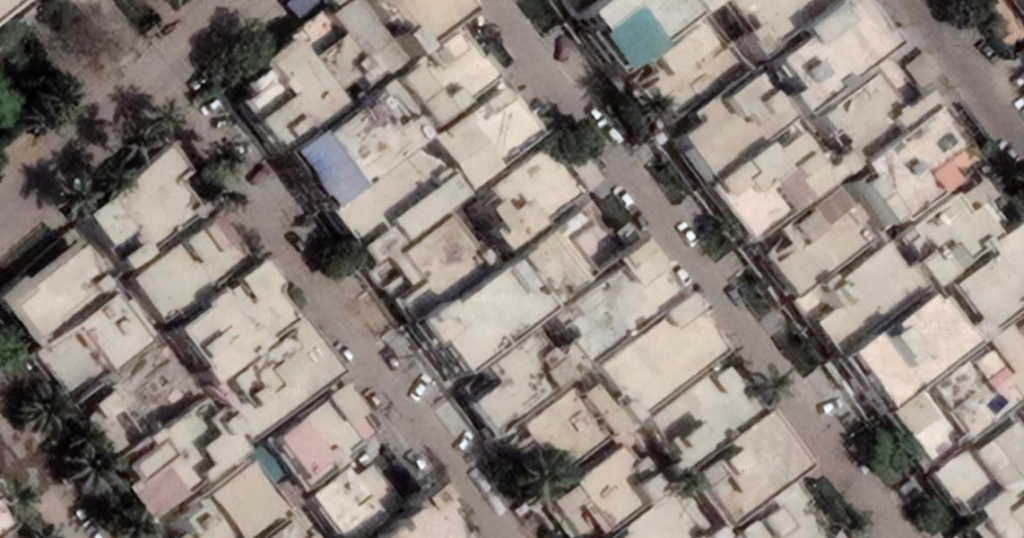
Over the last few years, something extraordinary has been happening in Pakistan.
Solar panels, until recently a rarity in the country, have enjoyed a dramatic surge in popularity. Satellite and aerial imagery shows how solar panels were virtually non-existent in cities such as Karachi and Lahore before the covid pandemic. A trickle of installations started to occur in 2021 and 2022, which quickly becoming a flood in 2023 and 2024. Today, almost every rooftop in some of the more affluent urban areas is carpeted in solar panels.
Data from energy think tank Ember shows the capacity of solar panels exported from China (by far the world’s largest solar panel manufacturer) to Pakistan exploded from 3.3 gigawatts in 2022, to 19 gigawatts in 2023 and 17 GW in 2024. In the 12 months to July 2025, Pakistan has imported more panels from China than any other country (except for the Netherlands, which, as Europe’s largest maritime gateway is likely to re-export much of its imported panels).
The solar boom in Pakistan has been astonishing for its speed and scale. But the other remarkable feature of the boom is that it has been largely unplanned. “This is a consumer revolution,” says Dave Jones, chief analyst at Ember. Solar panels are available for $60-80 in the country, he points out. Ordinary people can simply buy a panel from a hardware shop and install it themselves with the help of a YouTube video.
“The first question that everyone asked around Pakistan was, where’s the money coming from for this? Who’s lending them the money? And the answer is no one,” says Jones. Panels have simply reached a price where they are affordable for a sizeable slice of the population, he explains.
Learning from Pakistan
Comparing data on installed solar capacity with import data illustrates how Pakistan’s revolution is being driven from the ground up. Figures from the International Renewable Energy Agency suggests that Pakistan has only installed 3.7 gigawatts of solar capacity. Yet Ember’s data shows that Pakistan has imported panels from China since 2017 with a total capacity of 48 gigawatts.
In other words, the vast bulk of solar panels in Pakistan are not lined up in neat rows in solar farms that supply energy to the grid. Instead, the majority are nestled chaotically on rooftops, uncounted in official figures, but helping households and businesses to keep the lights on.
Pakistan is an interesting case study for African policymakers to consider. GDP per capita in Pakistan ($6,950) is similar to the average of $5,460 in sub-Saharan Africa, according to IMF data.
And, like many African countries, it has wrestled with an unreliable power supply for many years. Switching to solar is providing Pakistani households with a back-up to unreliable grid electricity, and a much more cost-effective alternative to diesel generators.
All this raises the question: could Pakistan’s bottom-up solar revolution provide a model for the continent to emulate?
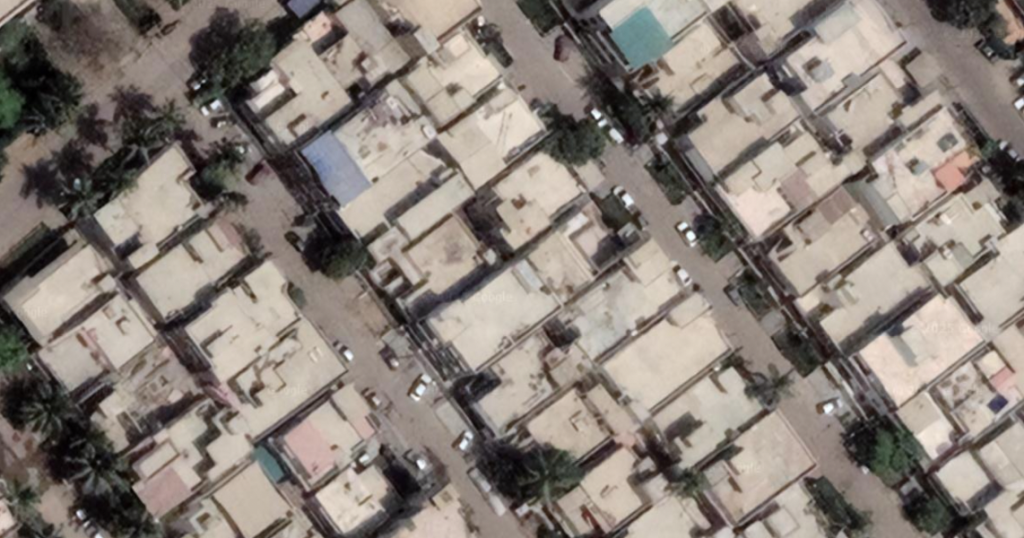
30 April 2019: No solar panels
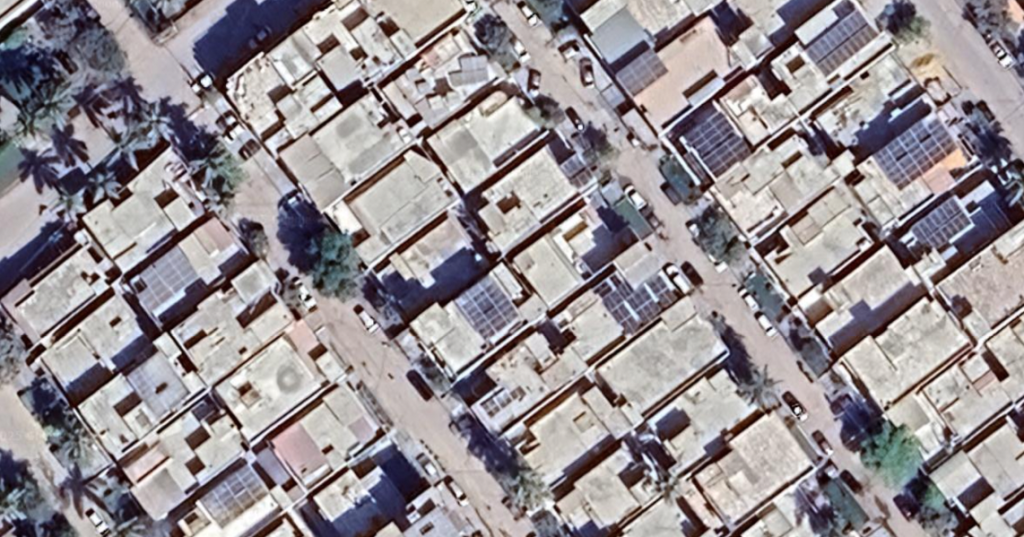
Africa’s solar revolution gains traction
While large swathes of Africa boast some of the world’s best conditions for generating solar energy, until now the continent has lagged behind other regions in actually deploying solar capacity. IRENA figures suggest Africa has installed just 1% of global solar capacity, compared to 62% in Asia.
Of the solar power that is installed in Africa, the vast majority is deployed on large sites that generate power for either utilities or large commercial and industrial companies. A spokesperson for AFSIA, the African Solar Industry Association, told African Business that residential solar probably accounts for around 2-3% of total installed solar capacity outside South Africa. In South Africa, the spokesperson estimated the figure is around 5%.
Intriguingly, however, there is some evidence that this is beginning to change.
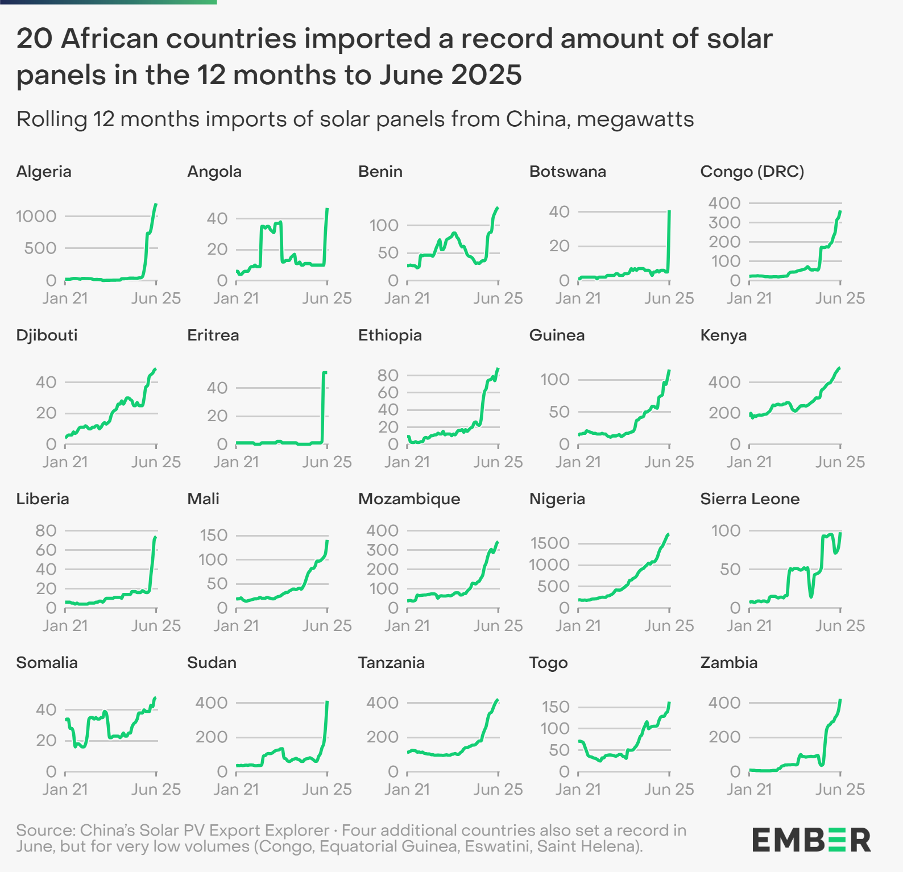
A new report from Ember shows that Africa’s solar panel imports from China have grown by 60% in the past year, reaching 15 gigawatts. Some 20 African countries have set a new record for solar imports within the past 12 months. Outside South Africa, the continent has tripled its imports within the past two years.
The “massive pick-up” of solar imports into Africa could quickly be transformative for the energy systems of some countries, Jones says.
Ember’s report states that if Sierra Leone installs all the panels it has imported from China in the last year, the electricity it could generate would be equivalent to 61% of the country’s reported electricity generation in 2023.
The export data used by Ember does not show how solar panels will be used. Yet given the largest planned solar projects in Sierra Leone have a planned capacity of only 25-50 megawatts, it is fair to assume that a large share of the 138 megawatts the country has imported in the last year is destined for rooftops.
The logic of installing rooftop solar is hard to ignore. Ember’s report notes that a 420-Watt solar panel, which costs around $60 in Nigeria, would generate 550 kilowatt hours of electricity in a year. By contrast, $60 of diesel would only provide 257 kilowatt hours. For those that can afford it, therefore, an investment in a solar panel would pay for itself within around six months.
Reasons for caution
IRENA director-general Francesco La Camera describes Pakistan’s solar revolution as a “miracle”. He says that other countries at a similar level of development can follow its example – but adds there is no time to lose to accelerate progress. “The question is not if this will happen in another country. The question is the speed and scale of it.”
Africa clearly still needs to speed-up its solar revolution. Africa’s population is six times larger than Pakistan’s, yet the South Asian country has imported more solar panels than the entire African continent in the last year.
A quick glance at the latest imagery on Google Earth shows that solar panels remain a rarity in Africa’s largest cities, especially outside the more affluent suburbs.
One African country has in fact already gone through a solar boom of its own. Solar imports into South Africa dramatically surged in 2023, as middle-class South Africans rushed to install rooftop solar at the height of the load shedding crisis.
The installation of solar by homes and businesses has helped South Africa exit its load shedding nightmare. But the growing tendency for wealthy homeowners and some businesses to rely less on the grid, or even disconnect altogether, has prompted warnings that the solar trend could further weaken Eskom, the embattled state-owned utility. Cash-strapped municipalities that traditionally rely on revenues collected from electricity customers to fund services are also badly affected.
Similar concerns are present in Pakistan. In a statement, Muhammad Mustafa Amjad, program director at Pakistan-based non-profit Renewables First, said that governments should at least keep track of rooftop installations, given the implications for the energy system as a whole.
“Tracking these additions is what makes the difference between a messy shift and an organised, accelerated one. When you don’t track, you lose time and opportunities. Pakistan’s experience shows this clearly. Africa’s transition will happen regardless, but with timely data it can be more equitable, planned and inclusive.”
Other experts also remain somewhat cautious about a bottom-up rooftop solar revolution in Africa.
Damola Omole, director of utility innovation at the Global Energy Alliance for People and Planet, acknowledges that an unplanned solar rollout is better than no rollout at all. Yet he argues that a more coordinated deployment can bring efficiency benefits. “You don’t need a plan for it to work, but it’s better to have a plan in place, because that means it’s more equitable and you’re able to do more with less.”