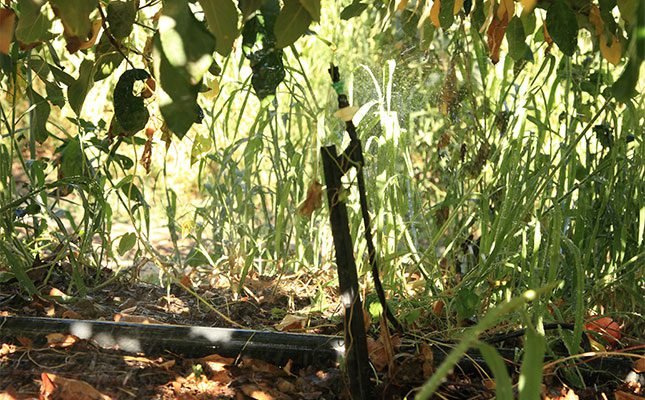
With climate change intensifying the risk of droughts, and urban development putting pressure on already scarce water supplies, farmers are under increasing pressure to make every drop count.


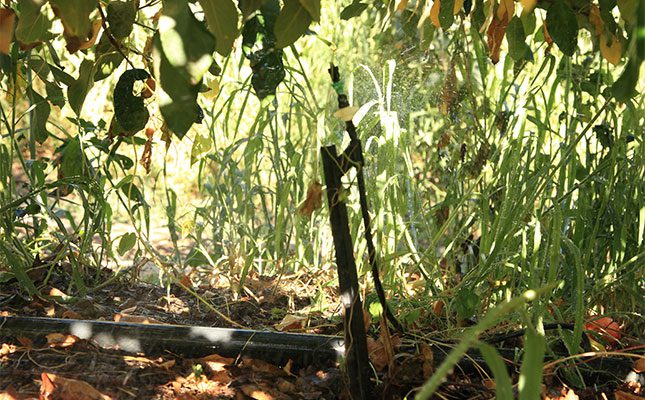
Photo: Glenneis Kriel
Improving water use efficiency begins long before the irrigation system is switched on. It starts with careful planning for the crops or livestock you want to produce, according to Riaan Botha, a retired employee of Karsten Boerdery, and Meatmaster sheep farmer near Britstown in the Northern Cape.
“Getting this basic principle right can help farmers avoid major setbacks and save hundreds of thousands of rands,” says Botha.
Check your water and soil
The first step in this planning process is to test the water source, ideally before land is purchased, to determine its suitability for use.
“High salinity or metal levels can render water unsuitable for plant production or animal consumption. While some of these issues can be rectified, it is often too expensive to justify economically,” he warns.
A thorough soil analysis should be conducted to assess both the soil’s water-holding capacity and identify any compaction layers or drainage issues that may restrict or impact water movement. “These problems must be corrected before anything is planted,” he says.
A chemical analysis of the soil is equally important to detect and rectify any imbalances that could limit water uptake and hinder plant growth, such as high salt concentrations, pH imbalances, and nutrient deficiencies, with potassium often being a problem.
Match sites with suitable crops
Once the land and water conditions are properly assessed, the site should be matched with a suitable crop.
“Consider the water requirement of different cultivars, even down to the clone level. Also look at the best-suited rootstocks, tree architecture, row orientation, windbreaks, and the design of the irrigation system,” explains Botha.
“Wind accelerates evaporation from soil and plant surfaces, increasing water demand and stressing crops. Well-placed windbreaks, such as rows of trees or shrubs, help create a more stable microclimate by reducing wind speed, limiting moisture loss, and improving the efficiency of irrigation by minimising drift.”
Plan for drought
Once a suitable crop has been selected, an irrigation plan should be developed to meet its specific water needs throughout various growth and productive stages. This plan must factor in the soil’s water holding capacity, drainage characteristics, and long-term climate data.
“Do not plant according to the farm’s irrigation capacity during good rainy seasons. Rather plant fewer hectares, so you have enough water even during dry years,” Botha stresses.
He says that these basics were neglected on the farm near Prieska with terrible consequences: “The soil had a high clay content and salt build-up, which meant that the irrigation system had to run almost continuously just to get small volumes of water to the pecan tree roots.”
To remedy the situation, the farm contracted a digger loader to loosen the soil up to 600mm deep inside the tree rows and the whole width of the tree canopies.
“The intervention not only broke the compaction but also stimulated root growth and we saw a complete turnaround in production within a year.”
Botha adds that the orchards would have had to be written off were it not for this drastic intervention.
Tap into expert advice
Botha encourages farmers to consult with experts for the analysis, planning and management of orchards and fields to ensure decisions are based on sound, up to date information.
“Do not try to cut costs by skipping expert input, as this can lead to expensive mistakes or systems that do not operate as efficiently as they can. An upfront consultation is far cheaper than having to replant or replace infrastructure,” he says.
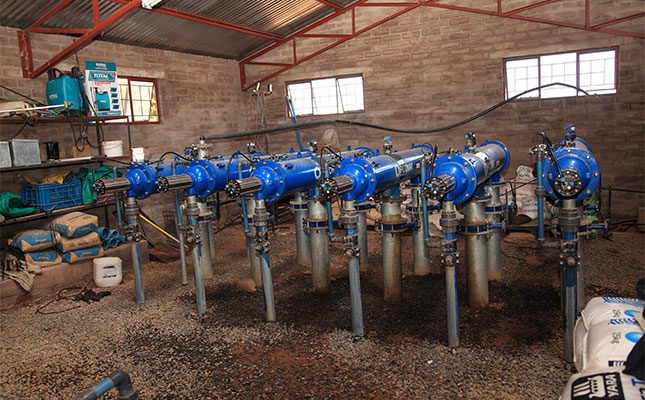
Experts can provide guidance on the most suitable technologies for a specific production environment – from irrigation system design and management software to monitoring tools. They also have access to advanced technologies, such as satellite or drone-based remote sensing, which can offer deeper insight into on-farm challenges or opportunities.
Measure to manage
Accurate, ongoing measurement is essential for effective water use. According to Botha, many farmers still rely on guesswork or outdated schedules when irrigating, which often leads to either overwatering or water stress, both of which can harm crops and waste valuable resources.
“At the Prieska farm we had two weather stations to monitor evaporation, the wind speed, temperatures and rainfall and adjusted irrigation when we knew heat waves were on their way.”
“We also relied on tensiometers and physical soil evaluations to assess moisture levels. If the soil forms a nice ball in your hand, instead of crumbling to dust, you know there is sufficient water,” he says.
Do not underestimate mulch and the training of staff
Even with the best systems in place, poor implementation can undermine water-saving efforts. That is why Botha emphasises the importance of staff training to understand and apply basic water management principles correctly.
“It does not help to have expensive probes and automated systems if the people on the ground do not know how to interpret the data or adjust practices accordingly,” he says.
He also highlights mulch as one of the simplest, most cost-effective ways to conserve moisture.
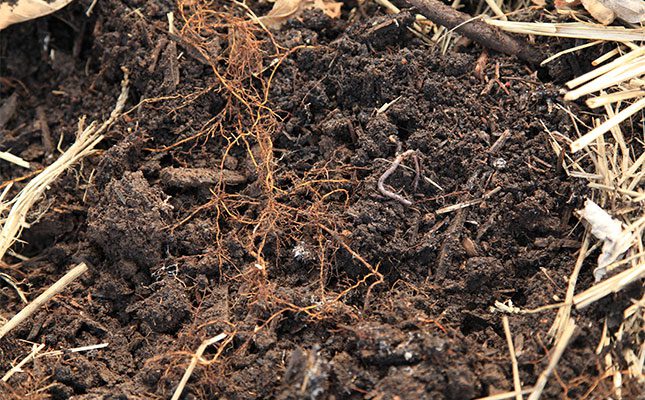
“A layer of organic mulch, like straw, wood chips or pruning, helps to reduce surface evaporations, supresses weeds that compete for water and improves soil health over time.”
In orchards, mulch can also help reduce temperature fluctuations around the root zone and improve water infiltration when it rains or during irrigation.
“It is an easy win, especially in dry areas,” he says.
For more information, email Riaan Botha at email [email protected].