


Kariba Dam rehabilitation secures Africa’s largest dam, protecting millions and ensuring sustainable power for Zambia, Zimbabwe, and beyond.
The Kariba Dam is located on the Zambezi River, which forms the border between Zambia and Zimbabwe. Based on reservoir capacity (180,600 hm3), it is the largest dam in the world. With structural failure looming due to erosion, urgent rehabilitation was essential to preserve this critical infrastructure and protect millions of lives across Southern Africa.
Supplying 2010 MW and 6400 GWh hydro-electric power per annum to parts of both Zambia and Zimbabwe, the Kariba Dam is a crucial piece of infrastructure for both countries. It also supports industries like mining, agriculture, fishing, and tourism. Importantly, the Kariba Dam is a vital water reserve in a region where droughts are common.
Cause for alarm
The dam was built on a seemingly solid bed of basalt. But, over the past 70 years, the force of water cascading from the sluice gates gradually eroded that bedrock, carving a 91 m deep pit – or plunge pool – at its base. The pool was around 40 m from the structure’s foundation.
If it reached the foundation, the dam was likely to give way. If that happened, a tsunami-like wall of water would rip through the Zambezi valley, reaching the Mozambique border within eight hours. The torrent would overwhelm Mozambique’s Cahora Bassa Dam and knock out 40% of southern Africa’s hydroelectric capacity. Along with the devastation of wildlife in the valley, it was estimated that the lives of 3.5 million people are at risk.
Kariba Dam Rehabilitation Project (KDRP)
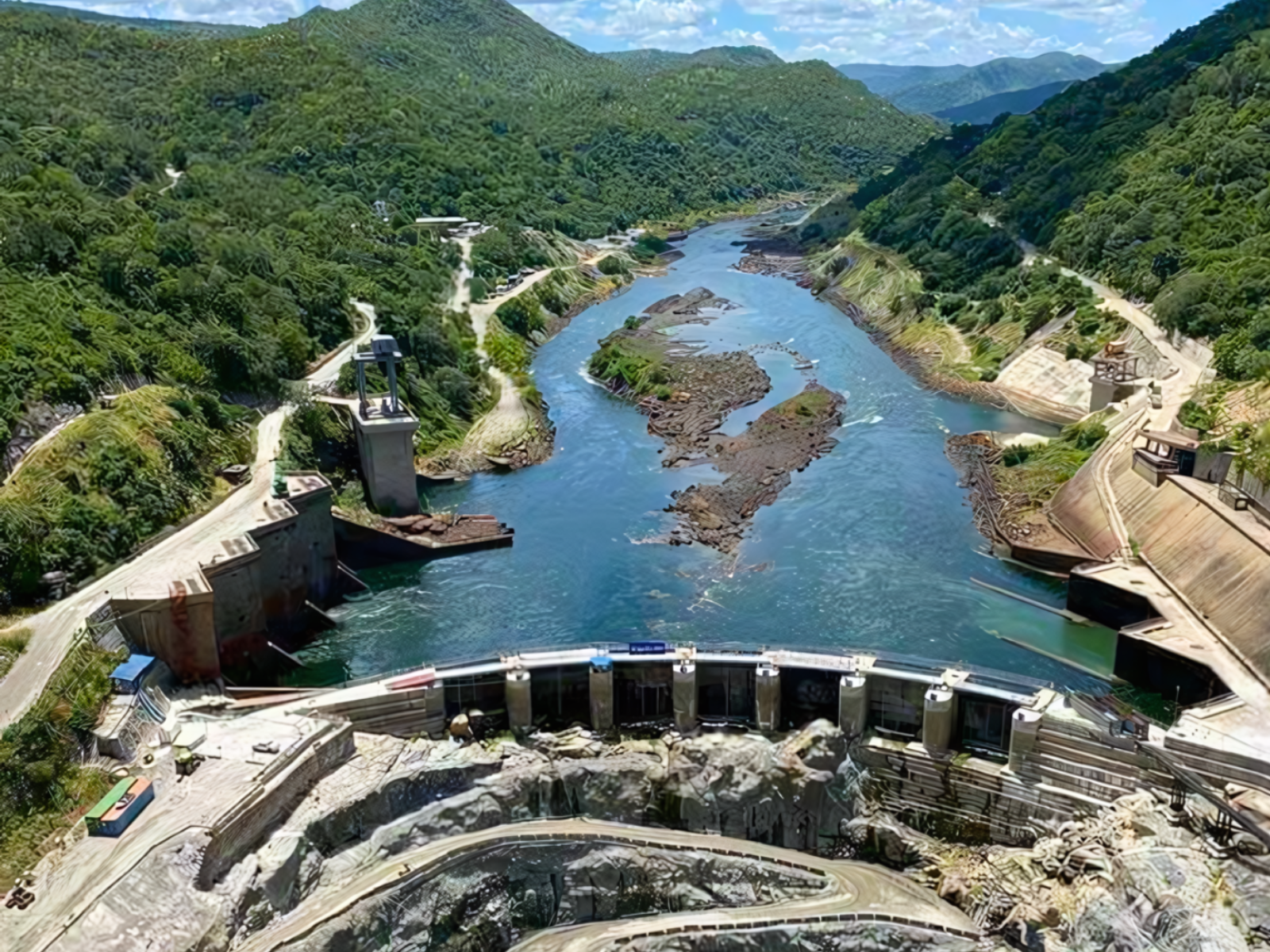
Based on reservoir capacity (180,600 hm3), the Kariba Dam is the largest dam in the world
This necessitated the KDRP. The project’s goal was to guarantee the structural integrity of the Kariba Dam, assuring the sustained generation of power primarily for the benefit of the inhabitants of Zimbabwe and Zambia and the broader Southern African Development Community area.

A key component of KDRP involved improving the stability of the plunge pool and reducing the backward scour towards the dam foundations. This was done by enlarging the plunge pool and safeguarding the dam’s downstream toe with a concrete lining.
Dry working conditions and pier construction
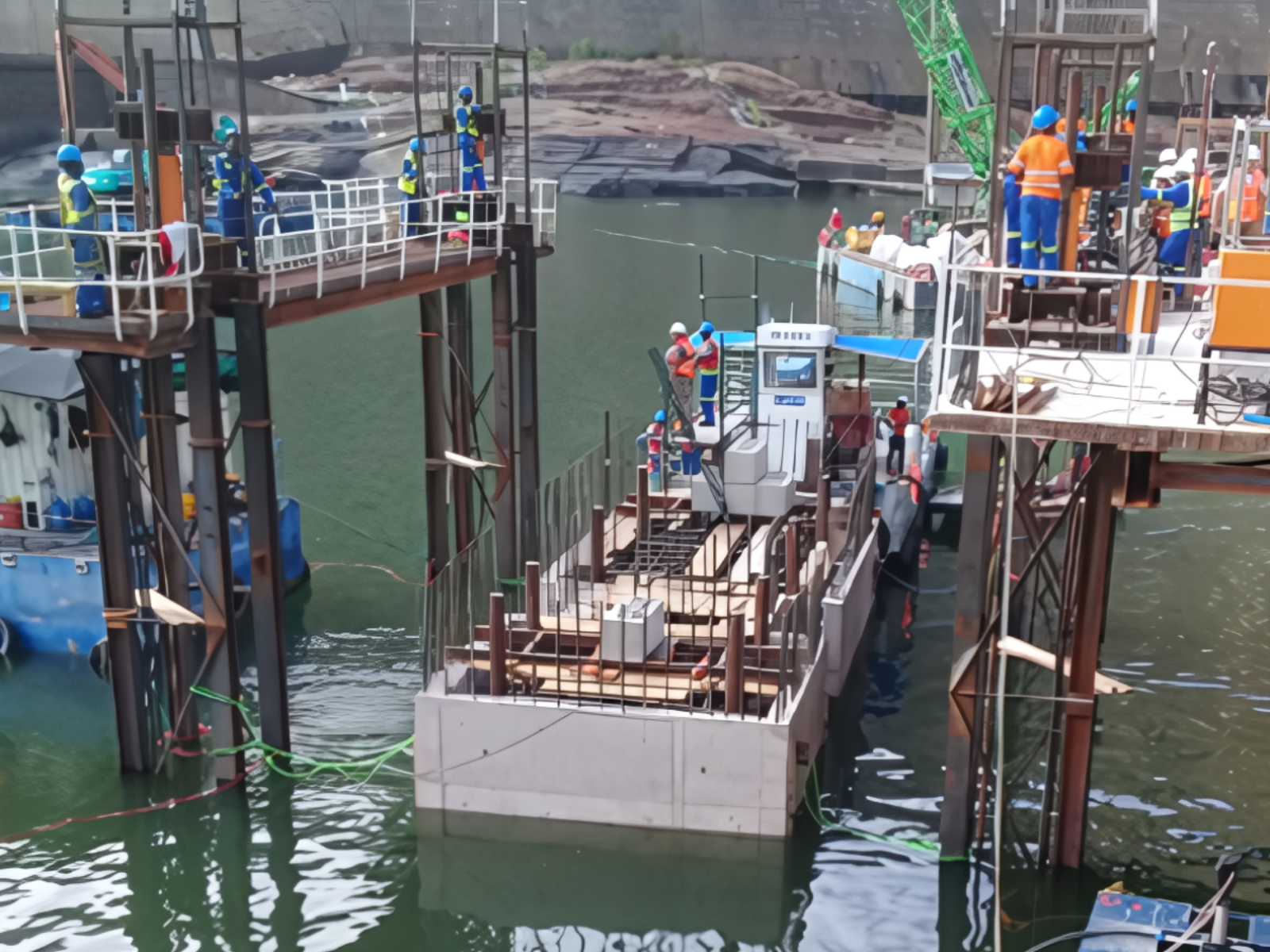
The piers were slip-formed as hollow structures, from a specially-built rig in the Zambezi River. Photo credit: Peri Formwork and Scaffolding
The first challenge to this project was the need for a dry working area inside a river. The solution was a cofferdam, a temporary enclosure built within or next to a body of water, designed to allow the enclosed area to be pumped dry. The 25-metre-deep cofferdam was constructed across the Zambezi River, downstream of the main Kariba Dam wall, allowing the deep plunge pool at the base of the Kariba dam to be drained, reshaped and stabilised. These were the first works of this kind in the world that implemented under an existing dam.
The riverbed was cleared at depths of up to 25 m using heavy machinery. Extensive underwater surveys were done to ensure stable foundations for the nine piers. Once constructed and positioned, prefabricated metal gates called stoplogs were positioned between the piers to form the cofferdam.
There were difficulties in finding bedrock for the piers near the dam’s right bank by the Zimbabwe border, which meant that 22 000 m3 of concrete had to be placed underwater.
This process took 6 months to complete. It involved pumping concrete to form 25 m deep and 15 m wide areas, with divers handling the 125 mm diameter tremie pipe to place the gravity-fed concrete.

The hydroelectric pumps caused strong currents to flow, making this task nearly impossible. The construction team worked with Zimbabwe’s Kariba Power Station, agreeing to switch off the turbines while they worked.
Nine piers were constructed, with six measuring 15 m x 4.5 m and three measuring 18 m x 4.5 m. These were slip-formed as hollow structures, designed to house 13-meter steel stoplogs for water control. The piers were constructed in stages using high-quality watertight concrete, incorporating CHRYSO® Omega 162, which enhanced workability while minimising excess water for improved durability. CHRYSO® Fuge B, a permeability-reducing admixture, was used to prevent water penetration, critical for submerged structures.
Each pier was positioned using submerged lifts, filled with water for sinking, and then permanently secured by being filled with concrete. This arduous process – which took six months and was completed in September 2023 – involved pumping concrete to 25 m deep and 15 m wide, with divers handling the 125 mm diameter tremie pipe to place the gravity fed concrete. Crocodiles were a concern. Some of the bigger crocodiles were safely captured and relocated but the divers had to be aware of the remaining crocodiles.
To withstand strong currents and maintain long-term stability, the piers were anchored using 48 permanent strand anchors, each containing multiple high-strength steel cables.
Underwater concreting and abrasion resistance
Working with concrete underwater posed challenges such as washout, segregation, and reduced visibility. To counteract this, CHRYSO® Aquabeton ZA was incorporated, improving concrete cohesion and minimizing cement loss. CHRYSO® Quad further enhanced viscosity and reduced material separation. The construction team also conducted ASTM C1138 abrasion resistance tests, a first for South Africa, ensuring the concrete mix could withstand high-velocity water erosion.
Fault line reinforcement and thermal management
To address a fault line near the dam, 600 000 m³ of high-strength concrete was used to construct a massive reinforced sarcophagus, equivalent to an 18-story building. The concrete wall shielding the fault was 90 meters high, 45 meters wide, and 2.5 meters thick, anchored into the rock using 40 mm diameter steel anchors.
CHRYSO® Omega 162 and CHRYSO® Fluid Optima 206, combined with fly ash and silica fume, helped regulate hydration temperatures, preventing thermal cracking in the intense 40°C heat. A chiller plant pre-cools the aggregate and mixing water to control temperature rise.
Precision and quality control
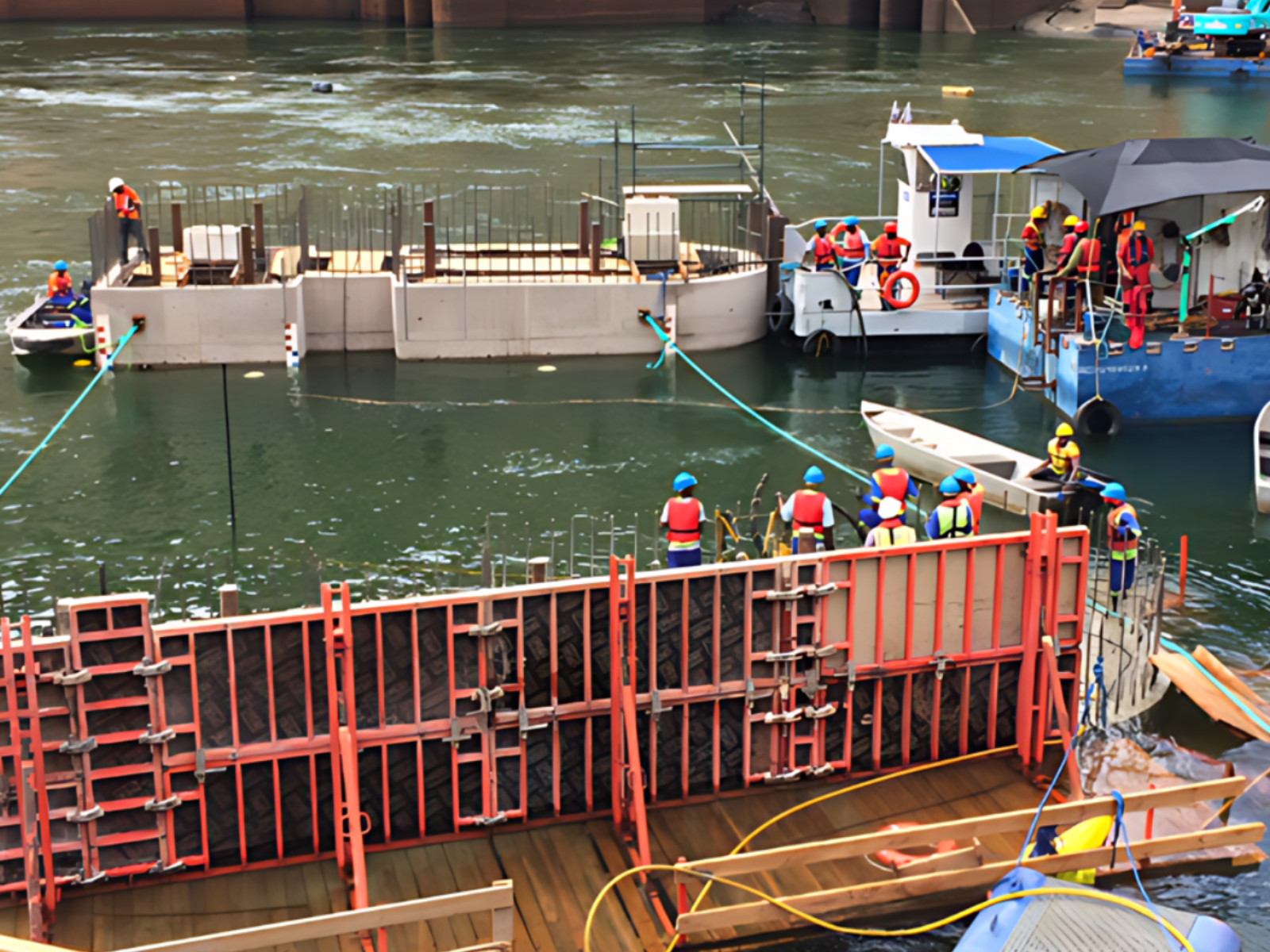
When the piers achieved the minimum required height, they were floated into position using submerged lifts. Photo credit: Peri Formwork and Scaffolding
The project required extensive laboratory testing, with an ISO 17025-accredited lab set up onsite. Concrete slump tests were conducted at the batching plant and again before placement to ensure consistency. Materials were also sent to South Africa for further abrasion testing.
The Kariba Dam Rehabilitation is a testament to advanced concrete engineering, ensuring the dam’s long-term resilience and continued power generation for millions in Southern Africa.
The project used over 600 000 m³ of concrete, which allows for this critical piece of infrastructure to continue serving Zambia and Zimbabwe. The project was massive in scope and incredibly difficult to achieve, earning it a Fulton Award from the Concrete Society of Southern Africa. CHRYSO submitted to the project to be judged under projects over R100 million, and the ingenuity and techniques used beat out the competition.


